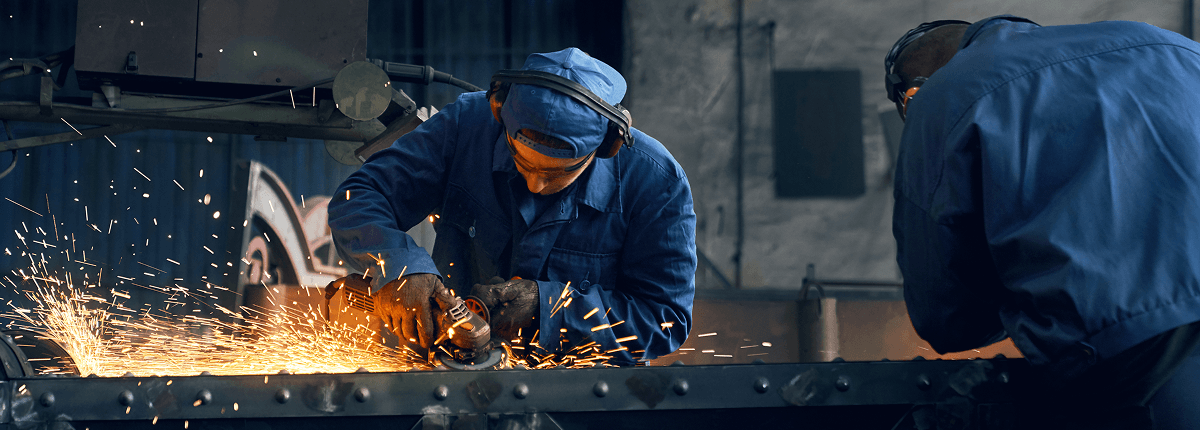

As manufacturing standards continue to tighten across industries, quality control is evolving from a reactive process into a strategic business function. Whether producing automotive components, consumer electronics, medical devices, or precision-machined parts, manufacturers are under growing pressure to reduce defects, improve traceability, and maintain consistent product quality.
In this environment, visual inspection machines have become a critical investment rather than an optional production upgrade. Modern Automated Optical Inspection (AOI) and machine vision technologies can detect defects faster and more consistently than manual inspection, helping manufacturers reduce waste, improve throughput, and meet increasingly demanding customer requirements.
However, selecting the right inspection solution is not always straightforward. Today’s market offers everything from e·try-level 2D vision systems to advanced AI-powered 3D scanning platforms. Understanding the technical differences between these systems is essential for making a procurement decision that delivers long-term value.
Why Choosing the Right Inspection System Matters
A visual inspection machine influences far more than defect detection.
The right system can:
- Improve production consistency
- Reduce labor dependency
- Minimize scrap and rework costs
- Increase traceability and compliance
- Provide actionable manufacturing data
Conversely, an unsuitable inspection platform can generate excessive false rejects, create operational bottlenecks, and increase maintenance costs.
For this reason, procurement decisions should focus on production requirements rather than marketing specifications alone.
Evaluating Hardware Performance: The Foundation of Inspection Accuracy
The quality of an inspection system begins with its physical imaging components. Even the most advanced software cannot compensate for poor image acquisition.
Camera Resolution and Pixel Performance
Many buyers focus exclusively on megapixel ratings, but resolution alone does not determine inspection quality.
Pixel size plays an equally important role.
Larger pixels capture more light, producing clearer images in high-speed manufacturing environments where exposure times are limited. This is particularly important when inspecting moving parts or operating under challenging lighting conditions.
Manufacturers should carefully balance:
- Field of View (FOV)
- Required defect size detection
- Production speed
- Available lighting conditions
A system optimized for micro-defect detection may require a different camera configuration than one designed for large-scale dimensional inspection.
Advanced Illumination Systems
Lighting is often responsible for the success or failure of a machine vision project.
Different defect types require different illumination strategies:
| Lighting Type | Primary Application |
|---|---|
| Brightfield Lighting | Flat and non-reflective surfaces |
| Darkfield Lighting | Scratches, edge defects, surface damage |
| Diffuse Lighting | Highly reflective materials |
| Coaxial Lighting | Precision flat-surface inspection |
| Structured Lighting | 3D measurements and profiling |
Modern machine vision systems increasingly utilize programmable lighting architectures that automatically adjust illumination angles and intensity based on product characteristics.
This flexibility significantly improves inspection accuracy across multiple production lines.
Lens Quality and Distortion Control
Optical distortion directly impacts measurement accuracy.
In applications involving dimensional verification, even minor lens distortion can result in incorrect pass/fail decisions.
For high-precision environments, telecentric lenses provide a significant advantage by maintaining consistent magnification regardless of object position. This eliminates perspective errors and improves measurement repeatability.
Manufacturers involved in semiconductor production, precision machining, and electronics assembly often consider telecentric optics a necessity rather than an upgrade.
Software Intelligence: Traditional Rule-Based Vision vs AI Inspection
Hardware captures the image, but software determines the inspection result.
The evolution of inspection software is currently one of the most significant developments in industrial quality control.
Traditional Rule-Based Systems
Conventional inspection software operates according to predefined rules established by engineers.
These systems perform exceptionally well when:
- Product geometry remains unchanged
- Tolerances are clearly defined
- Defect patterns are predictable
- High-speed deterministic processing is required
Applications such as barcode verification, dimensional measurements, and component presence detection remain ideal use cases.
AI-Powered Defect Detection
As manufacturing complexity increases, traditional programming methods often struggle to account for real-world variability.
This has accelerated adoption of AI-powered visual inspection platforms.
Instead of relying solely on manually defined thresholds, AI models learn from historical production data and defect samples.
Key advantages include:
- Improved detection of irregular defects
- Better handling of complex surface textures
- Reduced false-positive rates
- Adaptability to product variation
- Continuous performance improvement through training
For manufacturers dealing with cast surfaces, composite materials, painted components, or organic textures, AI inspection systems often deliver superior performance.
Comparison of Inspection Approaches
| Feature | Rule-Based Vision | AI & Deep Learning Vision |
|---|---|---|
| Setup Complexity | Moderate | Higher initial training |
| Inspection Flexibility | Limited | High |
| Defect Adaptability | Low | Excellent |
| Processing Speed | Extremely Fast | Fast |
| New Product Introduction | Requires Reprogramming | Retraining Required |
| Surface Complexity Handling | Moderate | Excellent |
The best choice depends on production variability and inspection objectives rather than technology trends alone.
Why Compact Inspection Machines Are Gaining Popularity
Historically, advanced inspection equipment was associated with large-scale automated production facilities.
That assumption is rapidly changing.
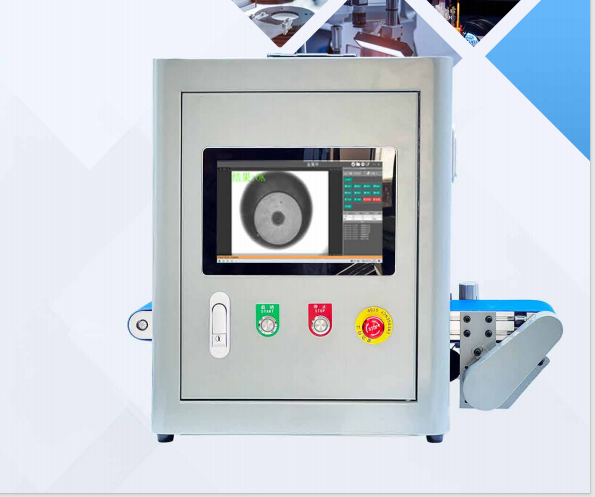
Recent advances in sensor technology, embedded computing, and industrial automation have enabled the development of compact desktop inspection machines capable of delivering laboratory-grade precision.
These systems provide several operational advantages:
Reduced Infrastructure Requirements
Compact inspection units occupy significantly less floor space than traditional inline systems.
This makes them suitable for:
- Small manufacturing facilities
- Research and development laboratories
- Precision machining workshops
- Electronics assembly operations
Flexible Quality Control Deployment
Instead of concentrating quality assurance at the end of production, manufacturers can deploy multiple inspection stations throughout the manufacturing process.
This approach enables earlier defect detection and prevents defective parts from progressing to downstream operations.
Faster Decision Cycles
Immediate inspection feedback allows operators to identify process deviations before large quantities of defective products are produced.
This reduces scrap rates and minimizes production disruption.
Understanding ROI and Total Cost of Ownership
The purchase price of a visual inspection system represents only one portion of the overall investment.
A more accurate evaluation considers the Total Cost of Ownership (TCO).
Integration and Deployment Costs
Implementation time directly affects production schedules.
Modern plug-and-play systems can significantly reduce installation complexity and downtime compared with custom-engineered inspection platforms.
Training Requirements
Complex inspection systems may require dedicated machine vision specialists.
Equipment featuring intuitive software interfaces and automated configuration tools can reduce training expenses and accelerate adoption.
False Reject Management
An inspection system that incorrectly rejects acceptable products can become a hidden operational cost.
Manufacturers should carefully evaluate:
- Detection accuracy
- False-positive rates
- False-negative rates
- Calibration stability
The most profitable inspection systems are often those that achieve the optimal balance between defect sensitivity and production efficiency.
Data Utilization
Modern quality control automation platforms generate valuable production intelligence.
Inspection data can reveal:
- Process drift
- Equipment wear
- Tool degradation
- Material inconsistencies
This information transforms inspection from a quality function into a continuous improvement tool.
Building an Effective Procurement Strategy
Selecting the ideal inspection platform requires more than comparing technical specifications.
Decision-makers should evaluate:
- Current production requirements
- Future scalability needs
- Product complexity
- Maintenance capabilities
- Integration requirements
- Software upgrade pathways
Working with suppliers that specialize in surface defect detection technologies often leads to better outcomes than purchasing from general industrial equipment distributors.
Specialized providers typically offer application-specific expertise, helping manufacturers match inspection capabilities to real-world production challenges.
Conclusion
Choosing a visual inspection machine is a strategic investment that directly impacts product quality, operational efficiency, and long-term competitiveness.
The most successful implementations begin with a clear understanding of inspection requirements and a balanced evaluation of optics, illumination, software intelligence, and operational costs. Whether deploying a traditional AOI platform, an AI-driven inspection system, or a compact desktop solution, manufacturers should prioritize systems that deliver measurable improvements in accuracy, repeatability, and process visibility.
As Industry 4.0 adoption continues to accelerate, inspection equipment is evolving beyond simple defect detection. Modern systems are becoming intelligent data-generation platforms that help manufacturers optimize production, reduce waste, and build stronger quality assurance frameworks across the entire manufacturing lifecycle.
Leave a Reply