

Investing in an advanced Automated Optical Inspection (AOI) system is a major step toward improving product quality and manufacturing efficiency. However, purchasing high-end inspection equipment alone does not guarantee accurate results. The true performance of any visual inspection solution depends on how effectively it is implemented, calibrated, and integrated into daily production operations.
Many manufacturers discover that the difference between laboratory-level specifications and real-world production performance lies in environmental control, workflow optimization, and ongoing system maintenance. Whether operating a high-volume production facility or a specialized precision workshop, organizations must establish a structured deployment strategy to achieve consistent inspection accuracy and maximize return on investment.
This guide outlines the key factors involved in implementing and optimizing modern visual inspection systems for long-term manufacturing success.
Why Implementation Matters as Much as Hardware Selection
Even the most sophisticated inspection platform can underperform if deployed in an unsuitable environment.
Common issues such as unstable lighting, equipment vibration, temperature fluctuations, and poor calibration practices often contribute more to inspection errors than limitations in the inspection hardware itself.
Successful quality control programs focus on three interconnected areas:
- Environmental stability
- Calibration accuracy
- Workflow integration
When properly managed, these factors enable manufacturers to achieve reliable, repeatable inspection performance at micrometer-level precision.
Creating an Optimal Inspection Environment
Every machine vision system depends on the quality of the image data it receives. Controlling environmental variables is therefore essential for maintaining inspection accuracy.
Vibration Control and Equipment Stability
Modern inspection equipment, particularly systems utilizing 3D line scanning technology, can detect extremely small dimensional variations.
However, this sensitivity also makes such systems vulnerable to mechanical disturbances.
Common vibration sources include:
- Conveyor systems
- CNC machining centers
- Material handling equipment
- Nearby industrial machinery
Even minor vibrations can distort measurements and reduce inspection repeatability.
Traditional factory installations often rely on isolated foundations or dedicated inspection zones. Newer desktop inspection machines increasingly incorporate vibration-dampening structures, making deployment easier in smaller workshops and laboratory environments.
Controlling Ambient Light Interference
Lighting consistency remains one of the most overlooked aspects of successful machine vision implementation.
Changes in environmental lighting can alter image contrast and affect defect detection performance.
Potential sources of interference include:
- Direct sunlight
- Skylights
- LED lighting fluctuations
- Reflections from nearby equipment
For optimal results, inspection stations should operate within enclosed or shielded environments where the machine’s dedicated illumination system remains the only active light source.
Stable lighting conditions significantly improve the reliability of surface defect detection processes.
Maintaining Thermal Stability
Temperature variations can affect both inspection equipment and the products being measured.
Thermal expansion may cause:
- Lens distortion
- Mechanical drift
- Dimensional measurement inconsistencies
In high-precision manufacturing sectors such as electronics, aerospace, and medical device production, maintaining stable environmental temperatures is essential for preserving measurement accuracy across multiple shifts.
Organizations seeking micron-level repeatability should include temperature control as part of their quality assurance strategy.
Establishing a Robust Calibration Program
Calibration is not a one-time installation procedure.
It is an ongoing process that ensures inspection systems continue to operate within specified tolerances throughout their lifecycle.
Why Calibration Is Critical
Over time, factors such as:
- Mechanical wear
- Dust accumulation
- Optical contamination
- Minor equipment impacts
can gradually affect inspection accuracy.
Without regular calibration, measurement drift may go unnoticed, increasing the risk of false inspection results.
Best Practices for Calibration
Most modern machine vision systems utilize certified calibration targets containing precisely defined geometric patterns.
During calibration:
- The system scans the reference target.
- Measured values are compared against certified dimensions.
- Software automatically compensates for optical distortion.
- Alignment parameters are adjusted.
- Measurement accuracy is verified.
Routine calibration schedules help maintain consistent defect detection performance and support long-term process reliability.
Adapting Inspection Strategies to Different Manufacturing Models
One of the most significant trends in industrial automation is the wider accessibility of advanced quality control technologies.
Today, inspection systems serve manufacturers of all sizes, from multinational production facilities to independent engineering workshops.
High-Volume Manufacturing Operations
Large-scale manufacturers typically prioritize:
- Maximum throughput
- Low false-rejection rates
- Automated material handling integration
- Real-time production analytics
In these environments, inspection systems are often connected directly to robotic sorting equipment, manufacturing execution systems (MES), and production databases.
The primary objective is maintaining quality without reducing production speed.
Specialized and Low-Volume Manufacturing
Smaller manufacturers often face different challenges.
They frequently produce:
- Customized components
- Precision-machined parts
- Prototype products
- High-value niche goods
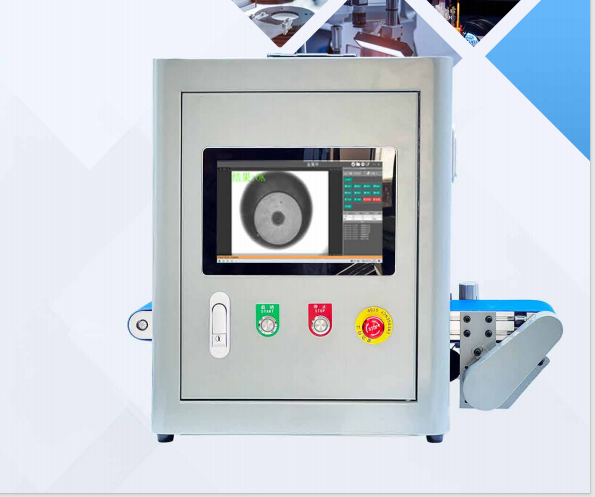
For these organizations, compact quality control automation solutions provide significant advantages.
Desktop inspection platforms allow manufacturers to establish flexible inspection checkpoints throughout production rather than relying solely on final-stage verification.
This approach enables faster corrective actions and reduces the cost of downstream defects.
Solving Common Inspection Performance Challenges
Even well-designed inspection systems occasionally encounter operational issues.
The following table outlines common implementation challenges and practical solutions.
| Challenge | Likely Cause | Recommended Solution |
|---|---|---|
| Excessive False Rejects | Overly strict tolerances or unstable lighting | Adjust acceptance parameters and verify lighting consistency |
| Missed Defects | Inadequate imaging resolution or incorrect illumination angle | Optimize lighting configuration and recalibrate optical settings |
| Inconsistent 3D Measurements | Vibration or thermal instability | Improve environmental control and recalibrate system |
| Slow Processing Speeds | Hardware limitations or excessive inspection complexity | Upgrade processing hardware and optimize inspection regions |
| Variable Inspection Results | Calibration drift | Implement scheduled calibration procedures |
Addressing these issues proactively minimizes downtime and ensures consistent inspection performance.
Maximizing Long-Term Return on Investment
A successful inspection strategy extends beyond defect detection.
Modern industrial machine vision platforms generate valuable production intelligence that can improve manufacturing performance across multiple departments.
Inspection data can help identify:
- Process instability
- Equipment wear patterns
- Tool degradation
- Material quality variations
- Production bottlenecks
As a result, inspection systems increasingly function as operational optimization tools rather than standalone quality control devices.
Manufacturers that actively leverage inspection data often achieve measurable improvements in efficiency, product consistency, and overall equipment effectiveness (OEE).
Planning Future Equipment Upgrades
As production requirements evolve, inspection capabilities must evolve as well.
Organizations should periodically evaluate whether existing systems continue to meet:
- Accuracy requirements
- Production volume demands
- Product complexity levels
- Data integration needs
When upgrading equipment, selecting suppliers with expertise in machine vision inspection systems and precision manufacturing applications is essential.
Specialized providers are often better positioned to recommend solutions that align with specific inspection challenges rather than offering generic automation equipment.
Conclusion
Implementing an automated inspection system is not simply a technology purchase—it is the foundation of a comprehensive quality strategy.
Manufacturers that focus on environmental stability, disciplined calibration practices, and intelligent workflow integration can unlock the full potential of modern Automated Optical Inspection (AOI) technologies. Whether operating a large-scale production facility or a specialized precision workshop, a well-optimized inspection process improves product quality, reduces operational waste, and provides the data necessary for continuous improvement.
As manufacturing standards continue to rise, organizations that treat visual inspection as a strategic capability rather than a compliance requirement will be best positioned to achieve long-term competitiveness and sustainable growth.
Leave a Reply