
In today’s highly competitive manufacturing environment, product quality is no longer viewed as a final checkpoint before shipment—it has become a strategic factor that directly influences profitability, customer retention, and brand reputation. As production volumes increase and tolerance requirements become more demanding, traditional manual inspection methods are struggling to keep pace with modern quality expectations.
This challenge has accelerated the adoption of Automated Optical Inspection (AOI) technologies. By combining advanced imaging systems, intelligent software algorithms, and high-speed processing capabilities, modern inspection platforms are transforming how manufacturers detect, classify, and prevent surface defects throughout the production cycle.
For factories seeking higher efficiency and lower defect rates, understanding the latest developments in automated visual inspection has become essential.
Why Surface Defect Detection Matters More Than Ever
Even minor cosmetic or structural imperfections can create significant downstream costs. Scratches, dents, coating inconsistencies, contamination marks, and dimensional deviations often lead to product returns, warranty claims, and production delays.
Industries such as automotive manufacturing, electronics assembly, semiconductor fabrication, medical device production, and precision machining require increasingly stringent quality standards. In many cases, defects invisible to the human eye can compromise product performance or regulatory compliance.
As a result, manufacturers are shifting from reactive quality control toward proactive defect prevention through machine vision inspection systems.
The Core Architecture of Modern AOI Systems
A modern automated inspection platform functions as both the visual sensor and analytical decision-maker within a production line. Its effectiveness depends on the seamless integration of three critical technologies.
Precision Imaging Hardware
Industrial-grade cameras serve as the foundation of any inspection system. Equipped with specialized optics and high-resolution sensors, these cameras capture detailed surface images at production speeds.
The quality of captured data directly affects inspection accuracy. Higher-resolution cameras can identify microscopic imperfections that would otherwise escape detection during manual review.
Advanced Lighting Technology
Lighting is often the most underestimated factor in machine vision performance.
Different defect types require different illumination strategies:
- Directional lighting for scratches and surface texture analysis
- Diffuse lighting for reflective materials
- Coaxial lighting for flat surfaces and printed components
- Structured lighting for dimensional measurement
Proper illumination creates the contrast necessary for detecting subtle surface variations that may be invisible under standard factory lighting conditions.
Intelligent Image Processing
Once images are captured, sophisticated software evaluates them against predefined quality parameters.
Modern machine vision software uses advanced pattern recognition and defect classification algorithms to distinguish between acceptable manufacturing variation and genuine defects. This significantly reduces false alarms while maintaining high inspection sensitivity.
Many newer systems also incorporate artificial intelligence models that continuously improve defect recognition accuracy based on historical production data.
The Evolution from 2D Inspection to 3D Line Scanning
Traditional 2D inspection systems remain highly effective for applications such as:
- Barcode verification
- Label inspection
- Presence/absence checks
- Basic dimensional measurements
However, complex surfaces and reflective materials present challenges that conventional cameras cannot always overcome.
To address these limitations, manufacturers are increasingly deploying 3D line scanning technology.
How 3D Line Scanning Works
The system projects a laser line onto a product’s surface while a camera observes the line from a calibrated angle.
As the product moves through the inspection area, thousands of measurement points are collected in real time. These points are then reconstructed into a highly detailed three-dimensional model of the object.
Unlike traditional imaging methods, 3D scanning measures actual physical geometry rather than relying solely on visual contrast.
This enables accurate detection of:
- Surface depressions
- Raised defects
- Warpage
- Dimensional inconsistencies
- Material deformation
For high-precision manufacturing sectors, micrometer-level measurement capability provides a significant quality advantage.
Comparing Quality Control Approaches
The operational benefits of automated inspection become clearer when compared with conventional inspection methods.
| Evaluation Factor | Manual Inspection | 2D AOI System | 3D Line Scanning System |
|---|---|---|---|
| Inspection Speed | Variable and operator-dependent | High-speed | High-speed |
| Defect Consistency | Affected by fatigue | Consistent | Highly consistent |
| Depth Measurement | Subjective estimation | Not available | Precise measurement |
| Data Traceability | Limited | Comprehensive | Comprehensive |
| Production Analytics | Minimal | Available | Advanced |
| Human Error Risk | High | Low | Very Low |
| Initial Investment | Low | Moderate | Moderate to High |
While manual inspection remains useful for specialized applications, automated systems offer significantly better repeatability, traceability, and scalability.
The Rise of Compact and Desktop Inspection Solutions
Historically, advanced inspection equipment was associated with large-scale industrial facilities and substantial capital investment.
This landscape is changing rapidly.
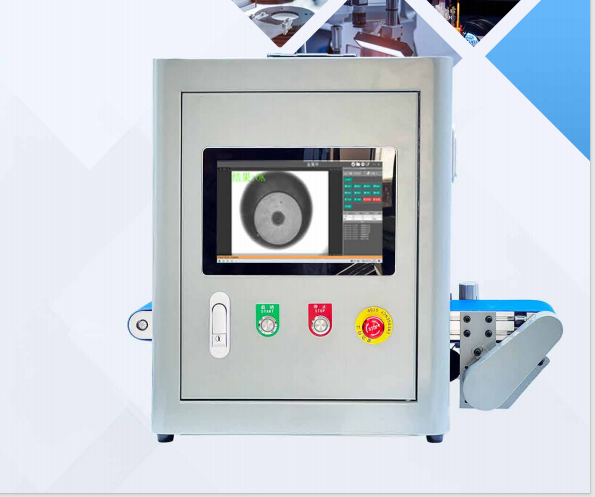
Recent developments in sensor miniaturization, embedded computing, and machine vision software have enabled the emergence of compact automated inspection machines suitable for smaller production environments.
These systems provide several advantages:
- Reduced installation space requirements
- Lower deployment costs
- Faster implementation cycles
- Greater production flexibility
- Easier integration into existing workflows
For specialized manufacturers, research laboratories, precision workshops, and emerging production businesses, desktop inspection platforms now offer enterprise-level quality control capabilities without requiring extensive infrastructure investments.
Maximizing ROI Through Strategic Implementation
The successful deployment of an automated visual inspection solution requires more than selecting advanced hardware. Organizations should focus on several key implementation principles.
Establish Clear Quality Standards
Inspection parameters should align with actual product requirements.
Overly strict thresholds may increase unnecessary rejection rates, while overly lenient settings can allow defects to pass undetected.
A balanced tolerance strategy ensures optimal production efficiency.
Evaluate Environmental Conditions
Machine vision systems perform best in controlled environments.
Factors such as vibration, temperature fluctuations, dust accumulation, and ambient light interference can impact inspection accuracy.
Conducting a thorough site assessment before installation helps avoid future performance issues.
Invest in Reliable Equipment
The quality of cameras, lenses, illumination systems, and software algorithms directly affects inspection performance.
Manufacturers evaluating new inspection technologies should prioritize vendors with proven experience in industrial automation and surface defect detection applications.
Maintain Calibration Schedules
Even the most advanced systems require periodic calibration.
Routine verification of camera alignment, optical components, and lighting performance ensures long-term measurement accuracy and system stability.
Emerging Trends Shaping the Future of Automated Inspection
Several technological developments are expected to redefine the next generation of quality control systems.
AI-Driven Defect Classification
Deep learning models are increasingly capable of identifying complex defect patterns that traditional rule-based systems may miss.
This enables more adaptive inspection performance across varying product types.
Real-Time Production Analytics
Inspection systems are evolving from standalone quality tools into connected manufacturing intelligence platforms.
By analyzing inspection data in real time, manufacturers can identify process drift before significant defect rates occur.
Digital Twin Integration
Advanced 3D inspection solutions are beginning to generate digital representations of inspected products, enabling deeper quality analysis and predictive maintenance capabilities.
Smart Factory Connectivity
Inspection platforms are becoming integral components of Industry 4.0 ecosystems, exchanging data with ERP, MES, and production management systems to create fully traceable manufacturing environments.
Conclusion
The evolution of Automated Optical Inspection (AOI) technology is fundamentally changing how manufacturers approach quality assurance. By combining high-resolution imaging, intelligent software, and increasingly sophisticated 3D line scanning technology, modern inspection systems provide a level of accuracy and consistency that manual inspection cannot achieve.
As compact solutions become more affordable and advanced analytics become more accessible, automated inspection is no longer reserved for large enterprises. Manufacturers of all sizes can leverage surface defect detection technologies to reduce waste, improve product reliability, and strengthen their competitive position in an increasingly quality-driven global marketplace.
Leave a Reply