
In modern manufacturing, product quality has become a critical factor that directly influences operational efficiency, customer trust, and long-term competitiveness. Industries such as automotive, electronics, semiconductor production, medical equipment, and precision engineering are facing increasingly strict requirements for accuracy and reliability. Even a small surface defect, dimensional deviation, or assembly error can result in production delays, warranty costs, product recalls, and reputational damage.
For many years, manufacturers relied on manual inspection processes and traditional measurement tools to maintain quality standards. However, as production speeds increase and product designs become more complex, these methods are struggling to meet current industrial demands. Limited inspection speed, inconsistent judgment, and a lack of real-time data have created significant challenges for factories seeking higher efficiency.
This has accelerated the adoption of industrial quality inspection machines, which combine advanced imaging technologies, artificial intelligence, and automated data analysis to provide faster and more accurate quality verification. Unlike traditional sampling methods, modern inspection solutions enable continuous inspection throughout the production process, helping manufacturers achieve better consistency while reducing operational risks.
Why Traditional Quality Inspection Methods Are Becoming Insufficient
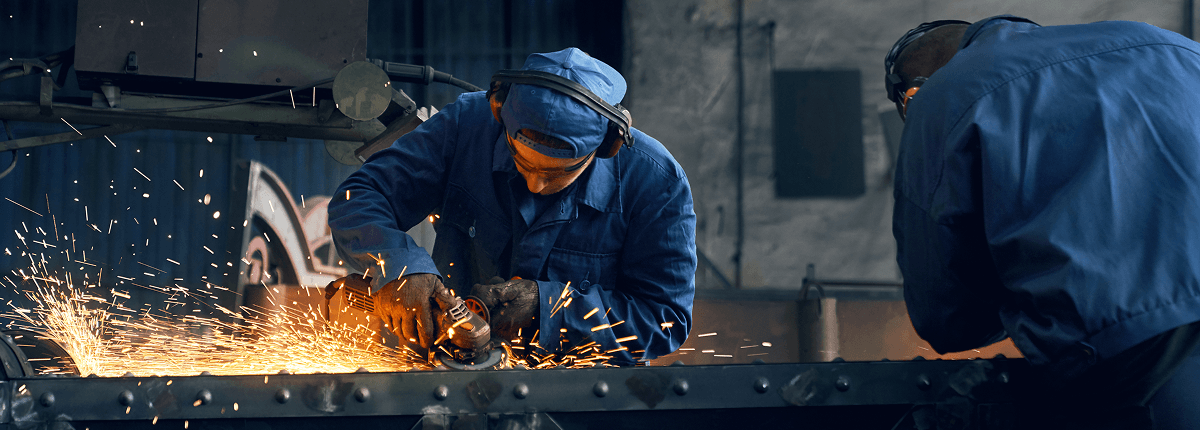
Manual inspection has played an important role in manufacturing for decades. Skilled operators can identify many visible issues through experience and careful observation. However, human-based inspection also has unavoidable limitations in high-volume production environments.
One major challenge is inconsistency. Human inspectors may experience fatigue during long shifts, causing attention levels to decline and increasing the possibility of missed defects. Different operators may also have different interpretations of quality standards, resulting in inconsistent inspection results.
Another limitation is production speed. Modern manufacturing lines often operate continuously at extremely high speeds, making it difficult for manual inspection processes to examine every product accurately. As production requirements become more demanding, relying only on human inspection can create bottlenecks that restrict overall factory efficiency.
Traditional inspection methods also provide limited data visibility. While an operator may identify that a product has failed, these methods often cannot generate detailed information about defect patterns, failure frequency, or production trends. Without structured data, manufacturers may struggle to identify the root causes behind quality issues.
The Technologies Behind Advanced Inspection Systems
The development of automated vision inspection systems has transformed quality control from a reactive process into a data-driven manufacturing function. Modern inspection machines integrate multiple technologies to achieve higher precision and reliability.
High-Resolution Imaging and Advanced Optical Systems
At the foundation of modern inspection equipment is machine vision technology, which uses industrial cameras, specialized lenses, and controlled lighting environments to capture detailed images of products during production.
High-resolution cameras can detect extremely small surface imperfections, scratches, contamination, missing components, and dimensional variations that may not be visible to the human eye. Advanced optical designs, including telecentric lenses, improve measurement accuracy by reducing image distortion and maintaining consistent dimensional analysis.
These capabilities are especially valuable in industries where precision is essential, such as semiconductor manufacturing, automotive components, and electronic assemblies.
Artificial Intelligence for Smarter Defect Recognition
Traditional automated inspection systems often depended on predefined rules to identify defects. While effective for stable production conditions, rule-based systems can struggle when products have complex surfaces or unpredictable variations.
Modern AI-powered defect detection technologies use deep learning algorithms to analyze large volumes of image data and recognize complex defect patterns. Instead of relying entirely on manually programmed rules, AI models can learn from previous inspection results and improve their recognition accuracy over time.
This approach helps manufacturers distinguish between acceptable product variations and actual quality problems, reducing false alarms while improving detection reliability.
3D Measurement and Advanced Inspection Capabilities
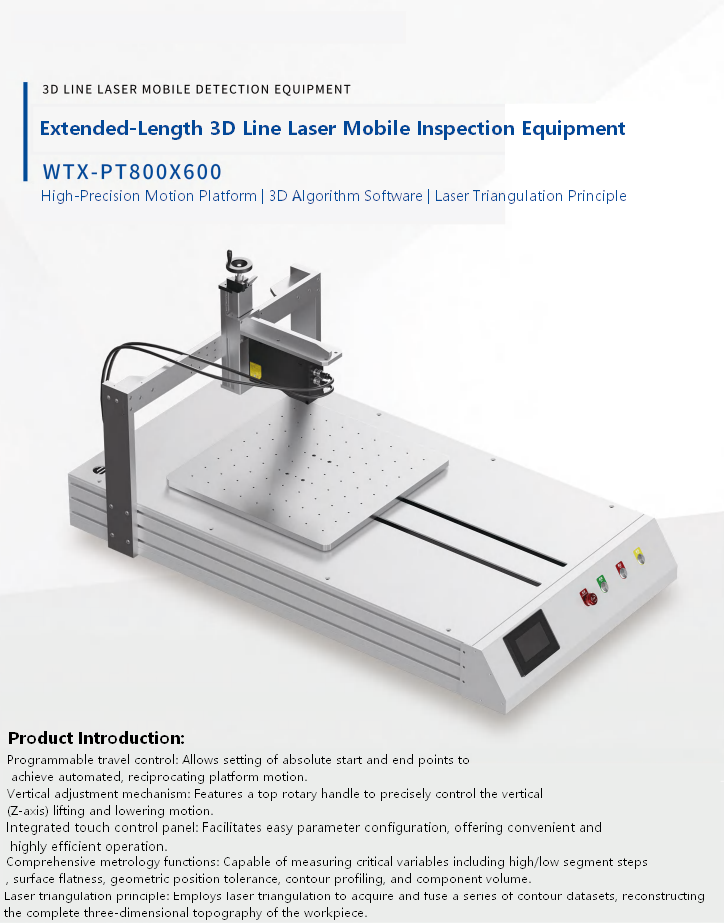
Beyond traditional two-dimensional image analysis, many advanced inspection platforms now incorporate 3D imaging technologies. Laser scanning, structured light projection, and depth measurement systems allow manufacturers to evaluate product geometry, surface height, flatness, and structural characteristics.
These capabilities are particularly useful for applications requiring precise dimensional control, including mechanical parts, molded components, and complex assemblies.
Business Benefits of Automated Quality Inspection
Implementing advanced inspection equipment provides measurable advantages throughout the manufacturing process.
Improved Defect Prevention
One of the most important benefits of automated inspection is the ability to perform complete product verification rather than relying only on sampling. By inspecting every unit on the production line, manufacturers can significantly reduce the risk of defective products reaching customers.
Lower Production Costs
Early defect identification prevents wasted materials, unnecessary labor, and additional processing costs. Detecting problems immediately during production also allows engineers to correct process issues before they create larger-scale losses.
Better Manufacturing Data Management
Modern inspection platforms can connect with factory software systems, including manufacturing execution systems (MES), to collect and analyze quality information. This creates a continuous feedback loop where inspection data supports production optimization and preventive decision-making.
Through integration with broader Industry 4.0 manufacturing solutions, factories can move toward smarter production environments with improved traceability and operational visibility.
How to Choose the Right Inspection Machine for Your Factory
Selecting the correct inspection solution requires more than comparing technical specifications. Manufacturers need to evaluate their production conditions, quality objectives, and future expansion plans.
Key considerations include:
Production Speed Requirements
Inspection equipment must match the speed of the manufacturing line. Camera performance, processing capability, and software response time all influence whether the system can maintain accurate inspection without slowing production.
Defect Detection Requirements
Different industries face different quality challenges. Some applications require surface defect detection, while others focus on dimensional measurement, assembly verification, or internal structural inspection.
System Integration Capability
A modern inspection machine should work smoothly with existing production equipment, automation systems, and factory management platforms. Flexible integration helps manufacturers upgrade quality control without completely redesigning their production lines.
Scalability and Maintenance
Manufacturers should also consider whether the inspection system can adapt to future product changes. Modular designs, software upgrades, and easy maintenance can extend the long-term value of the investment.
The Future of Intelligent Manufacturing Quality Control
As manufacturing continues to adopt digital transformation strategies, quality inspection machines are becoming more than simple defect detection tools. They are evolving into intelligent production systems that provide real-time analysis, predictive insights, and continuous process improvement.
The combination of artificial intelligence, automation, and connected manufacturing platforms allows companies to move from traditional quality control toward predictive quality management. Instead of discovering problems after defects occur, manufacturers can identify process deviations earlier and take corrective action before failures happen.
For companies seeking to improve production accuracy, reduce waste, and build more competitive manufacturing operations, advanced inspection technologies represent a key step toward the future of intelligent manufacturing.
Leave a Reply