
For many manufacturers, investing in automated inspection equipment is often viewed as a significant capital decision. While the initial purchase cost is easy to calculate, the long-term financial impact of manual inspection is frequently underestimated. Labor-intensive quality control, product rework, scrap, warranty claims, and production delays all contribute to hidden operational expenses that accumulate over time.
Modern manufacturers are increasingly shifting their focus from equipment price alone to total operational value. When automated inspection is combined with optimized production workflows, companies not only improve product quality but also increase manufacturing efficiency, reduce operating costs, and strengthen their competitive position in global markets.
Looking Beyond the Purchase Price
Evaluating inspection equipment based solely on its purchase price provides only part of the financial picture.
The more meaningful metric is the Total Cost of Quality (CoQ), which considers every expense associated with identifying, correcting, and preventing product defects throughout the manufacturing process.
Manual inspection often appears inexpensive because labor costs are visible and predictable. However, the indirect costs generated by inconsistent inspection frequently exceed the initial investment required for automation.
A modern machine vision inspection system helps manufacturers reduce these hidden expenses by delivering consistent, repeatable quality verification across every production shift.
The Hidden Costs of Manual Quality Inspection
Many operational costs remain unnoticed until they begin affecting profitability.
Common hidden quality costs include:
- Product rework caused by late defect detection
- Material waste from scrapped components
- Additional labor required for repeated inspections
- Production delays resulting from quality issues
- Customer complaints and warranty claims
- Emergency replacement shipments
- Damage to supplier reputation
- Lost engineering time spent resolving recurring defects
These costs rarely appear as a single line item within financial reports, yet together they significantly reduce manufacturing profitability.
By improving inspection consistency, manufacturers can eliminate many of these recurring operational losses.
Why Automated Inspection Delivers Faster Returns
Modern automated optical inspection systems generate financial value in multiple ways rather than through labor savings alone.
Continuous inspection enables manufacturers to identify production issues immediately, allowing corrective actions before large batches of defective products are produced.
Earlier defect detection helps reduce:
- Scrap rates
- Rework costs
- Material consumption
- Machine downtime
- Customer quality incidents
In many production environments, savings generated through lower scrap and improved first-pass yield recover equipment investment much faster than expected.
As production volumes increase, the financial benefits continue to grow because inspection accuracy remains stable regardless of output.
Improving Workflow Without Disrupting Production
Some manufacturers hesitate to introduce automated inspection because they believe installation will require extensive production line redesign.
Fortunately, today’s industrial machine vision solutions are designed with flexibility in mind.
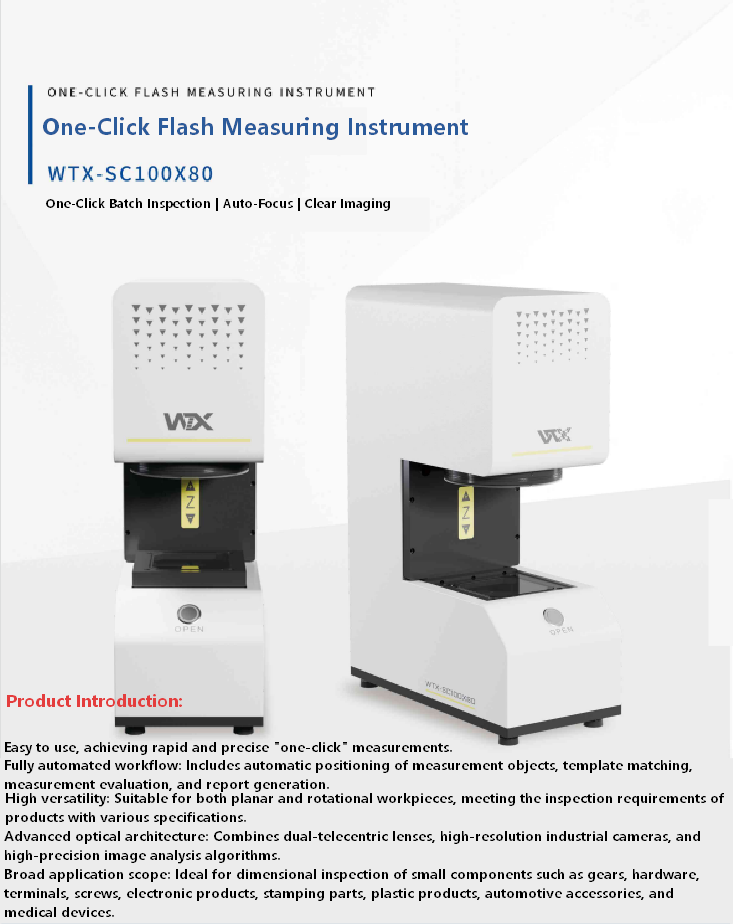
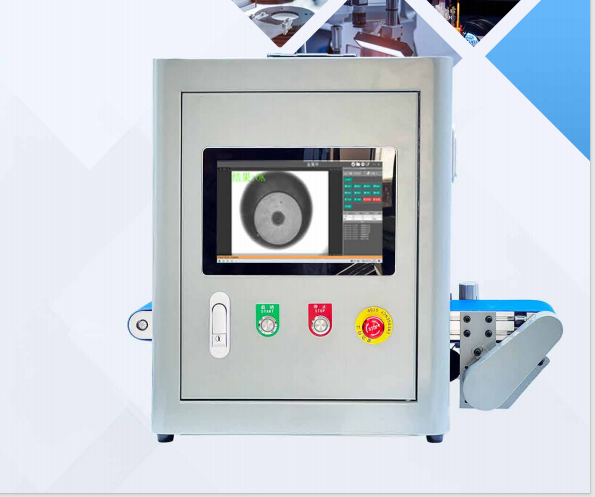
Compact inspection units can be installed alongside existing conveyors, workstations, or assembly cells without major modifications to factory layouts.
Whether deployed as standalone inspection stations or integrated directly into automated production lines, modern systems are designed to support existing manufacturing processes rather than replace them entirely.
This flexibility allows manufacturers to improve quality while minimizing implementation risk.
Compact Equipment, Maximum Production Value
Space limitations are common in both new and established manufacturing facilities.
Fortunately, recent advances in camera technology, lighting systems, and industrial computing have significantly reduced equipment size while improving inspection performance.
Compact quality inspection systems can now perform tasks that previously required much larger installations.
These systems are suitable for applications including:
- Surface defect inspection
- Assembly verification
- Dimensional measurement
- Packaging inspection
- Label verification
- Component presence detection
Because of their smaller footprint, manufacturers can introduce automation gradually without disrupting daily production activities.
Faster Deployment Means Faster Results
Reducing implementation time is another important factor influencing return on investment.
Modern inspection platforms increasingly feature standardized hardware, intuitive software interfaces, and simplified configuration tools that reduce installation complexity.
Instead of spending months integrating legacy equipment, engineering teams can begin validating products within days or weeks.
Simplified implementation also reduces operator training requirements and allows production personnel to become familiar with inspection procedures more quickly.
The faster inspection systems begin generating reliable production data, the sooner manufacturers realize operational improvements.
Positioning Inspection Where It Creates the Greatest Impact
Inspection technology delivers the highest value when installed at the most appropriate production stages.
Rather than concentrating all inspection activities at the end of manufacturing, many companies now distribute inspection throughout the production process.
Typical inspection locations include:
After fabrication
Verifying structural integrity and dimensional accuracy before components move into assembly reduces unnecessary downstream processing.
During assembly
Confirming correct component placement and assembly completeness prevents costly rework later in production.
Before packaging and shipment
Final inspection ensures only qualified products leave the factory while providing complete quality documentation for customers.
Strategically placing inspection stations throughout production creates a balanced manufacturing workflow that minimizes bottlenecks while improving overall efficiency.
Data-Driven Manufacturing Improves Long-Term Profitability
When inspection systems connect with Manufacturing Execution Systems (MES) and factory automation software, manufacturers gain much more than quality verification.
Inspection data supports:
- Production performance monitoring
- Root cause analysis
- Predictive maintenance
- Statistical process control
- Continuous improvement initiatives
- Digital quality traceability
This information enables engineering teams to identify recurring process variation, optimize machine settings, and improve production stability over time.
Instead of simply detecting defective products, inspection becomes an essential part of intelligent manufacturing management.
Automated Inspection Is a Long-Term Business Investment
As global manufacturing continues evolving toward Industry 4.0, automated quality control is becoming a strategic business requirement rather than an optional productivity upgrade.
Companies that invest in scalable inspection technologies today position themselves to meet increasing customer expectations for quality consistency, production transparency, and digital traceability.
Accurate inspection reduces waste, strengthens customer confidence, improves operational efficiency, and supports sustainable business growth.
Rather than viewing automated inspection as an equipment purchase, forward-looking manufacturers recognize it as an investment that continuously generates operational value throughout the entire production lifecycle.
Over time, the combination of lower quality costs, improved production flow, and better manufacturing intelligence creates measurable financial returns that extend far beyond the original equipment investment.
Leave a Reply