
Manufacturers are under constant pressure to improve product quality while controlling costs and maintaining production flexibility. Although many companies recognize the value of automated inspection, some hesitate because they believe factory-wide automation requires a massive upfront investment.
In reality, the most successful manufacturers rarely automate every inspection process at once. Instead, they adopt a modular strategy that addresses the most critical production challenges first and expands inspection capabilities over time. Combined with data-driven process monitoring, this approach not only improves product quality but also supports predictive maintenance, higher equipment availability, and continuous manufacturing improvement.
Why Modular Inspection Is a Smarter Investment
Many production facilities assume they need a fully integrated inspection system from day one. However, large-scale automation projects often require significant capital investment, lengthy implementation periods, and major production adjustments.
A modular machine vision inspection system provides a more practical alternative.
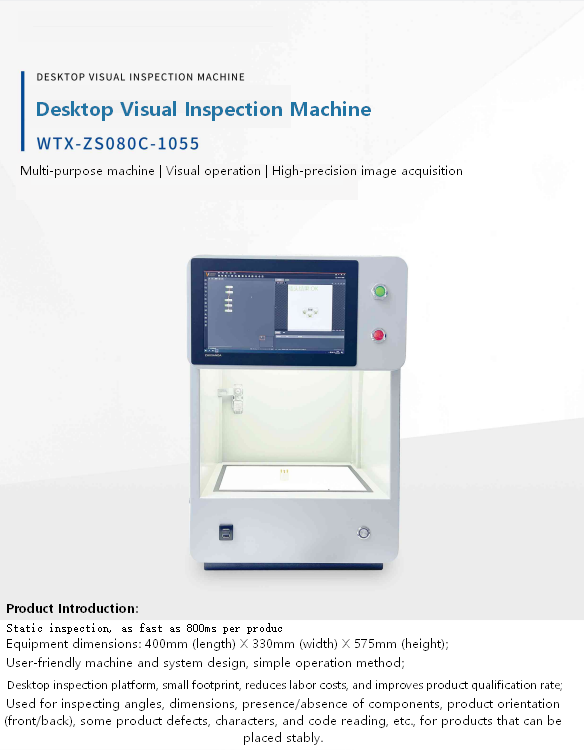
Instead of replacing every manual inspection station simultaneously, manufacturers can deploy individual inspection units where they generate the greatest operational value. This staged implementation reduces financial risk while allowing engineering teams to gain experience before expanding automation across additional production lines.
Modular inspection also gives manufacturers greater flexibility to respond to changing customer requirements and evolving production demands.
Focus on the Largest Production Bottleneck First
The fastest return on investment often comes from solving the biggest quality challenge rather than automating every inspection process.
Engineering teams should begin by identifying production stages with:
- High manual inspection workloads
- Frequent quality escapes
- Excessive product rework
- Low inspection consistency
- High operator fatigue
For many manufacturers, these bottlenecks occur during final assembly inspection, cosmetic surface evaluation, dimensional verification, or packaging quality control.
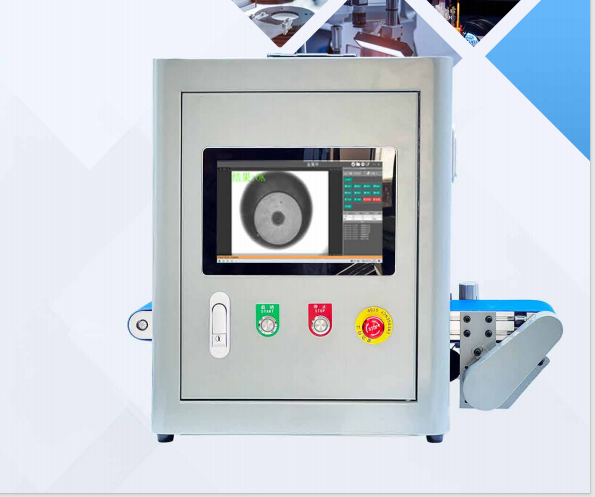
Installing a standalone automated optical inspection solution at one critical production stage immediately improves inspection consistency without disrupting the rest of the manufacturing process.
Once measurable improvements are achieved, the same inspection strategy can gradually expand across additional workstations.
Scaling Inspection as Production Grows
One of the greatest advantages of modular inspection equipment is scalability.
As production capacity increases or new product lines are introduced, manufacturers can expand existing inspection capabilities instead of replacing complete systems.
Additional cameras, lighting modules, processing units, or inspection stations can often be integrated while maintaining the same software environment and inspection logic.
This approach provides several important benefits:
- Lower capital investment over time
- Consistent operator experience
- Simplified employee training
- Easier maintenance procedures
- Standardized inspection performance across multiple production lines
Because operators continue using familiar software and inspection workflows, expansion becomes significantly more efficient than implementing entirely new systems.
Designing Inspection Systems for Long-Term Flexibility
Manufacturing environments rarely remain static.
Products evolve, materials change, customer specifications become more demanding, and production methods continue to improve. Inspection equipment should be capable of adapting to these changes without requiring complete hardware replacement.
A flexible industrial machine vision platform allows manufacturers to modify inspection parameters by adjusting lighting configurations, replacing lenses, updating software algorithms, or adding new inspection modules.
This adaptability extends equipment lifespan while protecting long-term capital investment.
Future-ready inspection systems enable manufacturers to respond quickly to new business opportunities without major production interruptions.
Inspection Data Creates More Than Quality Reports
Modern inspection systems do much more than determine whether products pass or fail inspection.
Every inspection cycle generates valuable production information that helps manufacturers understand how equipment, materials, and processes perform over time.
Advanced quality inspection systems continuously record defect frequency, inspection trends, dimensional measurements, and process variation.
Rather than viewing these records as simple quality documentation, manufacturers increasingly use inspection data to optimize production performance.
The result is greater visibility into manufacturing operations and faster identification of developing process problems.
Using Inspection Data for Predictive Maintenance
One of the most valuable applications of inspection data is predictive maintenance.
Small increases in recurring defects often indicate equipment wear long before machines experience complete failure.
For example, a gradual increase in microscopic scratches may suggest tool wear, while recurring dimensional variation could indicate fixture movement or mechanical alignment issues.
Instead of waiting for equipment breakdowns or significant quality failures, maintenance teams can schedule repairs during planned production downtime.
This proactive maintenance strategy reduces:
- Unexpected equipment failures
- Emergency maintenance costs
- Production downtime
- Scrap and rework
- Customer quality issues
By identifying process changes early, manufacturers improve equipment reliability while protecting production schedules.
Creating a Continuous Process Improvement Loop
Inspection data becomes even more valuable when analyzed over extended production periods.
Manufacturers can identify relationships between product quality and operating conditions such as temperature, humidity, machine settings, material batches, or production speed.
When inspection systems connect directly with Manufacturing Execution Systems (MES) and factory automation platforms, quality information becomes part of a continuous improvement cycle.
Production teams can monitor defect trends in real time, verify corrective actions, and optimize manufacturing parameters using objective production data rather than assumptions.
This closed-loop approach enables faster process optimization while improving product consistency across every production shift.
Building Smarter Manufacturing Through Reliable Inspection
Successful smart factories are built on reliable, consistent production data.
Without accurate inspection results, predictive maintenance, artificial intelligence, and process optimization initiatives cannot deliver reliable outcomes.
Manufacturers do not need large data science teams to begin benefiting from data-driven manufacturing. Instead, success starts with dependable inspection hardware capable of producing accurate, repeatable inspection results every day.
As inspection systems expand throughout the factory, manufacturers create a stronger digital foundation that supports predictive maintenance, operational efficiency, quality assurance, and continuous improvement.
Companies that adopt modular automation today position themselves for greater flexibility, lower operating costs, and stronger competitiveness as manufacturing continues to evolve toward fully connected Industry 4.0 production environments.
Leave a Reply