
In electronics manufacturing, the smallest defect on a PCB can cause device failures, costly recalls, or reliability problems down the road. As components shrink and circuit boards grow more complex, manual inspection simply can’t keep up with the speed and precision required. That’s why AOI inspection machines have become indispensable on modern electronics production lines.
These systems deliver fast, accurate, and repeatable checks that help manufacturers maintain high yields while catching issues early.
What Is an AOI Inspection Machine?
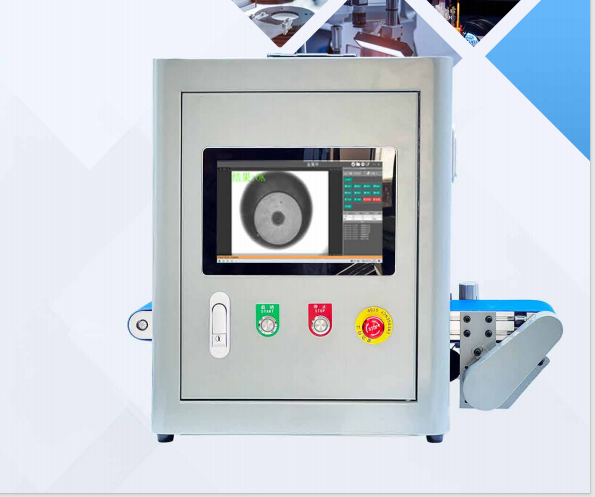
An AOI (Automated Optical Inspection) machine is a specialized machine vision system that uses high-resolution cameras and advanced software to examine printed circuit boards (PCBs) and electronic assemblies. It reliably detects problems such as missing components, misalignment, soldering defects, short or open circuits, polarity errors, and surface contamination.
AOI systems are typically deployed at key production stages — after solder paste printing, after component placement, and after reflow soldering — so defects can be caught before they progress further.
Why AOI Systems Matter for PCB Manufacturing
Modern PCBs pack incredibly dense layouts with microscopic components. Human eyes struggle to maintain consistency at this scale, especially on high-speed lines. AOI inspection machines address this by providing:
- Rapid inspection of entire boards in seconds, supporting mass production
- Consistent standards without fatigue or subjective judgment
- Early detection that prevents expensive downstream problems
This combination helps factories achieve better quality and higher throughput.
Core Components of an Effective AOI System
Several technologies work together in a good AOI system:
High-Resolution Imaging — Industrial cameras capture detailed 2D or 3D views, often from multiple angles. This level of detail is essential for spotting tiny defects.
Advanced Lighting — Different setups (coaxial for solder joints, ring lighting for uniform surfaces, oblique or structured light) reveal specific issues. Good lighting often matters more than camera specs alone.
Image Processing Software — Combines rule-based checks with AI for smarter defect recognition and fewer false calls.
Mechanical Handling — Conveyor or robotic systems that move boards smoothly through the inspection station.
Main Types of AOI Systems
- Pre-Reflow AOI: Checks component placement and alignment before soldering.
- Post-Reflow AOI: Focuses on solder joint quality and connectivity after the reflow process.
- 3D AOI Systems: Use three-dimensional imaging to measure solder volume, height, and surface topography for deeper analysis.
AOI Compared to Other Inspection Methods
Manual inspection is still used in some low-volume settings but suffers from fatigue, inconsistency, and limited speed. AOI offers objective, high-speed, micron-level accuracy that scales easily.
It also complements other technologies:
- SPI (Solder Paste Inspection) checks paste volume before components are placed.
- AXI (Automated X-ray Inspection) looks inside hidden joints like BGAs where optical systems can’t see.
Together they create a robust quality control ecosystem.
Common Defects AOI Systems Catch
These machines excel at identifying issues like tombstoning, bridging, insufficient or excess solder, missing or skewed components, and polarity errors. Early detection of these problems significantly boosts first-pass yield.
Key Benefits of AOI in Electronics Production
- Higher overall yield rates by catching problems early
- Lower rework and scrap costs
- Valuable production data for process optimization
- Easy scalability as output grows without adding headcount
Implementation Challenges to Consider
Successful deployment requires attention to programming and calibration for each new board design, proper lighting setup, handling component variability, and managing the data generated. AI-enhanced AOI is helping reduce some of these hurdles by improving adaptability and lowering false positives.
The Growing Role of AI and Industry 4.0
Modern AOI systems increasingly incorporate AI to recognize complex patterns, adapt to new designs faster, and learn from production data. In Industry 4.0 environments, they feed real-time insights into MES and ERP systems, supporting predictive maintenance and closed-loop process control.
Future Trends in AOI Technology
Expect more fully AI-driven models, wider use of 3D AOI, cloud analytics, edge computing for faster decisions, and tighter integration with predictive quality tools. These advances will make inspection even more autonomous and intelligent.
Final Thoughts AOI inspection machines have become essential for reliable, high-precision electronics manufacturing. They help factories maintain strict quality standards on dense, complex PCBs while keeping production efficient and cost-effective. As electronics continue to advance, investing in capable AOI technology remains one of the smartest moves for long-term competitiveness.
Leave a Reply