

In today’s manufacturing world, quality control has moved far beyond a final checkpoint. It’s now a continuous, integrated part of the entire production process. With faster global supply chains and rising customer expectations, manufacturers face growing pressure to cut defects, deliver consistent results, and maintain full traceability. Automated inspection machines are quietly driving this shift across electronics, automotive, packaging, precision hardware, and many other sectors.
What used to be occasional manual sampling has evolved into high-speed, data-driven systems that can check every single unit on the line without slowing things down.
The Move Away from Traditional Manual Inspection
For years, quality checks depended on experienced human operators visually examining parts, measuring dimensions, and pulling out anything that looked off. This approach worked reasonably well for smaller operations, but it hits clear limits as scale increases.
Common issues include operator fatigue during long shifts, varying judgment between different people, inability to keep pace with high-speed lines, and struggles spotting tiny or subtle defects. When you’re producing millions of units, even a tiny defect rate can become very expensive.
Automated inspection machines address these problems head-on by combining optical imaging, smart sensors, and advanced software for consistent, repeatable results every time.
What Exactly Is an Automated Inspection Machine?
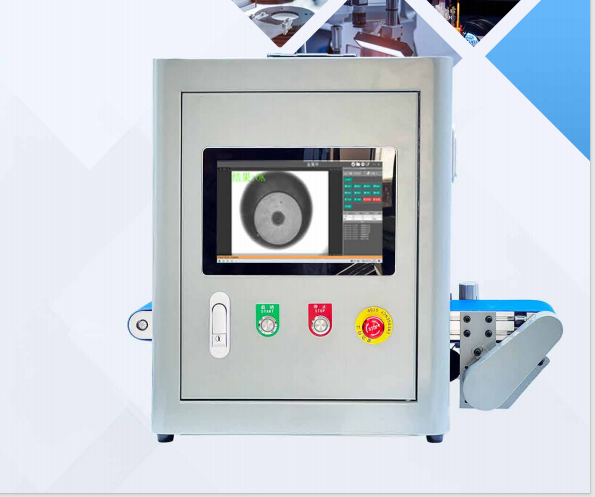
An automated inspection machine evaluates products automatically using high-resolution cameras, specialized lighting, AI-powered image processing, and sometimes mechanical handling. These systems reliably catch issues such as surface scratches or cracks, dimensional variations, missing components, assembly misalignments, and contamination.
They can run inline, directly on the moving production line for real-time checks, or offline at dedicated stations. The goal remains the same: make sure every product meets specifications before it moves forward.
Core Technologies Powering These Systems
Modern automated inspection machines rely on several key technologies working together:
Machine Vision Systems form the foundation, using cameras to capture detailed images that algorithms analyze consistently — without fatigue or distraction.
Artificial Intelligence and Deep Learning take things further by learning from real production data. This helps identify new defect types, reduce false rejects, adapt to product variations, and get smarter over time.
Precision Lighting is often the unsung hero. Techniques like backlighting, ring lighting, coaxial, or structured light make hidden defects visible.
High-Speed Processing with GPUs and edge computing ensures the system keeps up with fast lines, making decisions in milliseconds instead of creating bottlenecks.
Inline vs Offline: Choosing the Right Setup
Manufacturers often debate inline inspection versus offline inspection.
Inline inspection integrates directly into the flow, catching problems immediately, reducing waste, and providing instant feedback for adjustments. It’s ideal for high-volume lines but requires careful synchronization.
Offline inspection uses separate stations, offering more flexibility and easier setup, especially for batches or complex evaluations. The trade-off is a slower feedback loop.
Many factories combine both for the best coverage.
Where Automated Inspection Is Making the Biggest Impact
Adoption has spread well beyond high-end electronics. In electronics manufacturing, systems handle PCB inspection, solder joints, and micro-components. The automotive industry uses them for critical parts and safety components. Food and packaging lines rely on them for contamination control and labeling accuracy, while medical device production depends on near-perfect verification to meet strict regulations.
Real Business Benefits
The advantages go beyond catching defects. Manufacturers typically see fewer recalls, lower labor costs, stronger compliance, better customer satisfaction, and richer production data that helps optimize upstream processes. What starts as a quality tool often becomes a driver of overall efficiency.
Common Implementation Challenges
Getting these systems up and running isn’t always smooth. Initial costs, integration with existing lines, calibration time, training AI models, and handling product variations can be hurdles. Fortunately, as technology matures and becomes more accessible, these barriers are coming down for more companies.
What’s Next for Inspection Technology
The future points toward even smarter systems with full AI-driven classification, cloud dashboards for quality monitoring, wider use of 3D vision, edge computing for speed, and predictive quality control that anticipates problems before defects occur. Instead of just reacting, inspection will increasingly help prevent issues altogether.
Final Thoughts Automated inspection machines have become essential infrastructure for manufacturers aiming to balance speed, scale, and uncompromising quality. They help close the gap between high-output production and reliable results, supporting both operational excellence and long-term competitiveness.
Companies exploring these solutions often benefit from working with specialists who can tailor machine vision and inspection systems to their specific production environments and quality goals.
Suggested Keywords for Hyperlinks (5-6 total):
- Automated Inspection Machines – Link to main product category or solutions page
- Machine Vision Systems – Link to technology overview or case studies
- Inline Inspection – Link to inline system details or comparisons
- Artificial Intelligence – Link to AI-powered inspection content (or broader manufacturing AI)
- 3D Vision – Link to advanced 3D inspection solutions
- Predictive Quality Control – Link to predictive analytics or future trends guide
These are bolded naturally in the body text where they fit conversationally. The rewrite uses practical, grounded manufacturing language with varied sentence rhythm, real-world context, and smooth transitions to sound authentically human while maintaining strong SEO structure through clear subheadings, bullets, and scannable flow suitable for Google and large model indexing.
Leave a Reply