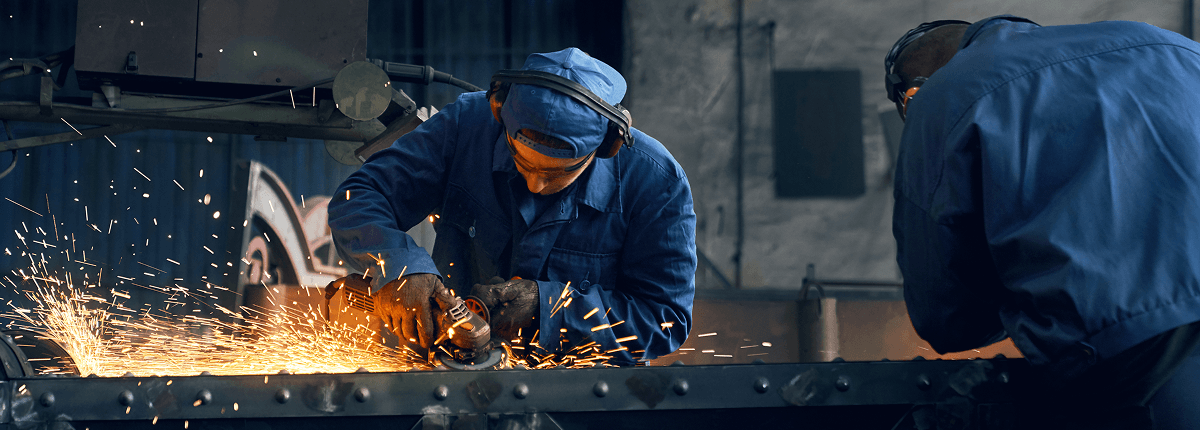

In today’s highly competitive manufacturing environment, maintaining product consistency is no longer optional. Customers expect reliable quality, regulatory standards continue to tighten, and production lines are expected to operate at increasingly higher speeds. Under these conditions, traditional manual inspection methods often struggle to deliver the accuracy, repeatability, and efficiency modern manufacturers require.
Human inspectors remain valuable for certain specialized tasks, but fatigue, subjective judgment, and production pressure can introduce inconsistencies. As a result, more manufacturers are investing in quality inspection machine solutions that provide standardized quality verification, real-time defect detection, and comprehensive production data tracking.
From automotive components and electronics to packaging and industrial equipment, automated inspection technologies help manufacturers reduce waste, improve productivity, and ensure products meet predefined specifications before reaching customers.
Why Automated Inspection Is Becoming the Industry Standard
Quality control has evolved significantly over the past decade. Historically, manufacturers relied on sampling methods, where only a small percentage of products were inspected during production. While this approach reduced inspection costs, it also increased the risk of defective products entering the market.
Modern inspection equipment enables full inline inspection, allowing every product moving through the production line to be analyzed in real time. This shift delivers several operational advantages:
- Consistent inspection standards across all production shifts
- Higher production throughput
- Reduced dependency on manual labor
- Improved traceability and compliance documentation
- Faster identification of process abnormalities
- Better long-term production analytics
For industries where precision and compliance are critical, automated inspection has become an essential part of modern manufacturing strategy.
Core Technologies Behind Modern Inspection Machines
Not all inspection machines operate in the same way. Different manufacturing environments require different sensing technologies depending on the products being inspected and the types of defects that must be detected.
Machine Vision Inspection Technology
Among all industrial inspection methods, machine vision systems are the most widely adopted.
These systems combine industrial cameras, specialized lighting, and advanced image-processing software to analyze products as they move through production lines. The captured images are compared against predefined specifications or reference models, allowing defects to be identified instantly.
Machine vision technology is commonly used for:
- Surface defect detection
- Component presence verification
- Label and barcode inspection
- Assembly validation
- Color consistency analysis
- Packaging quality checks
For example, in automotive manufacturing, machine vision systems can verify whether fasteners, seals, connectors, or other critical components have been installed correctly before products proceed to the next stage of assembly.
Precision Measurement Through 3D Scanning
Some manufacturing applications require dimensional measurements rather than simple visual inspection.
In these situations, 3D laser scanning technology provides highly accurate geometric analysis. By projecting laser lines onto a product’s surface and measuring reflected light, the system creates a detailed three-dimensional profile of the object.
This technology is widely used for:
- Dimensional verification
- Height and depth measurement
- Flatness analysis
- Volume calculation
- Molded part inspection
- Machined component validation
Manufacturers producing precision metal parts, injection-molded plastics, or aerospace components often rely on 3D scanning systems to maintain strict dimensional tolerances.
Internal Defect Detection Using X-Ray Technology
Some defects cannot be identified through external visual inspection alone.
In these cases, X-ray inspection systems provide a non-destructive method for examining internal structures and material integrity.
Typical applications include:
- Detecting internal cracks
- Identifying air voids in castings
- Verifying solder joint quality
- Inspecting sealed electronic assemblies
- Detecting foreign materials
- Evaluating structural consistency
By analyzing density variations inside a product, X-ray systems can identify hidden defects that would otherwise remain undetected until product failure occurs.
Dynamic Weight Verification
Weight control remains one of the most effective methods for ensuring production consistency.
Modern checkweigher systems are integrated directly into conveyor lines and automatically measure the weight of each product while production continues uninterrupted.
Common applications include:
- Missing component detection
- Fill-level verification
- Packaging accuracy control
- Material consistency monitoring
- Compliance verification
Products falling outside predefined weight tolerances can be automatically rejected, preventing non-conforming items from reaching customers.
Critical Factors When Selecting Inspection Equipment
Choosing inspection equipment requires more than comparing specifications or purchase prices. Manufacturers should evaluate how well a system aligns with production requirements and long-term operational goals.
Production Throughput Requirements
An inspection system must be capable of matching or exceeding the speed of the production line.
For example, if a production line outputs 100 units per minute but the inspection system can only process 70 units per minute, inspection becomes a bottleneck that limits overall efficiency.
Key performance indicators include:
- Processing speed
- Camera frame rate
- Sensor response time
- Conveyor synchronization capability
- Data processing performance
Selecting equipment with future production growth in mind can help avoid costly upgrades later.
Inspection Accuracy and Error Rates
Inspection accuracy is often evaluated using two key metrics.
False Reject Rate
A false reject occurs when a good product is incorrectly identified as defective.
Excessive false rejects can lead to:
- Higher material waste
- Increased operating costs
- Reduced production efficiency
False Accept Rate
A false accept occurs when a defective product passes inspection.
Consequences may include:
- Customer complaints
- Product recalls
- Compliance violations
- Brand reputation damage
Modern inspection software should provide adjustable sensitivity settings that allow manufacturers to balance these risks according to operational priorities.
Integration with Smart Manufacturing Systems
Today’s factories increasingly rely on connected production environments and data-driven decision-making.
Inspection equipment should integrate seamlessly with:
- Manufacturing Execution Systems (MES)
- Enterprise Resource Planning (ERP) platforms
- Statistical Process Control (SPC) software
- Industrial IoT infrastructure
Effective integration enables manufacturers to monitor quality trends in real time, identify root causes of defects, and make data-driven process improvements.
This capability is becoming increasingly important as companies pursue broader quality control automation initiatives and Industry 4.0 transformation strategies.
Maintenance and Calibration Best Practices
Even the most advanced inspection technology requires ongoing maintenance to maintain peak performance.
Over time, dust accumulation, sensor drift, lighting degradation, and mechanical wear can affect inspection accuracy.
A structured maintenance program should include:
- Sensor cleaning
- Camera calibration
- Conveyor alignment checks
- Software updates
- Mechanical component inspections
- Scheduled performance validation
Many manufacturers also use certified reference samples containing known defects to verify that inspection systems continue to perform within acceptable accuracy limits.
Conclusion
Investing in automated inspection technology is not simply a quality-control decision—it is a long-term operational strategy. The right inspection system can improve product consistency, reduce waste, strengthen compliance performance, and support future manufacturing growth.
Whether evaluating machine vision, 3D scanning, X-ray inspection, or checkweighing solutions, manufacturers should focus on operational requirements, scalability, integration capability, and lifecycle costs rather than purchase price alone.
By selecting the right technology and implementing proper maintenance practices, manufacturers can build a more reliable, efficient, and competitive production environment while meeting the increasing quality expectations of global markets.
Leave a Reply