
Manufacturing has entered an era where speed, consistency, and product quality are expected to improve simultaneously. Whether producing electronic components, medical devices, automotive parts, or consumer goods, manufacturers face increasing pressure to minimize defects while maintaining high production efficiency. Even a small quality issue can result in product recalls, customer complaints, regulatory penalties, or damage to a company’s reputation.
To meet these growing demands, more manufacturers are replacing manual inspection processes with Automated Inspection Machines. What was once considered an advanced production upgrade has now become an essential part of modern manufacturing. Automated inspection technology enables businesses to improve product quality, reduce operational costs, and collect valuable production data that supports continuous process improvement.
Why Manual Quality Inspection Is Reaching Its Limits
For decades, visual inspection relied heavily on experienced operators. Human inspectors remain valuable for certain applications, but manual inspection has several unavoidable limitations that become increasingly apparent as production volumes grow.
Fatigue, inconsistent judgment, and limited attention spans can all affect inspection accuracy during long production shifts. Even highly trained inspectors may overlook tiny scratches, dimensional variations, contamination, or assembly defects when reviewing thousands of products every day.
Production speed also creates additional challenges. As manufacturing lines become faster, inspection teams often struggle to keep pace without increasing labor costs. Hiring additional inspectors may temporarily improve throughput, but it also raises operational expenses while introducing greater variability between shifts.
For manufacturers operating in industries with strict quality standards, these limitations make manual inspection increasingly difficult to sustain.
How Automated Inspection Machines Improve Quality Control
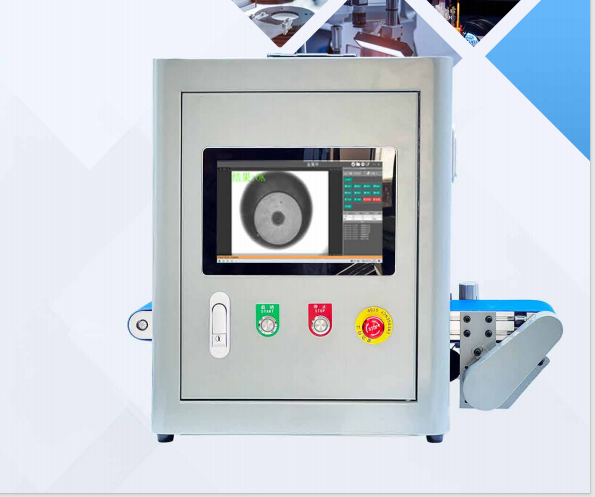
Modern Automated Inspection Machines combine high-speed cameras, precision sensors, lighting systems, and intelligent software to inspect products with exceptional consistency.
Instead of relying on subjective visual judgment, these systems evaluate every product according to predefined quality standards. They can identify surface scratches, missing components, dimensional deviations, color inconsistencies, incorrect labeling, and other manufacturing defects within milliseconds.
One of the greatest advantages of automated inspection systems is consistency. Unlike human operators, automated equipment delivers identical inspection performance regardless of shift length or production volume. Every product is evaluated using the same criteria, reducing variation and improving overall product quality.
Many systems also integrate directly with manufacturing execution systems (MES) and programmable logic controllers (PLC), allowing defective products to be removed automatically without interrupting production.
Machine Vision Is Transforming Manufacturing Inspection
The rapid development of machine vision inspection has significantly expanded the capabilities of automated quality control.
High-resolution industrial cameras capture detailed images of each product while advanced image processing software compares those images against predefined specifications. Multiple cameras can inspect products from different angles simultaneously, allowing manufacturers to identify defects that would be difficult or impossible to detect through manual inspection.
Today’s machine vision technology can inspect products moving at extremely high speeds while maintaining remarkable accuracy. Industries such as electronics manufacturing, semiconductor production, pharmaceutical packaging, food processing, and automotive assembly increasingly rely on vision-based inspection to ensure every product meets strict quality requirements.
Because inspection results are recorded digitally, manufacturers can also establish complete traceability for every production batch, making regulatory compliance significantly easier.
Artificial Intelligence Makes Inspection Smarter
Artificial intelligence has become one of the most important developments in modern quality control.
Traditional rule-based inspection systems work well when defects follow predictable patterns. However, real manufacturing environments often involve subtle variations that are difficult to classify using fixed programming rules.
AI vision inspection systems use deep learning algorithms trained on thousands of product images. Rather than simply comparing measurements against fixed limits, these systems learn the difference between acceptable product variation and actual defects.
As more production data becomes available, AI models continue improving their accuracy. This allows manufacturers to reduce false rejection rates while identifying defects that conventional inspection systems might overlook.
The result is improved production efficiency, fewer unnecessary product rejections, and more reliable quality control across changing production environments.
Data Collection Creates Long-Term Manufacturing Improvements
Beyond defect detection, automated inspection generates valuable production intelligence.
Every inspection cycle produces detailed information about product quality, defect frequency, production trends, and equipment performance. This information helps engineers identify recurring issues before they become expensive manufacturing problems.
For example, if an inspection system detects an increasing number of dimensional deviations, engineers can investigate tooling wear, calibration drift, or machine alignment before significant production losses occur.
This data-driven approach supports predictive maintenance strategies that reduce unexpected downtime while extending equipment life.
Instead of reacting after quality issues occur, manufacturers can proactively improve production stability using real-time inspection data.
Industries Benefiting from Automated Inspection
Demand for quality control automation continues to grow across numerous industries where consistent product quality is essential.
Electronics manufacturers use automated inspection to identify soldering defects, missing components, and PCB assembly errors. Pharmaceutical companies verify packaging accuracy, label placement, and product integrity while complying with strict regulatory requirements.
Food and beverage manufacturers inspect packaging seals, expiration dates, labeling accuracy, and contamination risks before products reach consumers. Automotive suppliers rely on automated inspection to verify dimensions, weld quality, surface finish, and assembly precision across thousands of components every day.
Regardless of industry, manufacturers share the same objective: delivering consistent quality while reducing waste and increasing production efficiency.
Choosing the Right Automated Inspection Solution
Selecting the appropriate inspection equipment requires careful evaluation of production requirements.
Manufacturers should consider inspection speed, camera resolution, lighting technology, AI capabilities, software compatibility, maintenance requirements, and future scalability before investing in new equipment.
Integration with existing production lines is equally important. A well-designed inspection solution should communicate seamlessly with factory automation systems, allowing manufacturers to monitor quality in real time while minimizing disruption during implementation.
Working with experienced suppliers also provides access to technical support, software updates, and customized inspection solutions designed for specific manufacturing environments.
Investing in the Future of Manufacturing Quality
As manufacturing becomes increasingly automated, inspection technology is evolving from a quality assurance tool into a strategic business asset.
Modern Automated Inspection Machines not only improve defect detection but also help manufacturers reduce labor costs, increase production throughput, strengthen regulatory compliance, and build greater confidence in product quality. Combined with machine vision inspection, artificial intelligence, and real-time production analytics, automated inspection provides the consistency and scalability that modern manufacturing demands.
Businesses investing in advanced industrial inspection equipment today are positioning themselves for stronger operational performance, improved customer satisfaction, and sustainable growth in an increasingly competitive global market.
Leave a Reply