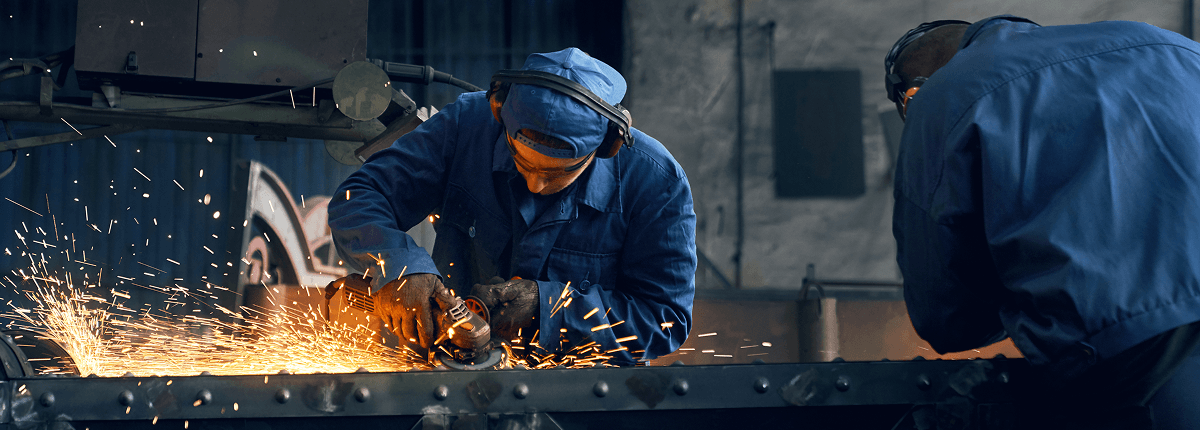

As manufacturing tolerances become increasingly stringent, traditional sampling inspections are no longer sufficient to guarantee consistent product quality. Modern production facilities are adopting Automated Inspection Machines to achieve continuous quality verification, reduce human error, and generate real-time production intelligence.
From electronics assembly and automotive manufacturing to precision machining and packaging industries, automated inspection systems have become a critical component of digital quality management. Their value extends beyond defect detection; they also provide traceable production data that supports process optimization and regulatory compliance.
How Automated Inspection Machines Work
An automated inspection system combines optical hardware, controlled lighting environments, and image-processing software to evaluate products against predefined quality standards.
The inspection process generally consists of four stages:
- Image acquisition
- Feature extraction
- Defect classification
- Pass/fail decision making
The overall accuracy of the system depends heavily on the interaction between lighting conditions, sensor capabilities, and algorithm performance.
The Importance of Lighting Configuration
In machine vision applications, lighting often has a greater impact on inspection accuracy than camera resolution alone.
Different inspection objectives require different illumination techniques:
Coaxial Lighting
Coaxial lighting projects illumination along the same optical path as the camera. It is commonly used for inspecting polished metal surfaces, glass panels, semiconductor wafers, and other highly reflective materials.
This method improves visibility of scratches, dents, and subtle surface inconsistencies that may otherwise be difficult to detect.
Dark-Field Lighting
Dark-field illumination introduces light at a shallow angle relative to the inspected surface.
The technique is particularly effective for identifying:
- Surface contamination
- Fine cracks
- Burrs
- Raised defects
- Edge irregularities
Defects appear significantly brighter than the surrounding area, improving detection sensitivity.
Backlighting
Backlighting positions the light source behind the inspected component.
Manufacturers frequently use this method when measuring:
- External dimensions
- Hole diameters
- Cutout positions
- Part profiles
- Assembly alignment
Because only the silhouette is analyzed, dimensional measurements can often achieve extremely high repeatability.
A common best practice is to utilize enclosed inspection stations that isolate the system from changing factory lighting conditions, ensuring long-term measurement stability.
Camera Technologies Used in Automated Inspection
The camera serves as the primary data collection device within an inspection system.
Area Scan Cameras
Area scan cameras capture an entire image frame in a single exposure.
Typical applications include:
- PCB inspection
- Packaging verification
- Label inspection
- Assembly validation
They are generally preferred when parts remain stationary during image acquisition.
Line Scan Cameras
Line scan cameras capture one row of pixels at a time while the product moves continuously.
They are widely used in:
- Steel production
- Paper manufacturing
- Textile inspection
- High-speed web processing
For long or continuously moving materials, line scan technology can provide significantly higher inspection efficiency.
Core Machine Vision Algorithms
Once an image is captured, software algorithms determine whether the product meets predefined quality requirements.
Pattern Matching
Pattern Matching compares the captured image with a reference model representing a qualified product.
It is frequently used for:
- Component presence verification
- Orientation checking
- Assembly confirmation
- Packaging validation
Blob Analysis
Blob Analysis identifies connected pixel regions sharing similar characteristics.
Manufacturers commonly apply it to:
- Particle detection
- Surface contamination analysis
- Object counting
- Missing feature identification
Edge Detection
Edge Detection measures transitions between contrasting pixel regions.
This technique is particularly important for:
- Precision dimensional inspection
- Tolerance verification
- Gap measurement
- Position accuracy analysis
In industries where micron-level precision is required, edge detection often forms the foundation of measurement systems.
Performance Metrics That Matter
Evaluating an inspection machine involves more than measuring inspection speed.
Two operational metrics are especially important.
False Acceptance Rate (FAR)
False Acceptance Rate (FAR) represents the percentage of defective products incorrectly classified as acceptable.
A high FAR can result in:
- Customer complaints
- Product recalls
- Warranty claims
- Regulatory compliance issues
For safety-critical sectors such as automotive, aerospace, and medical manufacturing, minimizing FAR is often the highest priority.
False Rejection Rate (FRR)
False Rejection Rate (FRR) measures how often acceptable products are incorrectly rejected.
Excessive FRR can create:
- Increased scrap rates
- Production inefficiencies
- Additional manual inspections
- Higher operating costs
Successful system calibration requires balancing FAR and FRR according to the risk tolerance of the manufacturing process.
Comparing Major Automated Inspection Technologies
| Technology | Primary Principle | Typical Applications | Key Limitation |
|---|---|---|---|
| AOI (Automated Optical Inspection) | Visible-light imaging | Surface defects, assembly verification, dimensional inspection | Cannot inspect hidden structures |
| AXI (Automated X-Ray Inspection) | X-ray penetration imaging | Solder joints, internal voids, hidden defects | Higher acquisition and operating costs |
| Laser Profilometry | 3D surface measurement | Height analysis, volume measurement, surface profiling | Sensitive to reflective material variations |
Selecting the correct technology depends on defect type, production speed, and inspection requirements rather than choosing the most advanced solution available.
Integration with Smart Manufacturing Systems
Modern inspection equipment increasingly functions as part of a connected manufacturing ecosystem.
Many manufacturers integrate inspection systems with:
- Manufacturing Execution Systems (MES)
- Industrial IoT Platforms
- OPC UA Communication Networks
- Modbus Industrial Protocols
- Statistical Process Control (SPC) Systems
By transmitting inspection results directly into production databases, facilities can identify process drift, monitor equipment performance, and implement predictive quality control strategies.
This transition transforms inspection machines from standalone quality checkpoints into real-time production intelligence tools.
Selecting the Right Inspection Machine
When evaluating a new inspection solution, manufacturers should consider several factors:
- Target defect characteristics
- Required measurement precision
- Production throughput
- Environmental conditions
- Software compatibility
- Integration requirements
- Future scalability
A system optimized for actual production requirements often delivers better long-term value than an overly complex platform with capabilities that remain unused.
Conclusion
As production environments continue moving toward Industry 4.0 and data-driven manufacturing, Automated Inspection Machines have become essential tools for maintaining consistent quality and improving operational efficiency.
By combining optimized lighting, advanced imaging sensors, intelligent algorithms, and seamless factory integration, these systems help manufacturers reduce defects, improve traceability, and establish a more predictable quality control process. Organizations that carefully evaluate performance metrics such as FAR, FRR, inspection accuracy, and system interoperability are better positioned to achieve sustainable quality improvements across their production operations.
Leave a Reply