
Why AI-Based Visual Inspection Is Reshaping Industrial Quality Control
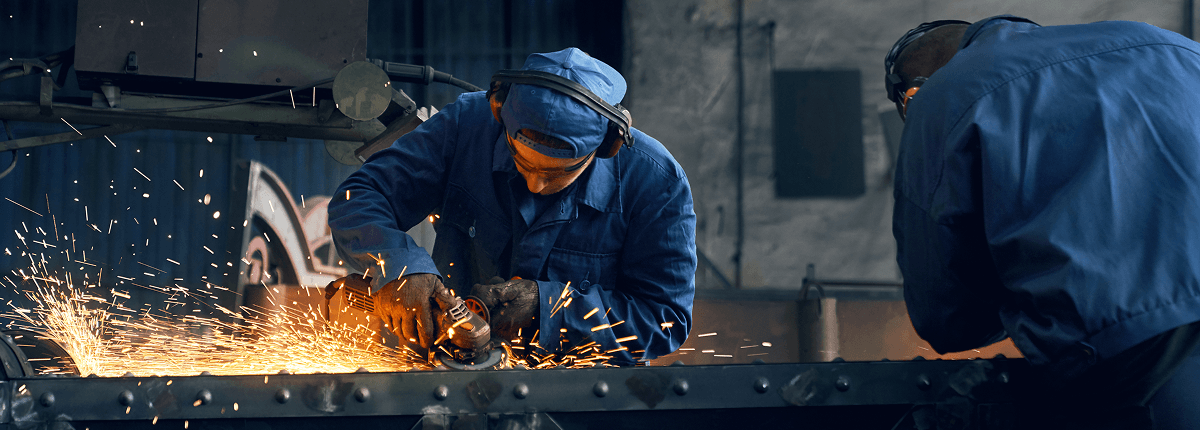
Manufacturers are under constant pressure to increase throughput while maintaining increasingly strict quality standards. As production volumes expand and product designs become more complex, traditional inspection methods often struggle to deliver the consistency required in modern manufacturing environments.
For decades, factories relied heavily on human inspectors to identify scratches, dimensional deviations, assembly errors, and cosmetic defects. While experienced operators can recognize many quality issues, manual inspection introduces unavoidable variability. Fatigue, inconsistent judgment, and limited processing speed can all affect inspection accuracy over time.
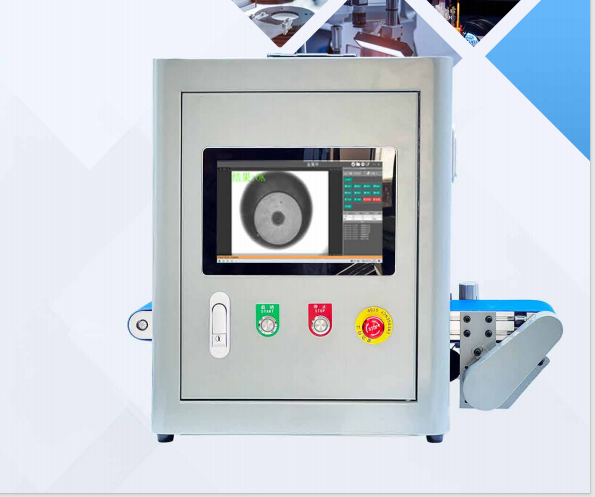
To address these challenges, manufacturers are adopting AI-Driven Visual Inspection Systems that combine industrial imaging hardware, machine vision software, and deep learning algorithms. These technologies enable production facilities to perform real-time defect detection with a level of speed and consistency that manual inspection cannot achieve.
Rather than relying solely on predefined rules, modern inspection platforms can learn from production data and continuously improve detection performance, making them particularly valuable in industries where product appearance and surface quality play a critical role.
The Challenges of Traditional Rule-Based Machine Vision
Conventional machine vision systems operate using deterministic programming.
In a rule-based environment, engineers establish exact inspection criteria such as:
- Pixel dimensions
- Contrast thresholds
- Edge distances
- Shape tolerances
- Color variation limits
This approach performs exceptionally well when inspecting features with clearly defined measurements. For example, verifying hole diameters, confirming component presence, or measuring machined dimensions can often be accomplished with high accuracy.
However, manufacturing environments rarely remain perfectly consistent.
Natural material variation, changing surface textures, reflective properties, and minor environmental fluctuations can create inspection scenarios that are difficult to manage using fixed rules alone.
Products such as:
- Brushed metal components
- Wood-based materials
- Composite surfaces
- Agricultural products
- Painted assemblies
often exhibit acceptable visual variations that traditional algorithms may incorrectly classify as defects.
As a result, manufacturers frequently experience elevated false rejection rates, leading to unnecessary waste, rework costs, and reduced production efficiency.
How Deep Learning Improves Defect Detection Accuracy
The emergence of AI Vision Inspection technology has significantly expanded the capabilities of machine vision systems.
Instead of manually defining every defect characteristic, deep learning models analyze large collections of annotated production images and identify patterns automatically.
A typical implementation involves training a neural network using thousands of examples that include:
- Acceptable products
- Surface scratches
- Dents
- Missing components
- Coating defects
- Assembly errors
- Alignment issues
Through repeated analysis, the model develops an understanding of normal product variation versus actual quality concerns.
This enables the system to detect defects that would be difficult to describe through traditional programming methods.
Benefits commonly include:
- Higher defect detection rates
- Lower false reject rates
- Improved inspection flexibility
- Faster deployment for new products
- Better adaptation to production variability
For manufacturers dealing with complex surfaces or cosmetic inspection requirements, deep learning often delivers a measurable improvement over conventional machine vision approaches.
The Role of Edge Computing in High-Speed Inspection
Inspection accuracy alone is not enough. Production environments also require immediate response times.
Modern Machine Vision Systems generate large volumes of image data from high-resolution industrial cameras. Sending all raw images to a centralized cloud server for processing can introduce delays that are unacceptable on fast-moving production lines.
To solve this challenge, many manufacturers deploy Edge Computing for Machine Vision.
In this architecture, image processing occurs directly within:
- Smart cameras
- Industrial PCs
- Embedded edge devices
Rather than transmitting full image files across the network, the system processes data locally and generates pass/fail decisions within milliseconds.
Once inspection decisions are completed, only essential information is transmitted to factory management systems, including:
- Defect classifications
- Production timestamps
- Batch information
- Statistical performance metrics
This approach minimizes latency while supporting real-time quality control.
Integrating Inspection Data with Smart Factory Infrastructure
As manufacturers continue moving toward Industry 4.0 strategies, inspection systems are becoming increasingly connected to broader factory ecosystems.
Modern Automated Visual Inspection Systems can communicate directly with:
- Manufacturing Execution Systems (MES)
- Enterprise Resource Planning (ERP) platforms
- Statistical Process Control (SPC) software
- Industrial IoT networks
This connectivity transforms inspection stations into valuable sources of production intelligence.
Rather than simply identifying defective products, the system continuously generates data that can reveal:
- Process instability
- Equipment wear
- Material quality fluctuations
- Recurring defect patterns
- Production bottlenecks
Engineering teams can then use this information to implement corrective actions before quality issues affect larger production volumes.
Evaluating the Return on Investment of AI Inspection Systems
The decision to implement automated inspection technology typically involves evaluating both direct and indirect financial benefits.
| Evaluation Area | Manual Inspection | AI-Powered Visual Inspection |
|---|---|---|
| Labor Requirements | Multiple operators across shifts | Minimal operator intervention |
| Defect Detection Consistency | Operator dependent | Highly repeatable |
| Scrap Reduction | Delayed detection increases waste | Immediate detection limits material loss |
| Production Throughput | Limited by human inspection speed | Matches high-speed automation |
| Data Traceability | Manual records | Automated digital archives |
| Regulatory Compliance | Documentation-intensive | Automated audit trails |
While hardware investment represents an initial capital expense, many manufacturers achieve long-term savings through reduced labor dependency, lower scrap rates, and improved production efficiency.
Best Practices for Deploying AI Visual Inspection Systems
Successful implementation requires careful planning and validation.
Optical Feasibility Testing
Before selecting hardware, engineers should evaluate sample products under different lighting configurations to determine the optimal imaging conditions.
This process helps identify the most effective combination of:
- Camera resolution
- Lens selection
- Lighting geometry
- Inspection angle
Hardware Integration
After validation, the inspection platform must be synchronized with production equipment.
Key considerations include:
- Encoder synchronization
- Trigger timing accuracy
- Conveyor speed matching
- Reject mechanism response time
AI Model Development
For deep learning applications, model performance depends heavily on training data quality.
Manufacturers should collect representative images that include both acceptable products and realistic defect variations to improve model accuracy.
Continuous Performance Optimization
Inspection systems should be monitored continuously after deployment.
By reviewing false positives and false negatives, engineering teams can refine model performance and maintain long-term inspection reliability.
Preparing for the Future of Intelligent Quality Assurance
AI-powered inspection technology is rapidly becoming a foundational component of modern manufacturing operations. As deep learning algorithms, edge computing platforms, and industrial networking technologies continue to advance, quality control systems are evolving from simple inspection tools into intelligent production optimization platforms.
Organizations investing in Industrial Machine Vision Solutions, Automated Defect Detection, and AI Quality Inspection Systems are not only improving product quality but also building more resilient and data-driven manufacturing processes.
Selecting the right combination of hardware, software, and integration expertise is essential for achieving long-term operational success, reducing waste, and maintaining competitive production performance in increasingly demanding global markets.
Leave a Reply