
Why Automated Visual Inspection Has Become Essential in Modern Manufacturing
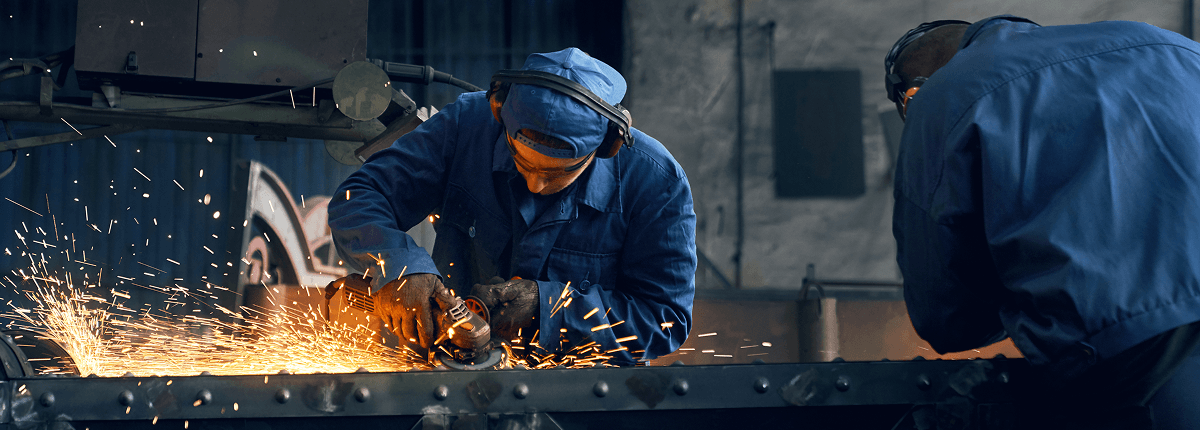
Manufacturers today face increasing pressure to deliver consistent product quality while maintaining high production throughput. As production volumes grow and component tolerances become tighter, traditional manual inspection methods struggle to keep pace with modern quality requirements.
Human inspectors remain valuable for subjective assessments and process oversight. However, fatigue, inconsistent judgment, and limited inspection speed can introduce variability into quality control operations. Even experienced operators may overlook microscopic defects after prolonged inspection cycles.
To overcome these limitations, manufacturers across automotive, electronics, pharmaceutical, packaging, and precision engineering sectors are investing in Automated Visual Inspection Systems. These solutions combine advanced optics, industrial cameras, controlled illumination, and intelligent software algorithms to perform rapid, non-contact inspections with repeatable accuracy.
By converting visual characteristics into measurable digital data, machine vision systems enable manufacturers to identify defects, verify dimensions, and maintain production consistency at a scale that manual inspection cannot achieve.
Core Components of an Automated Visual Inspection System
A modern inspection platform is not simply a camera connected to software. It is an integrated ecosystem where hardware and software must operate in synchronization.
Industrial Lighting Systems
Lighting is often the most critical factor affecting inspection performance.
The objective is to create sufficient contrast between the target feature and its surrounding environment while eliminating unwanted reflections and shadows.
Different inspection applications require different illumination strategies:
- Backlighting is commonly used for dimensional measurement and profile analysis.
- Coaxial lighting improves visibility on highly reflective surfaces.
- Ring lights help reveal scratches, dents, and surface irregularities.
- Structured lighting enhances feature extraction on complex geometries.
Proper lighting design frequently determines whether an inspection system achieves reliable defect detection or produces excessive false alarms.
Industrial Cameras and Optical Components
The imaging subsystem captures visual information that forms the basis of all inspection decisions.
Manufacturers generally choose between:
- Line-scan cameras for continuous materials such as paper, textiles, films, and metal sheets.
- Area-scan cameras for discrete components moving through assembly lines.
To maintain measurement accuracy, cameras are paired with precision industrial lenses that minimize optical distortion and ensure accurate pixel-to-millimeter conversion.
For applications requiring micron-level precision, camera resolution, sensor sensitivity, and lens quality become critical engineering considerations.
Vision Processing Software
Once an image is captured, it is transferred to a processing platform through industrial communication protocols such as GigE Vision or Camera Link.
The software then performs several analytical steps:
- Image enhancement and noise reduction
- Contrast optimization
- Region-of-interest extraction
- Feature detection
- Dimensional measurement
- Pattern recognition
- Pass/fail decision making
Modern Machine Vision Software can process thousands of images per minute while simultaneously recording inspection data for traceability and process improvement.
Industrial Applications of Automated Vision Inspection
One reason machine vision technology has achieved widespread adoption is its versatility across multiple industries.
Automotive Manufacturing
Automotive production facilities utilize Automated Optical Inspection (AOI) and machine vision systems to verify:
- Weld quality
- Component positioning
- Fastener presence
- Surface finish integrity
- Paint defect detection
Vision-guided robotics also rely on inspection cameras to improve assembly precision and reduce production errors.
Electronics and Semiconductor Production
Electronic components continue to shrink while circuit complexity increases.
As a result, visual inspection has become indispensable for:
- PCB assembly verification
- Solder joint inspection
- Component orientation validation
- Wafer defect detection
- Semiconductor contamination analysis
Even microscopic defects can impact product reliability, making automated inspection a critical quality control layer.
Pharmaceutical and Medical Device Manufacturing
In regulated industries, inspection accuracy directly influences product safety and compliance.
Vision systems are commonly used to verify:
- Packaging seal integrity
- Tablet count verification
- Barcode readability
- Label accuracy
- Vial crack detection
- Expiration date validation
Automated inspection helps manufacturers maintain compliance while reducing the risk of product recalls.
Comparing Manual Inspection and Automated Vision Systems
Organizations evaluating factory automation often compare manual quality control against automated inspection technologies.
| Operational Factor | Manual Inspection | Automated Vision Inspection |
|---|---|---|
| Inspection Speed | Typically 1–2 parts per second | Dozens or hundreds of parts per second |
| Consistency | Varies between operators | Highly repeatable |
| Measurement Accuracy | Subjective evaluation | Calibrated digital measurement |
| Data Collection | Manual reporting | Real-time digital records |
| Defect Traceability | Limited historical tracking | Full image and defect archive |
| Environmental Adaptability | Human limitations apply | Suitable for harsh industrial environments |
Beyond speed improvements, the greatest advantage often lies in data visibility. Every inspection event can be recorded, analyzed, and used to identify process trends before quality issues escalate.
Emerging Technologies Shaping the Future of Machine Vision
The next generation of inspection systems extends beyond traditional rule-based image processing.
Deep Learning-Based Defect Detection
Conventional machine vision systems rely on predefined inspection rules.
While effective for dimensional measurement, these approaches can struggle with highly variable cosmetic defects.
Modern AI Vision Inspection platforms utilize deep learning models trained on large image datasets. Rather than following rigid rules, these systems learn the visual characteristics of acceptable and defective products.
This approach significantly improves performance when detecting:
- Surface scratches
- Material inconsistencies
- Cosmetic blemishes
- Texture variations
- Complex assembly defects
3D Vision Inspection
Traditional 2D imaging relies heavily on color and contrast differences.
When defects exhibit minimal visual contrast, 3D technologies provide an alternative solution.
Using structured light, laser triangulation, or time-of-flight sensors, 3D Vision Inspection Systems generate detailed surface profiles that enable precise measurement of:
- Height
- Depth
- Flatness
- Coplanarity
- Volume
This capability is particularly valuable in electronics manufacturing, packaging inspection, and precision engineering.
Edge Computing and Smart Factories
As camera resolutions and inspection speeds increase, data volume grows exponentially.
To minimize latency, manufacturers increasingly deploy Edge Computing for Machine Vision, allowing image processing to occur directly at the inspection station rather than transferring raw image data to centralized servers.
Benefits include:
- Faster response times
- Reduced network congestion
- Improved system reliability
- Greater scalability for Industry 4.0 environments
Key Considerations Before Implementing an Automated Inspection System
Successful deployment requires more than selecting a camera and software package.
Engineering teams should evaluate:
- Product geometry and material characteristics
- Ambient lighting conditions
- Conveyor speed and synchronization requirements
- Mechanical vibration levels
- Inspection accuracy targets
- Rejection mechanism response times
- Integration with ERP and MES platforms
A thorough feasibility study often identifies potential imaging challenges before system installation, reducing implementation risks and accelerating return on investment.
For manufacturers seeking long-term quality improvements, selecting a supplier with expertise in optical engineering, industrial automation, and machine vision integration is equally important as choosing the inspection equipment itself.
Conclusion
Automated visual inspection systems have evolved from optional quality-control tools into essential infrastructure for modern manufacturing operations. By combining advanced optics, intelligent software, and high-speed data processing, these systems deliver consistent inspection accuracy that supports both productivity and product quality objectives.
As technologies such as deep learning, 3D imaging, and edge computing continue to mature, machine vision solutions will play an increasingly important role in achieving higher levels of manufacturing efficiency, traceability, and operational excellence.
Leave a Reply