

In today’s manufacturing environment, quality consistency is no longer simply a competitive advantage—it has become a prerequisite for sustainable growth. Whether operating a large-scale industrial production facility or a specialized machining workshop, manufacturers face the same operational challenges: increasing labor costs, tighter customer quality requirements, and the limitations of manual inspection processes.
As production speeds continue to rise and defect tolerances become increasingly stringent, traditional visual inspection methods often struggle to deliver consistent results. Consequently, manufacturers across industries are investing in automated quality control technologies to improve production efficiency, reduce scrap rates, and protect brand reputation.
Among these technologies, Automated Visual Inspection (AVI) systems have emerged as one of the most effective solutions for achieving standardized, data-driven quality assurance.
This guide explores how machine vision inspection systems work, the challenges they solve, and the key factors buyers should consider when selecting inspection equipment for their production environments.
Why Manual Quality Inspection Creates Production Bottlenecks
Before evaluating machine vision technologies, it is important to understand the operational limitations associated with traditional inspection methods.
Although human inspectors remain valuable in many manufacturing processes, manual inspection introduces several unavoidable variables that can negatively impact product quality and production efficiency.
Inspection Fatigue and Inconsistent Decision-Making
Continuous monitoring of fast-moving production lines places significant strain on operators.
Over time, visual fatigue can reduce concentration levels and lead to inconsistent judgment criteria between shifts, departments, or individual inspectors. As a result, defect detection accuracy may fluctuate throughout the production cycle.
Difficulty Detecting Micro-Level Defects
Many modern products require inspection at a level beyond normal human visual capability.
Examples include:
- Micro-scratches on polished surfaces
- Hairline cracks in metal components
- Soldering defects on electronic assemblies
- Minor dimensional deviations
- Surface contamination and discoloration
In high-speed production environments, making accurate pass/fail decisions within seconds becomes increasingly difficult without automated assistance.
Limited Data Collection and Process Visibility
One of the most significant disadvantages of manual inspection is the lack of structured production data.
Without digital records of detected defects, manufacturers often struggle to identify:
- Root causes of recurring defects
- Production trends
- Equipment performance issues
- Process optimization opportunities
Modern inspection systems transform quality control from a subjective activity into a measurable and traceable manufacturing process.
Understanding the Machine Vision Inspection Workflow
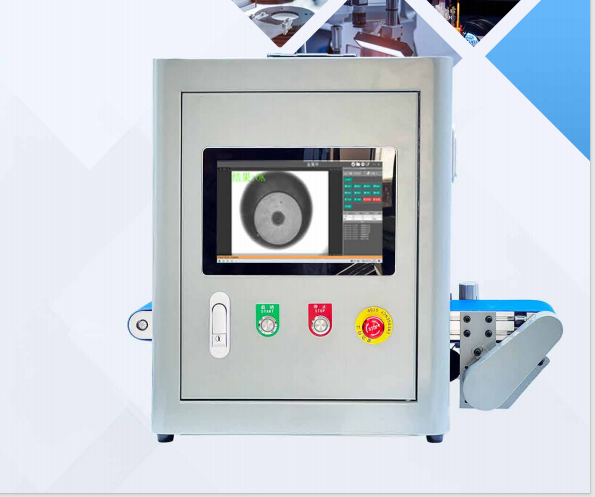
A machine vision inspection system functions as an integrated combination of optical hardware, intelligent software, and industrial automation controls.
The complete inspection process typically consists of three interconnected stages.
1. Image Acquisition: Capturing Product Data
The inspection cycle begins with industrial imaging hardware.
Products moving along the production line are captured using high-speed cameras combined with specialized lighting systems designed to highlight specific surface characteristics.
Common illumination technologies include:
- White LED lighting
- Infrared lighting
- Ultraviolet illumination
- Low-angle directional lighting
- Backlighting systems
Lighting configuration is often as important as camera resolution because proper illumination determines whether subtle defects become visible to the imaging sensor.
For manufacturers evaluating quality control upgrades, industrial machine vision cameras remain one of the most critical system components.
2. Image Processing and Defect Analysis
Once the image is captured, inspection software begins processing the visual data.
Initial processing typically includes:
- Noise reduction
- Contrast enhancement
- Edge extraction
- Grayscale conversion
The system then analyzes product characteristics using either traditional machine vision algorithms or advanced artificial intelligence models.
Modern AI defect detection platforms powered by deep learning can identify complex defects that are difficult to define using conventional rule-based methods.
These systems are capable of recognizing:
- Irregular scratches
- Variable contamination patterns
- Surface texture abnormalities
- Assembly inconsistencies
- Cosmetic defects
By learning from real production data, AI-based inspection systems continue improving detection accuracy over time.
3. Automated Decision-Making and Product Rejection
After completing the analysis, the inspection software compares measured values against predefined tolerance limits.
If a defect exceeds acceptable specifications, the system immediately communicates with downstream automation equipment through industrial protocols such as:
- Ethernet/IP
- Modbus TCP
- RS232
- Profinet
A PLC then activates an automated rejection mechanism, which may include:
- Pneumatic air ejectors
- Diverter gates
- Robotic sorting systems
- Automated conveyor controls
This closed-loop inspection process eliminates subjective decision-making and ensures consistent product quality across all production shifts.
Key Criteria for Selecting an Automated Inspection System
When evaluating inspection equipment, buyers should focus on how well the system aligns with actual production requirements rather than relying solely on technical marketing specifications.
The following four evaluation categories are particularly important.
| Evaluation Category | Technical Considerations | Operational Impact |
|---|---|---|
| Optical Resolution | Camera megapixels, lens quality, field of view | Determines smallest detectable defect size |
| Processing Speed | Frames per second (FPS), inspection cycle time | Prevents production bottlenecks |
| Inspection Methodology | Rule-based vision vs. AI-powered analysis | Influences flexibility and defect recognition capability |
| Integration Capability | PLC compatibility, MES/ERP connectivity | Supports factory-wide automation and traceability |
Manufacturers should always match inspection capabilities to the actual tolerance requirements of their products rather than selecting the highest specification equipment available.
Industry Applications of Automated Visual Inspection
Machine vision technology has become a critical quality assurance tool across a wide range of manufacturing sectors.
Precision Fasteners and Metal Components
High-volume production of screws, nuts, bearings, and machined components requires consistent dimensional accuracy.
Automated inspection systems perform 360-degree evaluations to detect:
- Missing threads
- Surface corrosion
- Coating defects
- Head deformation
- Dimensional nonconformities
The implementation of surface defect detection systems significantly reduces the risk of defective hardware reaching customers.
Pharmaceutical and Food Packaging
Regulated industries demand exceptionally high inspection standards.
Machine vision systems are commonly used to verify:
- Missing tablets in blister packs
- Fill-level consistency
- Packaging seal integrity
- Expiration date readability
- Batch code accuracy
Integrated OCR inspection systems enable manufacturers to automatically validate printed information and maintain regulatory compliance.
Consumer Electronics and EV Manufacturing
Electronic devices and electric vehicle components often contain highly reflective surfaces and complex geometries.
Inspection systems in these industries are designed to identify:
- Micro-scratches on housings
- PCB assembly defects
- Connector alignment issues
- Battery cell manufacturing defects
- Surface contamination
Advanced multi-angle illumination and deep learning algorithms help manufacturers maintain strict quality standards while supporting large-scale production volumes.
The Business Value of Data-Driven Quality Control
The return on investment of automated visual inspection extends far beyond labor savings.
The most significant benefit is the ability to establish a standardized quality control framework capable of delivering consistent results regardless of production volume or staffing conditions.
Key business advantages include:
- Reduced scrap and rework costs
- Lower customer return rates
- Improved production yield
- Enhanced product consistency
- Increased manufacturing efficiency
- Better process traceability
- Stronger brand reputation
By continuously collecting inspection data, manufacturers gain actionable insights that help engineering teams optimize upstream production processes and reduce future defect generation.
Future Trends: AI Vision and Smart Manufacturing Integration
As Industry 4.0 initiatives continue expanding, machine vision systems are becoming increasingly intelligent and interconnected.
Emerging technologies such as:
- Deep learning inspection software
- Edge AI machine vision
- Predictive quality analytics
- Real-time production monitoring
- Digital manufacturing platforms
are enabling manufacturers to move beyond simple defect detection and toward proactive quality management.
Rather than merely identifying defective products, next-generation inspection systems help manufacturers predict production issues before they occur, further improving operational efficiency and reducing waste.
Conclusion
Automated visual inspection has evolved into a foundational technology for modern manufacturing quality control.
By combining advanced imaging hardware, intelligent defect analysis software, and automated process control, manufacturers can achieve higher production yields, improve product consistency, and reduce operational costs.
Whether for precision machining, consumer electronics, automotive components, pharmaceutical packaging, or food production, selecting the right inspection system is a strategic investment that directly impacts quality performance and long-term competitiveness.
Organizations evaluating machine vision solutions should prioritize inspection accuracy, scalability, integration capability, and future AI readiness to maximize the value of their quality control infrastructure.
Leave a Reply