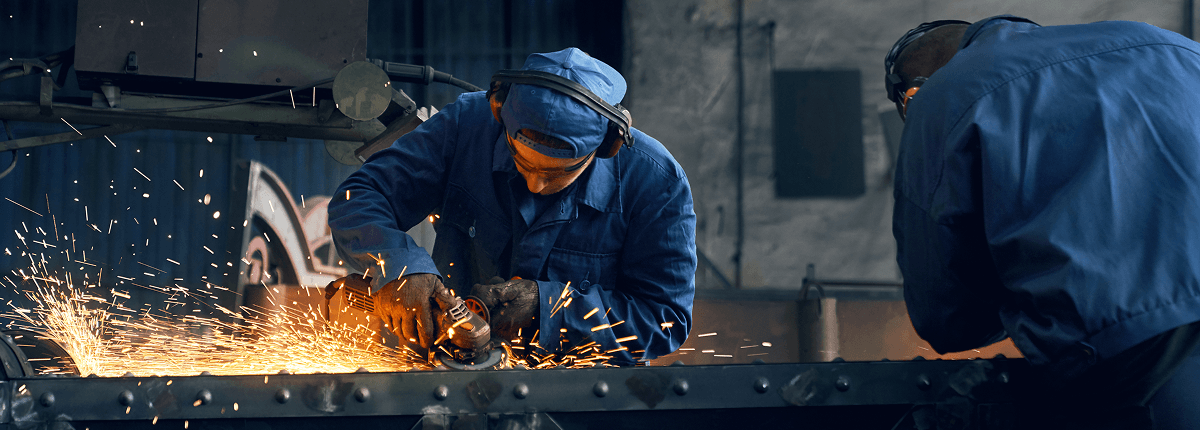

In today’s competitive manufacturing environment, product quality is no longer measured solely by production volume. Consistency, traceability, and defect prevention have become critical factors influencing profitability and customer satisfaction. As manufacturers pursue higher precision and lower defect rates, traditional manual inspection methods are increasingly unable to keep pace with modern production requirements.
Human inspectors remain vulnerable to fatigue, inconsistent judgment, and labor shortages, particularly in high-speed production environments. As a result, Automated Visual Inspection (AVI) systems have evolved from optional productivity tools into essential infrastructure for quality assurance across industrial manufacturing sectors.
From multinational production facilities to small and medium-sized machining workshops, companies are investing in machine vision technologies to reduce operational costs, improve yield rates, and prevent defective products from entering the supply chain. Understanding how automated surface defect detection works is now a strategic advantage for manufacturers seeking to modernize their quality control processes.
Understanding the Fundamentals of Automated Visual Inspection
At its core, automated visual inspection combines optics, imaging hardware, artificial intelligence, and industrial automation to evaluate product surfaces with exceptional speed and accuracy.
The inspection process typically follows four key stages:
- Image Acquisition
- Feature Extraction
- Defect Analysis
- Automated Response
As products move through a production line, industrial cameras capture high-resolution images in real time. Advanced software then compares captured images against predefined quality standards or AI-trained reference models.
Within milliseconds, the system can identify:
- Surface scratches
- Cracks
- Dents
- Contamination
- Missing components
- Dimensional deviations
- Printing and labeling errors
This rapid decision-making capability allows manufacturers to maintain consistent product quality while significantly reducing inspection costs.
The Four Core Components of a Machine Vision Inspection System
Achieving reliable defect detection requires a combination of specialized hardware and intelligent software. Modern inspection systems are generally built around four essential components.
1. Industrial Cameras and Precision Optics
Industrial cameras serve as the visual sensing element of the inspection platform.
Depending on production speed and inspection requirements, manufacturers may deploy:
- Area-scan cameras for stationary or slower-moving products
- Line-scan cameras for continuous web inspection and high-speed production lines
Lens quality plays a crucial role in determining detection capability. High-performance optical systems can identify defects at micron-level precision, making them suitable for electronics, semiconductor manufacturing, and precision machining applications.
Industrial machine vision cameras remain one of the most critical investments when designing a reliable inspection system.
2. Customized Industrial Lighting Systems
Lighting is often the deciding factor between successful and unsuccessful defect detection.
Proper illumination enhances surface features while minimizing environmental noise and reflections.
Common lighting configurations include:
Coaxial Lighting
Ideal for highly reflective materials such as polished metal, glass, and electronic components. It effectively reveals fine scratches and micro-defects.
Low-Angle Ring Lighting
Used to emphasize shallow dents, embossed markings, surface textures, and machining imperfections by creating controlled shadow contrast.
Backlighting
Frequently applied for dimensional measurement, edge detection, and verification of holes, slots, and transparent components.
Many machine vision engineers consider industrial lighting systems equally important as camera specifications when evaluating inspection performance.
3. AI-Powered Image Processing Software
The software layer functions as the analytical brain of the inspection platform.
Traditional machine vision systems relied heavily on predefined rules such as:
- Contrast thresholds
- Pixel counting
- Edge detection algorithms
While effective for controlled environments, rule-based systems often struggle when product appearance varies.
Today’s manufacturers increasingly deploy AI defect detection solutions powered by deep learning and convolutional neural networks (CNNs). These technologies can learn complex defect patterns and adapt to variable production conditions without extensive manual programming.
Benefits include:
- Higher detection accuracy
- Reduced false rejection rates
- Faster deployment for new products
- Improved adaptability to changing production environments
4. Automated Sorting and Process Control
Once a defect is identified, the inspection software communicates directly with a PLC (Programmable Logic Controller) or manufacturing execution system.
The response may trigger:
- Pneumatic reject mechanisms
- Conveyor diverters
- Robotic pick-and-place systems
- Automated production alerts
This closed-loop process ensures defective products are removed immediately, preventing downstream processing costs and protecting overall production efficiency.
Key Applications of Surface Defect Detection Across Industries
Different industries maintain different quality standards, but the value of automated inspection remains universal.
Electronics and Semiconductor Manufacturing
Electronic components often contain microscopic features that cannot be reliably inspected by human operators.
Machine vision systems are widely used for:
- PCB inspection
- Solder joint verification
- Component placement validation
- Semiconductor packaging inspection
Even minor defects such as cold solder joints or missing micro-components can cause complete device failure.
For this reason, AOI inspection systems have become standard equipment throughout electronics manufacturing facilities worldwide.
Automotive and Precision Metal Manufacturing
Automotive parts must meet strict safety and performance standards.
Inspection systems are commonly deployed to identify:
- Casting porosity
- Surface cracks
- Machining defects
- Dimensional inaccuracies
- Coating imperfections
In the rapidly growing electric vehicle sector, automated inspection also plays a vital role in battery cell manufacturing and insulation verification.
As manufacturers increase production volumes, surface defect detection systems help maintain consistent quality while reducing warranty risks.
Plastic Injection Molding and Consumer Products
Visual appearance directly influences customer perception in consumer-facing industries.
Machine vision systems help manufacturers detect:
- Flash and burr formation
- Sink marks
- Short shots
- Color inconsistencies
- Black specks and contamination
Additionally, inspection equipment verifies packaging quality, barcode readability, label placement, and print accuracy before products leave the factory.
How Manufacturers Evaluate Machine Vision Inspection Equipment
Selecting the right inspection solution requires balancing technical performance with operational requirements.
The following criteria are commonly used when evaluating equipment:
| Evaluation Factor | Technical Focus | Operational Impact |
|---|---|---|
| Detection Accuracy | Resolution, minimum detectable defect size | Determines inspection reliability and defect escape rates |
| Processing Speed | Throughput, image processing latency | Influences production line capacity |
| Ease of Deployment | Software usability, model training requirements | Affects implementation and maintenance costs |
| Environmental Stability | IP protection, vibration resistance, dust tolerance | Ensures long-term reliability in industrial environments |
| Scalability | AI adaptability, future upgrades | Supports changing production requirements |
Companies investing in machine vision inspection systems should carefully align equipment capabilities with actual production goals rather than focusing solely on camera specifications.
Emerging Trends: Edge Computing and Few-Shot Learning
The next generation of machine vision technology is being driven by advancements in artificial intelligence and distributed computing.
Historically, training an AI inspection model required thousands of defect samples, creating significant barriers for manufacturers with limited data.
Today, few-shot learning technologies allow systems to establish accurate defect recognition models using only a small number of reference images. This dramatically reduces deployment time and training costs.
At the same time, edge computing for machine vision is enabling data processing directly at the production line.
Key advantages include:
- Reduced latency
- Faster decision-making
- Enhanced cybersecurity
- Lower cloud infrastructure costs
- Improved protection of proprietary manufacturing data
These developments are making advanced inspection technologies increasingly accessible to small and medium-sized manufacturers, not just large-scale industrial enterprises.
Conclusion
Machine vision has evolved beyond a specialized automation technology and is rapidly becoming a foundational component of modern manufacturing quality control.
By integrating advanced imaging hardware, intelligent software, and automated process control, manufacturers can significantly improve product consistency, reduce labor dependency, and enhance overall production efficiency.
As artificial intelligence, edge computing, and adaptive learning technologies continue to mature, automated surface defect detection will play an even greater role in helping manufacturers achieve higher quality standards while remaining competitive in an increasingly demanding global market.
For organizations planning quality control upgrades, evaluating inspection systems based on detection accuracy, scalability, and long-term operational performance is essential to maximizing return on investment and ensuring sustainable manufacturing excellence.
Leave a Reply