
Investing in automated inspection equipment is only the first step toward building a smarter manufacturing operation. The real value comes from how effectively that equipment integrates with existing production processes, automation systems, and quality management workflows.
Manufacturers today are under constant pressure to improve productivity while maintaining consistent product quality. Simply adding inspection hardware to a production line does not automatically achieve those goals. Instead, successful implementation depends on designing an inspection strategy that works seamlessly with every stage of the manufacturing process.
When properly integrated, machine vision systems become more than quality control tools—they become an essential source of production intelligence that supports continuous improvement across the factory.
Quality Inspection Should Be Part of the Manufacturing Process
In many traditional factories, inspection still functions as the final step before packaging or shipment. Products are manufactured first, inspected afterward, and defective units are either repaired or discarded.
This approach identifies quality problems only after valuable materials, machine time, and labor have already been consumed.
Modern manufacturers are moving toward integrated automated inspection systems that monitor product quality throughout production rather than only at the end.
By positioning inspection stations at critical manufacturing stages, production teams receive immediate feedback whenever dimensional deviations, assembly errors, surface defects, or missing components occur.
This allows corrective action to be taken before quality issues spread across an entire production batch.
As a result, manufacturers reduce scrap, improve first-pass yield, and maintain more stable production processes.
Successful Integration Begins with System Design
Every manufacturing environment presents unique technical challenges.
Product dimensions, production speed, available installation space, material characteristics, lighting conditions, and inspection requirements all influence system configuration.
An effective industrial vision system is never simply installed—it is engineered to fit the production process.
Camera resolution, lens selection, lighting configuration, inspection software, triggering methods, and communication protocols must work together to ensure reliable inspection under actual production conditions.
Careful system design also makes future expansion easier by allowing additional inspection stations, cameras, or AI models to be incorporated without major production disruptions.
Lighting Is Just as Important as the Camera
Many manufacturers focus primarily on camera specifications when evaluating inspection equipment, but lighting often has a greater influence on inspection accuracy.
Without consistent illumination, even the highest-resolution camera cannot reliably detect subtle product defects.
Professional vision inspection technology uses specialized lighting techniques based on the inspection application.
Backlighting enhances dimensional measurements and edge detection.
Diffuse lighting minimizes reflections on glossy surfaces.
Dark-field lighting highlights scratches, dents, and other surface imperfections.
Polarized lighting improves inspection of transparent materials and reflective metals.
Selecting the correct lighting configuration dramatically improves image quality while reducing false rejection rates.
This is one reason experienced system integration is essential for achieving reliable long-term inspection performance.
Connecting Inspection with Smart Factory Systems
Inspection becomes significantly more valuable when integrated with digital manufacturing platforms.
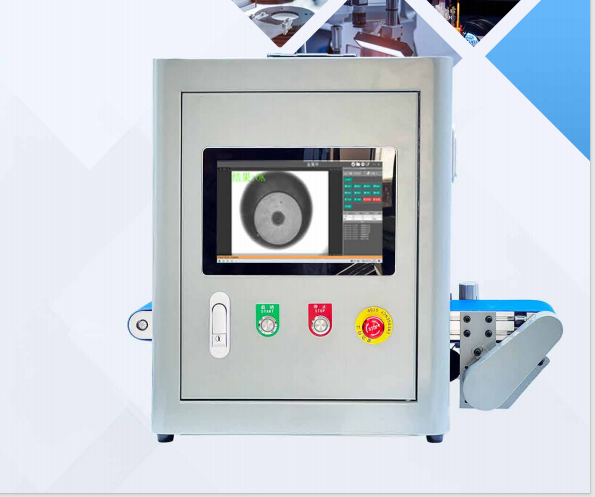
Modern quality inspection systems communicate directly with manufacturing execution systems (MES), enterprise resource planning (ERP) software, programmable logic controllers (PLCs), industrial robots, and production databases.
This connectivity enables real-time production management.
When inspection software identifies recurring defects, automated workflows can immediately reject faulty products, adjust production parameters, notify maintenance personnel, or generate quality reports without manual intervention.
By sharing inspection data throughout the factory, manufacturers gain complete visibility into production performance while supporting traceability and regulatory compliance.
This level of connectivity is a key foundation of Industry 4.0 manufacturing.
Data Turns Inspection into Process Improvement
The greatest long-term benefit of integrated inspection is the ability to transform quality information into operational improvements.
Every inspection produces valuable production data, including dimensional measurements, defect images, timestamps, product identifiers, and statistical quality indicators.
Over time, these records reveal recurring production patterns that help engineers identify root causes instead of treating only the symptoms.
For example, repeated dimensional variation may indicate tool wear, while increasing surface defects could suggest conveyor vibration, improper handling, or material inconsistencies.
Using data generated by automated quality inspection, manufacturers can schedule predictive maintenance, optimize equipment calibration, improve process capability, and reduce unplanned downtime.
Rather than reacting to customer complaints, production teams continuously improve manufacturing performance using objective production data.
Building Flexible Inspection Infrastructure for Future Growth
Manufacturing requirements rarely remain static.
New product designs, changing customer specifications, increased production volumes, and evolving quality standards require inspection systems that can adapt over time.
Modern modular inspection platforms allow manufacturers to upgrade cameras, modify inspection software, add AI models, or expand inspection stations without replacing the entire system.
This flexibility protects investment while supporting long-term manufacturing growth.
As artificial intelligence continues advancing, adaptable inspection platforms will also make it easier to introduce AI-powered machine vision for increasingly complex inspection applications involving textured materials, reflective surfaces, and variable product designs.
Final Thoughts
Successful automation depends on more than purchasing advanced inspection equipment—it depends on integrating that technology into every stage of the manufacturing process.
By implementing machine vision systems that communicate seamlessly with production equipment, quality software, and factory automation platforms, manufacturers gain more than consistent inspection. They build a connected manufacturing environment capable of reducing waste, improving efficiency, supporting predictive maintenance, and strengthening customer confidence.
As smart manufacturing continues to evolve, system integration will become just as important as inspection accuracy itself. Manufacturers that invest in scalable, connected inspection infrastructure today will be better prepared to meet tomorrow’s quality expectations while maintaining a strong competitive advantage.
Leave a Reply