
Manufacturing is entering an era where product quality, production efficiency, and operational consistency are equally important. As production lines become faster and customer expectations continue to rise, manufacturers can no longer rely solely on manual inspection to guarantee product quality. What was once an effective quality control method is increasingly challenged by the demands of modern industrial production.
Across industries such as automotive, electronics, battery manufacturing, medical devices, and precision machining, businesses are investing in automated inspection systems to improve consistency, reduce production costs, and support long-term digital transformation. Rather than replacing human expertise, automated inspection enables manufacturers to build more stable, data-driven production processes that are better suited to today’s competitive manufacturing environment.
The Limitations of Manual Inspection
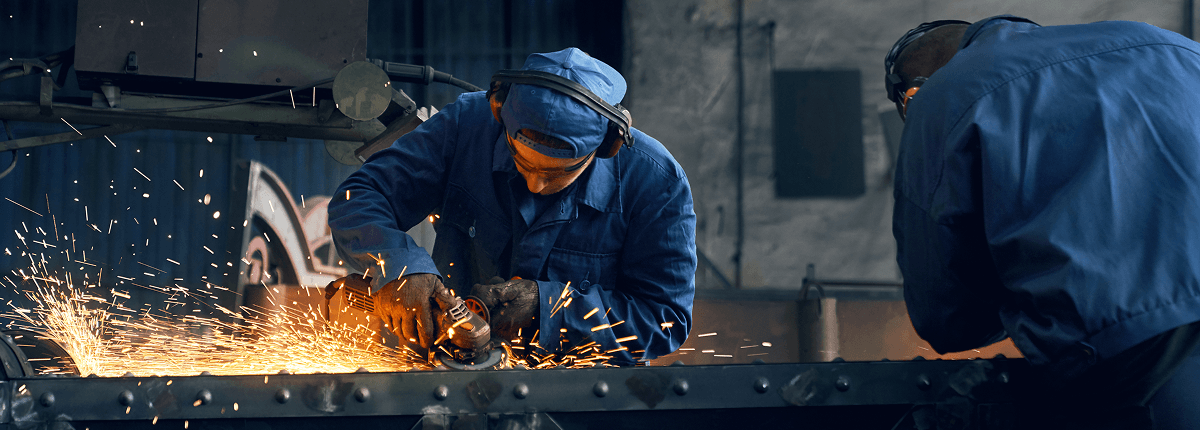
Human inspectors continue to play an important role in manufacturing, particularly when evaluating complex or low-volume products. However, repetitive visual inspection inevitably introduces variability.
Long production shifts, repetitive tasks, changing lighting conditions, and operator fatigue can all influence inspection accuracy. Even experienced inspectors may interpret cosmetic defects differently or overlook subtle imperfections after examining thousands of identical components.
These inconsistencies create two common quality risks.
The first is accepting defective products that should have been rejected, increasing warranty claims, customer complaints, and potential product recalls.
The second is unnecessarily rejecting acceptable products because of inconsistent inspection decisions, leading to higher material waste, additional rework, and reduced manufacturing efficiency.
As production speeds continue to increase, these challenges become even more difficult to manage using manual inspection alone.
Why Automated Vision Is Becoming the Industry Standard
Modern machine vision inspection addresses these limitations by providing objective, repeatable inspection based on predefined quality standards.
Using industrial cameras, precision lighting, image processing software, and intelligent algorithms, automated inspection systems evaluate every product according to identical criteria.
Unlike manual inspection, machine vision maintains the same level of performance regardless of production volume, shift schedules, or operating hours.
This consistency is particularly valuable for manufacturers producing high-volume components where even minor quality variations can have significant financial consequences.
From electronic assemblies and battery cells to precision metal parts and medical products, automated inspection enables manufacturers to maintain uniform quality across every production batch.
Improving Manufacturing Efficiency Through Real-Time Inspection
One of the greatest advantages of automated quality inspection is the ability to identify production issues immediately rather than after an entire batch has been completed.
Inline inspection systems continuously monitor products throughout the manufacturing process, allowing production teams to respond as soon as abnormalities appear.
Surface scratches, dimensional deviations, missing components, assembly errors, or contamination can all be detected within milliseconds.
Immediate feedback allows machine operators to adjust production parameters before defects continue through downstream manufacturing processes.
This significantly reduces scrap, minimizes rework, improves first-pass yield, and increases overall equipment effectiveness (OEE).
Instead of functioning solely as a final quality checkpoint, inspection becomes an active part of production optimization.
Standardized Quality Across Multiple Facilities
Many manufacturers now operate multiple production lines or facilities serving customers across different regions.
Maintaining identical quality standards across every location is difficult when inspection depends primarily on individual operator experience.
Modern industrial vision systems standardize inspection by applying the same measurement criteria regardless of factory location or production shift.
This consistency supports supplier qualification, regulatory compliance, and customer confidence while simplifying quality audits and production documentation.
Manufacturers serving the automotive, aerospace, electronics, and medical sectors particularly benefit from standardized inspection because these industries require strict traceability and repeatable quality verification.
Inspection Data Supports Smarter Process Engineering
Modern inspection equipment generates much more than pass-or-fail decisions.
Every inspection captures valuable production information, including images, dimensional measurements, defect classifications, timestamps, production batches, and statistical quality indicators.
Using quality inspection systems, manufacturers can identify recurring production trends that reveal underlying process problems.
For example, increasing dimensional variation may indicate tool wear, while recurring cosmetic defects could point to improper material handling or equipment vibration.
Rather than reacting only after customer complaints occur, engineering teams can analyze inspection data to optimize machine settings, improve process capability, and schedule predictive maintenance before failures develop.
This data-driven approach transforms inspection into a strategic engineering resource that continuously improves manufacturing performance.
Artificial Intelligence Is Expanding Inspection Capabilities
Artificial intelligence is making automated inspection even more flexible.
Traditional rule-based vision systems require engineers to define every inspection parameter manually. Although effective for standardized products, this approach becomes increasingly difficult when products contain natural variation, textured surfaces, reflective materials, or complex geometries.
Modern AI-powered inspection applies deep learning algorithms trained using thousands of production images.
Instead of searching only for predefined defect patterns, AI analyzes the overall appearance of each product and identifies subtle abnormalities that conventional inspection methods may miss.
This capability allows manufacturers to automate increasingly complex inspection tasks while reducing engineering effort required for new product introductions.
As AI technologies continue advancing, intelligent inspection will play an even larger role in predictive quality management and autonomous manufacturing.
Final Thoughts
Manufacturing competitiveness increasingly depends on producing high-quality products consistently while controlling costs and improving operational efficiency.
By implementing automated inspection systems, manufacturers reduce reliance on subjective manual inspection, improve production stability, strengthen traceability, and gain valuable production data that supports continuous improvement.
As Industry 4.0 technologies continue reshaping manufacturing worldwide, automated inspection is no longer simply a quality control upgrade—it has become a strategic investment that helps manufacturers improve productivity, maintain customer confidence, and remain competitive in an increasingly quality-focused global market.
Leave a Reply