
Manufacturing is undergoing a significant transformation. While increasing production capacity remains important, manufacturers are placing equal emphasis on delivering consistent quality, reducing waste, and improving operational efficiency. In highly competitive industries, success depends not only on producing more products but on ensuring that every product meets strict quality standards from the beginning of the production process.
To achieve these objectives, manufacturers are increasingly integrating automated inspection systems into their production environments. Rather than functioning solely as a final quality checkpoint, automated inspection has become a critical part of process engineering, providing real-time feedback that helps optimize production and prevent defects before they spread throughout the manufacturing line.
Moving from Reactive Quality Control to Preventive Manufacturing
Traditional quality inspection often takes place after manufacturing is complete. Defective products are identified at the end of the production line, where they must either be repaired or discarded.
Although this prevents faulty products from reaching customers, it does little to recover the labor, materials, machine time, and energy already invested in producing them.
Modern automated quality inspection shifts quality control closer to the point where products are manufactured.
By placing inspection stations at key production stages, manufacturers can detect abnormalities immediately after they occur. Surface defects, dimensional variations, missing components, or assembly errors are identified in real time, allowing operators to correct equipment settings before larger batches are affected.
This preventive approach supports lean manufacturing principles by reducing scrap, minimizing rework, and improving first-pass yield.
Consistency Is Essential for Modern Production
Maintaining consistent inspection standards becomes increasingly difficult as production volumes grow.
Manual inspection depends on individual experience, concentration, and working conditions. Even highly trained inspectors may interpret cosmetic defects differently or overlook minor imperfections after extended periods of repetitive work.
Using machine vision inspection, manufacturers establish standardized inspection criteria that remain consistent throughout every production shift.
Industrial cameras, controlled lighting, and advanced image processing software evaluate every product using identical measurement parameters.
Whether the production line operates during the day or overnight, inspection results remain objective and repeatable.
This consistency is especially valuable for manufacturers supplying automotive, electronics, aerospace, and medical industries, where strict quality documentation and traceability are mandatory.
Integrating Inspection into Process Engineering
Today’s inspection technology is no longer isolated from the rest of the manufacturing process.
Modern vision inspection systems integrate directly with manufacturing execution systems (MES), enterprise resource planning (ERP) software, programmable logic controllers (PLCs), and industrial robots.
Inspection results can immediately trigger corrective actions, such as rejecting defective products, adjusting machine parameters, or notifying maintenance personnel when abnormal production patterns appear.
Instead of waiting until defects become widespread, production teams gain continuous visibility into manufacturing performance.
This integration transforms inspection from a quality verification activity into an essential tool for process optimization.
Choosing the Right Inspection Solution
Every manufacturing environment has unique production requirements, making system selection an important part of implementation.
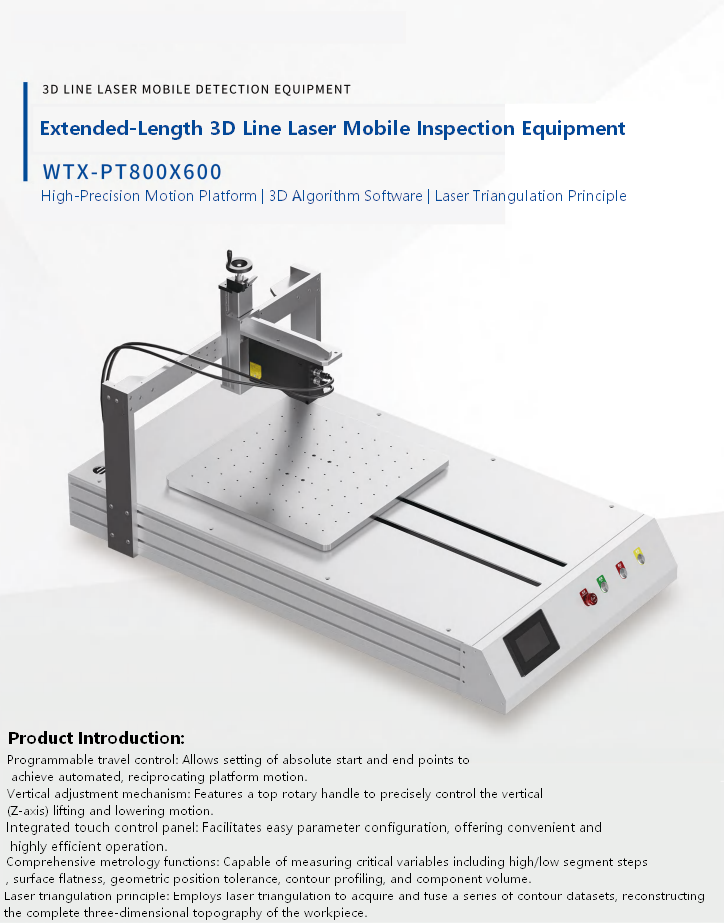
Some manufacturers benefit from compact inspection stations used for prototype development, laboratory testing, or low-volume production.
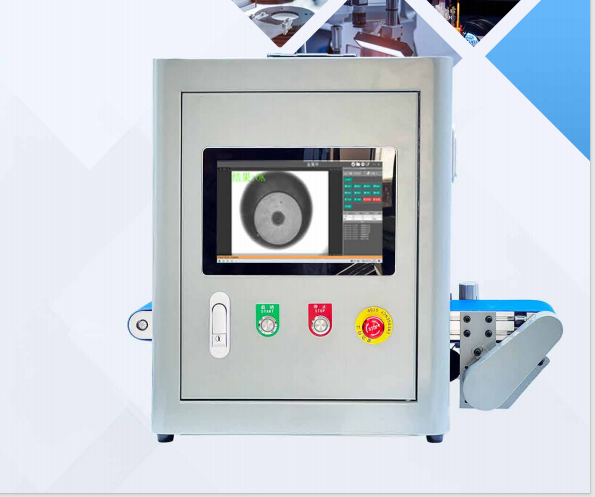
Others require fully integrated inline inspection capable of inspecting thousands of products every hour without interrupting production flow.
When evaluating industrial inspection systems, manufacturers should consider several factors:
- Inspection speed and accuracy
- Product size and material characteristics
- Software flexibility
- Integration with existing automation equipment
- Future scalability
- AI compatibility for evolving production requirements
Selecting equipment that supports both current and future production needs helps protect long-term investment while simplifying future manufacturing upgrades.
Inspection Data Supports Continuous Improvement
One of the greatest advantages of automated inspection is its ability to generate detailed production intelligence.
Every inspection creates valuable information, including measurement data, product images, defect classifications, timestamps, production batches, and statistical process indicators.
These records enable quality inspection systems to identify recurring production trends that may not be immediately visible to operators.
For example, increasing dimensional variation could indicate tool wear, while recurring surface scratches may point to conveyor damage or improper material handling.
Rather than reacting after customers report quality issues, manufacturers can analyze inspection data to schedule preventive maintenance, recalibrate equipment, and improve production stability.
This data-driven approach reduces downtime while increasing overall equipment effectiveness (OEE).
Artificial Intelligence Is Expanding Inspection Capabilities
Artificial intelligence is significantly improving what inspection systems can accomplish.
Traditional machine vision relies on predefined inspection rules developed by engineers.
While effective for standardized products, rule-based inspection becomes more challenging when products exhibit natural variation, reflective materials, complex geometries, or textured surfaces.
Modern AI-powered inspection applies deep learning algorithms trained using thousands of production images.
Instead of searching for one predefined defect, AI evaluates the complete visual appearance of each product, recognizing subtle abnormalities that traditional inspection methods may overlook.
As manufacturers introduce more customized products and shorter production cycles, AI provides greater flexibility while reducing programming effort for new inspection tasks.
Building a Smarter Manufacturing Future
Automated inspection delivers benefits that extend well beyond product quality.
Manufacturers improve production efficiency, strengthen traceability, reduce warranty costs, support regulatory compliance, and create more predictable manufacturing processes.
Most importantly, intelligent inspection enables engineers and production teams to focus on continuous process improvement rather than repetitive manual inspection.
As Industry 4.0 technologies continue connecting machines, sensors, robotics, and analytics platforms, inspection systems will become increasingly central to intelligent factory operations.
Final Thoughts
Quality assurance is evolving into an integral part of modern process engineering.
By implementing automated inspection systems, manufacturers gain real-time visibility into production performance while reducing human error, minimizing waste, and improving operational consistency.
As production demands continue to increase, manufacturers that embrace intelligent inspection technologies will be better equipped to deliver reliable products, optimize manufacturing efficiency, and remain competitive in an increasingly data-driven industrial environment.
Leave a Reply