
Digital transformation is reshaping manufacturing at every level, but building a smart factory rarely happens through a single large-scale upgrade. Instead, most successful manufacturers modernize their operations step by step, connecting critical production systems to create a more intelligent and responsive manufacturing environment.
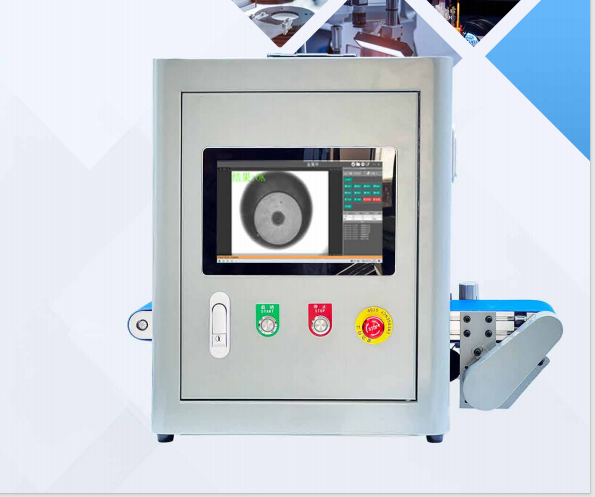
Among the most impactful starting points is the integration of Automated Inspection Systems into the broader digital infrastructure. When inspection equipment is connected with production software, factory automation, and industrial communication networks, it evolves from an isolated quality checkpoint into an active source of manufacturing intelligence.
This connected approach forms an important foundation for Industry 4.0, where production decisions are increasingly driven by real-time data rather than manual intervention.
Moving Beyond Standalone Inspection
In many conventional production facilities, inspection stations operate independently.
Their primary function is to identify defective products, activate rejection mechanisms, and allow production to continue. While effective for quality screening, these isolated systems often fail to make full use of the valuable data generated during every inspection cycle.
By integrating Machine Vision Inspection Systems with Manufacturing Execution Systems (MES), Enterprise Resource Planning (ERP) platforms, and industrial control systems, inspection data becomes available across the entire organization.
Instead of producing isolated inspection results, connected systems provide continuous visibility into:
- Product quality trends
- First Pass Yield (FPY)
- Recurring defect patterns
- Equipment performance
- Production stability
- Overall Equipment Effectiveness (OEE)
This information enables production teams to make faster and more informed operational decisions.
Turning Inspection Data into Manufacturing Intelligence
Every inspected component generates valuable production information.
Modern Quality Inspection Systems automatically collect measurement data, defect classifications, inspection images, timestamps, and process parameters.
When analyzed over time, this information reveals production trends that are difficult to identify through manual observation alone.
Engineers can detect gradual dimensional drift, increasing defect frequency, or equipment instability before these issues affect large production batches.
Rather than reacting to quality failures after they occur, manufacturers gain the ability to optimize processes proactively.
Enabling Closed-Loop Manufacturing
One of the defining characteristics of Industry 4.0 is closed-loop manufacturing.
In a connected production environment, inspection results are not only recorded—they actively influence manufacturing processes.
For example, when Industrial Vision Systems identify dimensional variation approaching engineering limits, inspection data can be transmitted directly to upstream equipment such as CNC machines, robotic assembly systems, or automated dispensing equipment.
Production parameters can then be adjusted automatically to compensate for tool wear, alignment changes, or process drift.
This real-time feedback loop helps manufacturers:
- Reduce scrap generation
- Improve process capability
- Minimize manual machine adjustments
- Increase production stability
- Maintain consistent product quality
Closed-loop control transforms inspection from a passive verification process into an active production optimization system.
Connecting Inspection with Smart Factory Platforms
A connected inspection strategy depends on seamless communication between manufacturing systems.
Modern inspection equipment supports integration with MES, ERP, SCADA platforms, PLC controllers, industrial robots, and Industrial Internet of Things (IIoT) architectures.
This connectivity creates a unified production environment where quality information, machine status, and production performance are shared across departments in real time.
Managers gain immediate visibility into manufacturing performance through centralized dashboards, while engineering teams can analyze historical production data to support continuous improvement initiatives.
Scalable Integration Without Rebuilding Existing Production Lines
Many manufacturers hesitate to begin digital transformation because they assume it requires replacing existing production equipment.
In practice, most modern inspection solutions are designed with modular architectures that integrate into current manufacturing environments.
By introducing connected inspection at high-value production stages first, manufacturers can gradually expand digital capabilities while protecting previous automation investments.
This phased implementation strategy reduces deployment risk and provides measurable operational improvements throughout the transition toward smart manufacturing.
AI Is Expanding the Value of Connected Inspection
Artificial intelligence further enhances connected manufacturing by extracting deeper insights from inspection data.
Traditional rule-based inspection identifies products that meet or fail predefined specifications.
With AI Vision Inspection, deep learning algorithms continuously analyze production images to recognize complex defect patterns, detect emerging quality trends, and improve inspection accuracy over time.
Combined with manufacturing analytics, AI enables predictive quality management, helping manufacturers identify process deviations before defects begin affecting production.
This transforms inspection from quality assurance into a strategic decision-support system.
Building a More Agile Manufacturing Operation
Connected inspection systems also improve manufacturing flexibility.
As customer requirements evolve and product life cycles become shorter, production lines must adapt quickly to new models, specifications, and quality standards.
Digital inspection platforms allow manufacturers to update inspection programs, modify quality parameters, and deploy new production recipes through software rather than extensive hardware changes.
This agility supports faster product introductions while maintaining consistent quality across multiple production lines.
Conclusion
Building a connected factory begins with connecting the systems that generate the most valuable production information.
By integrating Automated Inspection Systems with MES, ERP, industrial automation, and AI-powered analytics, manufacturers create a data-driven production environment capable of improving quality, increasing efficiency, and supporting continuous optimization.
As Industry 4.0 continues to evolve, connected inspection is becoming far more than a quality control solution—it is a key component of intelligent manufacturing, enabling factories to become more transparent, adaptive, and competitive in an increasingly digital industrial landscape.
Leave a Reply