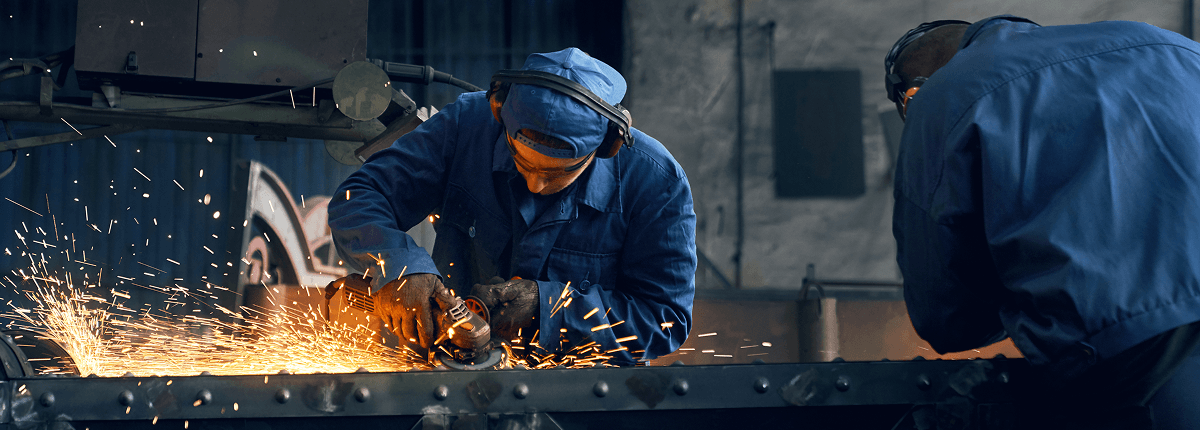

Manufacturing quality control is entering a phase where traditional inspection methods are no longer sufficient for many modern production challenges. As products become more complex in geometry, material composition, and surface characteristics, manufacturers increasingly face defects that are difficult to define using fixed rules.
These are often referred to as “complex defects”—subtle variations in texture, irregular surface patterns, cosmetic inconsistencies, or material-related anomalies that cannot be reliably detected using conventional inspection logic.
To address this challenge, AI-Driven Inspection Systems are transforming how manufacturers approach quality control by introducing adaptive learning capabilities based on deep learning and data-driven recognition models.
Why Rule-Based Inspection Reaches Its Limits
Traditional Machine Vision Inspection Systems rely on predefined logic rules created by engineers.
These systems evaluate products using fixed thresholds such as:
- dimensional limits
- presence or absence of components
- brightness or contrast thresholds
- geometric tolerances
While highly effective for standardized components, this approach becomes less reliable when product variation increases.
In real manufacturing environments, factors such as material inconsistency, surface reflection, lighting variation, and natural texture differences can lead to false rejects or missed defects.
As a result, rule-based systems often struggle with balancing sensitivity and accuracy in complex inspection scenarios.
How AI Changes the Inspection Model
Unlike rule-based systems, AI Vision Inspection does not depend solely on manually defined thresholds.
Instead, it learns from data.
By training models with large sets of labeled images—including both acceptable and defective products—AI systems develop an understanding of visual patterns associated with quality and failure conditions.
This allows the system to identify defects based on probability and pattern recognition rather than rigid measurement rules.
Over time, the model becomes more accurate as it processes additional production data, making it particularly suitable for environments with high variability.
Key Advantages of Adaptive AI Inspection
1. Improved Performance in Real-World Conditions
AI-based inspection systems are significantly more robust when dealing with real production variability.
They can better handle changes in:
- ambient lighting conditions
- surface reflectivity
- material batch differences
- minor positional shifts
This makes Industrial Vision Systems powered by AI more stable in uncontrolled manufacturing environments.
2. Continuous Learning and Model Improvement
One of the most important advantages of AI-driven inspection is its ability to evolve.
When new defect types appear, engineers can retrain the model using additional labeled data. This iterative process allows the system to continuously improve detection accuracy over time.
This capability is especially valuable in industries where product designs change frequently or where new defect patterns emerge during production scaling.
3. Faster Deployment Compared to Rule-Based Systems
Traditional inspection development often requires extensive parameter tuning, coding, and validation cycles.
In contrast, AI-based systems can be trained using sample datasets, significantly reducing deployment time for new product lines.
This accelerates time-to-production while maintaining consistent inspection performance across multiple product variants.
From Detection to Decision Intelligence
Modern AI inspection is not limited to identifying defects—it increasingly contributes to decision-making in manufacturing processes.
When integrated with Quality Inspection Systems, AI models can:
- classify defect types automatically
- detect early-stage anomalies
- highlight recurring quality patterns
- support predictive quality analysis
This transforms inspection from a passive quality gate into an active intelligence layer within the production system.
Practical Integration in Manufacturing Environments
Despite its advanced capabilities, successful AI inspection implementation depends heavily on usability and integration.
In real-world factory environments, systems must be intuitive enough for operators to use without requiring specialized data science expertise.
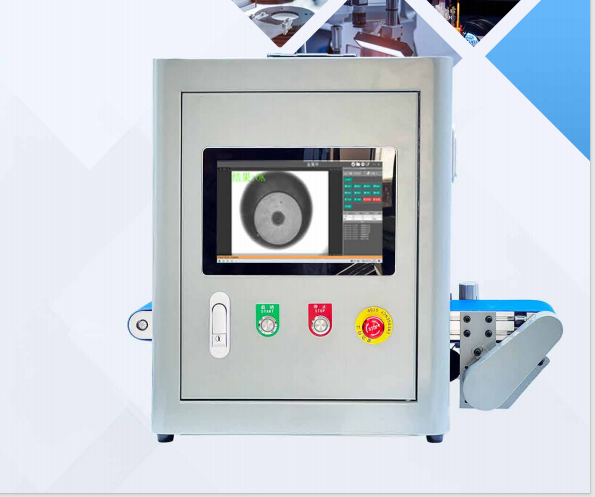
Modern AI Vision Inspection Systems are therefore designed with user-centric interfaces, allowing production teams to:
- monitor inspection performance in real time
- adjust inspection parameters visually
- review defect images and classifications easily
- retrain models with guided workflows
This ensures that AI technology remains practical and accessible on the factory floor.
Supporting Manufacturing Flexibility
As product lifecycles shorten and customization increases, manufacturing systems must adapt quickly.
AI-driven inspection provides the flexibility needed to support this shift.
By learning from new data instead of relying solely on fixed programming logic, these systems can adapt to new product designs without requiring complete system reconfiguration.
This makes them particularly valuable in industries with frequent design updates or high-mix production environments.
Future-Proofing Quality Control
Investing in AI-capable inspection infrastructure is increasingly seen as a long-term strategic decision rather than a short-term upgrade.
As manufacturing complexity continues to rise, systems that rely solely on fixed rules will struggle to maintain performance.
By contrast, AI Vision Inspection platforms provide a scalable foundation that evolves alongside production requirements.
This ensures that manufacturers remain capable of handling new defect types, evolving product designs, and stricter quality expectations in the future.
Conclusion
AI-driven inspection systems represent a fundamental shift in how manufacturing quality is managed.
By combining deep learning, adaptive pattern recognition, and real-time production data, manufacturers can move beyond rigid rule-based inspection toward intelligent, evolving quality control systems.
As a result, factories gain the ability to detect complex defects more reliably, reduce false rejects, and maintain consistent quality even in highly variable production environments.
In an increasingly competitive manufacturing landscape, this adaptability provides a clear and sustainable advantage in both quality assurance and operational efficiency.
Leave a Reply