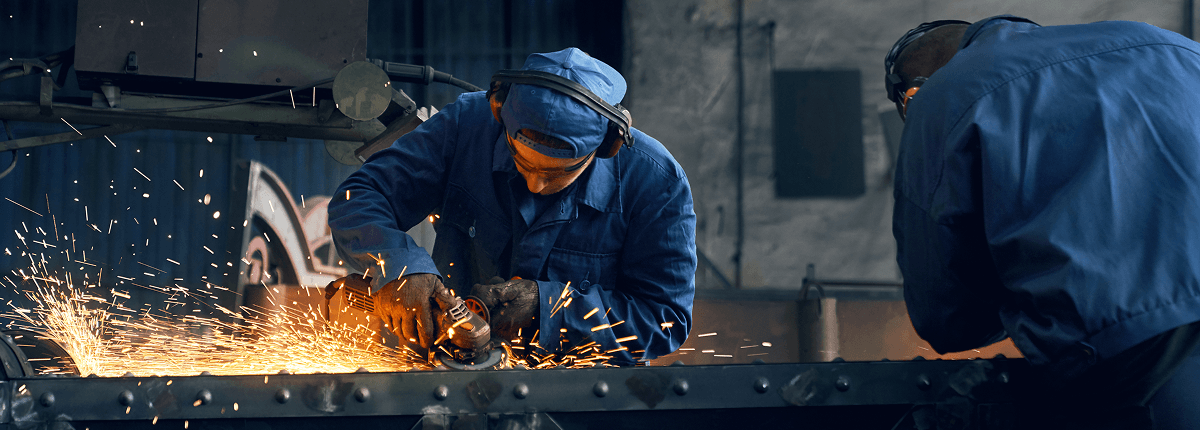

For modern manufacturers, increasing production speed is only valuable when product quality remains consistent. A production line that delivers high output but allows defective products to pass inspection ultimately creates higher costs through rework, warranty claims, customer complaints, and production interruptions.
To achieve both speed and precision, manufacturers are replacing traditional quality control methods with High-Performance Inspection Systems that operate continuously alongside automated production equipment. These systems enable quality assurance to become an integrated part of the manufacturing process rather than a separate production stage.
Eliminating the Inspection Bottleneck
One of the biggest challenges in manufacturing is preventing quality inspection from slowing production.
Traditional inspection methods often require products to pause for manual verification or rely on sampling techniques that leave some defects undetected. As production speeds increase, these approaches become increasingly difficult to manage.
Modern Automated Inspection Systems eliminate this bottleneck by performing inspections in real time without interrupting material flow.
Industrial cameras capture high-resolution images while products remain in motion, allowing every component to be inspected without reducing line speed or production capacity.
Why Stable Inspection Matters More Than Speed Alone
Fast inspection alone does not guarantee reliable quality control.
An effective inspection system must consistently capture accurate images under changing production conditions while processing inspection results within milliseconds.
High-Precision Image Acquisition
Reliable inspection begins with controlled image capture.
Industrial cameras, precision optics, and carefully engineered lighting work together to eliminate motion blur, reflections, and inconsistent illumination. High-speed strobe lighting is often used to freeze rapidly moving products, ensuring image quality remains stable even on fast production lines.
Accurate image acquisition forms the foundation of every successful Machine Vision Inspection application.
Real-Time Image Processing
Once images are captured, advanced processors analyze them immediately using intelligent vision algorithms.
The system measures dimensions, detects scratches, verifies component placement, identifies missing parts, and evaluates surface quality before products leave the inspection station.
High-speed processing ensures inspection decisions keep pace with production, preventing quality control from becoming a manufacturing constraint.
Turning Inspection Data into Process Improvement
Modern inspection systems provide far more than pass-or-fail decisions.
Every inspection cycle generates valuable manufacturing data that helps engineers understand process performance over time.
Using Quality Inspection Systems, manufacturers can monitor recurring defects, identify production trends, and detect gradual equipment changes before they affect product quality.
For example, a gradual increase in dimensional variation may indicate tooling wear, while recurring alignment errors could signal mechanical drift within automated equipment.
These insights support predictive maintenance strategies that reduce unexpected downtime and improve Overall Equipment Effectiveness (OEE).
Flexible Integration with Existing Automation Systems
Implementing advanced inspection technology no longer requires rebuilding an entire production line.
Today’s Industrial Vision Systems are designed with modular architectures that integrate smoothly into existing manufacturing environments.
Most systems communicate directly with PLC controllers, robotic cells, conveyors, MES platforms, and factory automation software using standard industrial communication protocols.
This modular approach allows manufacturers to upgrade inspection capabilities while minimizing installation time, production interruptions, and capital investment.
It also provides flexibility for future expansion as production capacity or inspection requirements evolve.
Supporting Long-Term Manufacturing Competitiveness
Reliable quality control has become a critical factor in supplier selection across many industries.
Customers increasingly expect manufacturers to demonstrate consistent production quality supported by measurable inspection data rather than relying solely on manual quality checks.
Automated inspection helps manufacturers establish standardized quality processes, improve product traceability, and reduce quality-related risks throughout the supply chain.
These capabilities strengthen customer confidence while supporting compliance with increasingly demanding industry standards.
AI Is Expanding the Capabilities of Machine Vision
Artificial intelligence is further enhancing the performance of modern inspection systems.
Traditional rule-based inspection performs exceptionally well when products follow predictable specifications. However, complex cosmetic defects or irregular surface variations often require more adaptive analysis.
With AI Vision Inspection, deep learning models continuously improve by analyzing thousands of production images collected during normal manufacturing.
Instead of relying entirely on manually defined inspection rules, AI systems recognize defect patterns automatically, improving inspection accuracy while reducing both false rejects and missed defects.
This adaptive capability makes AI-powered inspection particularly valuable for manufacturers producing high-value or visually complex products.
Conclusion
High-performance inspection systems have become an essential component of efficient manufacturing operations.
By combining precision imaging, real-time processing, intelligent software, and AI-driven analytics, manufacturers can maintain high production throughput without compromising product quality.
Beyond detecting defects, modern inspection technology provides the production intelligence needed to optimize processes, reduce downtime, and support continuous improvement across the factory.
As smart manufacturing continues to evolve, investing in advanced inspection solutions enables manufacturers to improve operational efficiency, strengthen customer confidence, and build a more competitive and resilient production environment.
Leave a Reply