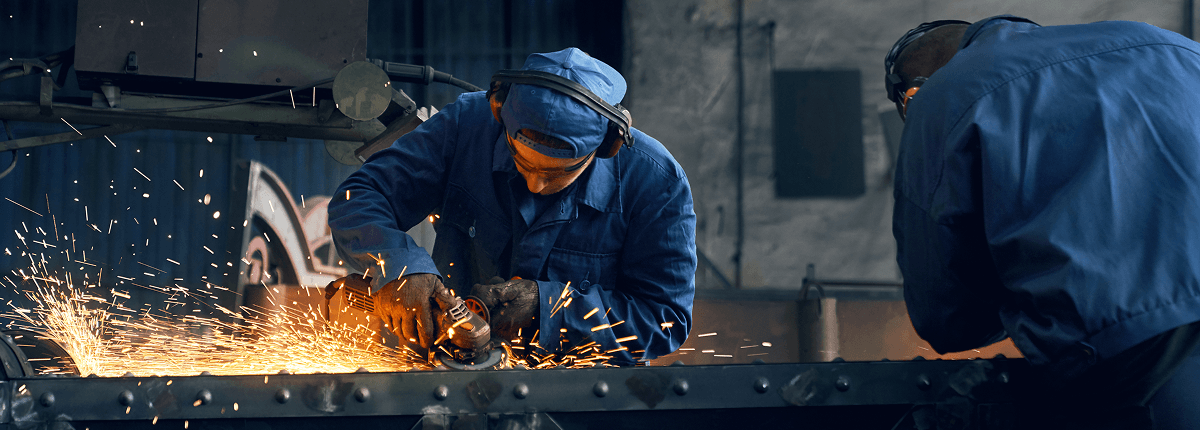

Quality has become one of the most important competitive advantages in modern manufacturing. As production lines operate at higher speeds and customer expectations continue to rise, manufacturers are expected to deliver defect-free products without slowing production or increasing operating costs.
For many companies, traditional manual inspection can no longer keep pace with these demands. Variations in human judgment, production fatigue, and the growing complexity of manufactured products make consistent quality control increasingly difficult.
As a result, Automated Quality Inspection has evolved from a productivity upgrade into a fundamental requirement for manufacturers pursuing higher efficiency, better product consistency, and long-term operational growth.
Why Manual Inspection Is Reaching Its Limits
Manual quality inspection has supported manufacturing for decades, but today’s production environments present challenges that exceed human capabilities.
Operators inspecting hundreds or thousands of components during a single shift naturally experience fatigue, reducing their ability to detect small defects consistently. Even highly experienced inspectors may interpret quality standards differently, introducing variation between production batches.
These inconsistencies become even more significant in industries that require micron-level precision, including electronics, automotive manufacturing, medical devices, and precision engineering.
By implementing Machine Vision Systems, manufacturers establish standardized inspection criteria that remain consistent regardless of production speed, shift changes, or operator experience.
Turning Visual Inspection into Actionable Manufacturing Data
Modern inspection equipment does far more than identify defective products. It transforms every inspection cycle into valuable production intelligence that supports continuous improvement.
High-Accuracy Image Acquisition
Inspection begins with industrial cameras, precision lenses, and carefully engineered lighting systems designed to capture clear, repeatable images under controlled conditions.
Lighting configurations—including diffuse lighting, dome lighting, and backlighting—are selected according to material characteristics, allowing the system to accurately inspect reflective metals, transparent plastics, textured surfaces, and complex geometries.
Intelligent Image Analysis
Captured images are processed using advanced algorithms capable of identifying scratches, dimensional deviations, missing components, contamination, assembly errors, and other quality issues that may be difficult or impossible to detect through manual inspection.
Modern Machine Vision Inspection software performs these analyses within milliseconds, ensuring inspection keeps pace with high-speed production lines.
Instant Quality Decisions
Once inspection is complete, the system immediately determines whether each product satisfies predefined quality standards.
Defective products can be automatically removed from the production line while inspection records are stored for traceability, compliance, and process optimization.
Easy Integration with Existing Production Lines
One of the most common concerns when upgrading quality control is implementation complexity.
Fortunately, today’s Industrial Vision Systems are designed with modular integration in mind. Most solutions can be incorporated into existing production lines without requiring extensive equipment replacement.
They communicate directly with conveyors, robotic systems, PLC controllers, MES platforms, and factory automation software, enabling manufacturers to modernize inspection capabilities while minimizing installation time and production disruption.
This flexibility makes automated inspection accessible to both large-scale manufacturers and smaller facilities seeking gradual automation upgrades.
Improving Manufacturing Efficiency Through Data
The greatest value of automated inspection lies not only in identifying defects but also in understanding why they occur.
Every inspection generates production data that reveals trends across thousands of manufacturing cycles.
For example, recurring dimensional variations may indicate tool wear, while increasing alignment errors could suggest mechanical instability or calibration drift.
Using information collected by Quality Inspection Systems, maintenance teams can identify potential equipment issues before they lead to costly production failures or unexpected downtime.
This data-driven approach supports predictive maintenance, improves process stability, and increases Overall Equipment Effectiveness (OEE).
The Growing Role of Artificial Intelligence
Artificial intelligence is reshaping industrial quality inspection by expanding the capabilities of traditional machine vision.
Conventional inspection systems rely on predefined rules and measurement parameters. While highly effective for consistent defects, they may struggle with irregular surface variations or unpredictable cosmetic imperfections.
With AI Vision Inspection, deep learning models analyze large volumes of production images to distinguish acceptable products from defective ones based on learned visual patterns rather than fixed programming rules.
As inspection data grows, AI models continue improving detection accuracy while reducing both false rejects and missed defects, making them particularly valuable for complex manufacturing environments.
Investing in Long-Term Manufacturing Performance
Automated inspection should not be viewed simply as another piece of production equipment. It is a strategic investment that improves quality, lowers operating costs, and strengthens manufacturing competitiveness.
By detecting defects earlier, reducing manual inspection requirements, minimizing rework, and generating valuable production insights, manufacturers can improve productivity while delivering more consistent product quality.
As digital manufacturing and Industry 4.0 continue to reshape global production, companies that invest in intelligent inspection technologies today will be better prepared to build more efficient, reliable, and data-driven manufacturing operations for the future.
Leave a Reply