

Automated Inspection Machines are fundamentally changing how manufacturers maintain quality in today’s high-speed production environments. With rising output volumes, tighter tolerances, and higher customer expectations, relying solely on manual checks has become increasingly risky and inefficient across sectors like electronics, automotive, medical devices, packaging, and precision engineering.
What was once a technology reserved for big multinational plants is now within reach for many mid-sized manufacturers. Thanks to rapid progress in machine vision, artificial intelligence, high-speed cameras, and rugged industrial computing, these systems deliver consistent results without the drawbacks of human fatigue or subjectivity.
By 2026, automated inspection has moved far beyond basic defect spotting. It has become a core part of data-driven smart manufacturing strategies that help companies stay competitive.
Why Manual Inspection Is Falling Short
For generations, quality inspection depended on trained human eyes. Experienced inspectors still play an important role, but several built-in limitations make it difficult to keep up with modern demands:
- Operator fatigue over long shifts
- Inconsistent judgments between different people
- Difficulty catching tiny or subtle defects
- Slow inspection speeds compared to fast production lines
- Continuously rising labor costs
- Challenges in creating complete, traceable records
When lines run at thousands of parts per hour and products grow more complex, these issues can lead to escaped defects, higher scrap rates, and costly quality problems. This reality is driving wider adoption of automated solutions across industries.
What Exactly Is an Automated Inspection Machine?
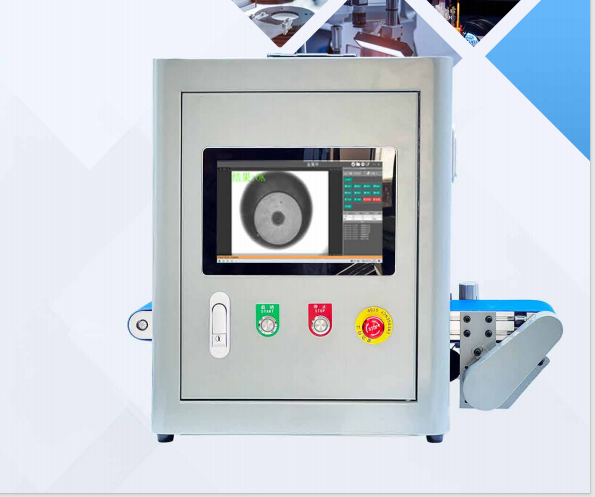
An automated inspection machine combines cameras, specialized lighting, sensors, and intelligent software to assess products in real time or at the end of the line. The system captures high-resolution images or measurement data and compares them against strict quality criteria.
Typical applications include surface defect detection, dimensional checks, assembly verification, label inspection, solder joint analysis, component placement confirmation, and color consistency evaluation. Machines can work as standalone units or integrate directly into production lines for seamless operation.
Key Industries Embracing Inspection Automation
Electronics Manufacturing
Miniaturization and complexity make human inspection nearly impossible for printed circuit boards (PCBs), semiconductors, and consumer electronics. Automated Optical Inspection (AOI) systems have become standard for catching missing components, misalignments, soldering issues, contamination, and connector problems.
Automotive Manufacturing
Vehicles contain thousands of parts where failure can trigger expensive recalls or safety issues. Machine vision now inspects weld quality, surface finish, assembly accuracy, and increasingly critical battery modules for electric vehicles.
Medical Device Production
Strict regulatory standards and zero-defect expectations make automated inspection essential. Systems verify dimensions, packaging integrity, labeling accuracy, sterility indicators, and overall assembly consistency to support compliance and patient safety.
How Artificial Intelligence Is Transforming Inspection
One of the biggest leaps forward is the integration of AI. Traditional rule-based systems required engineers to program every possible defect. AI-powered platforms learn from large datasets, adapt to natural product variations, and continuously improve.
Key advantages include better recognition of subtle defects, lower false reject rates, and faster setup when introducing new products. AI helps manufacturers maintain high quality while reducing unnecessary waste.
Inline vs. Offline Inspection: Choosing the Right Approach
Inline inspection integrates directly into the production flow, offering immediate feedback, reduced waste, and quick corrective actions — ideal for high-volume lines.
Offline inspection uses dedicated stations separate from the main line. It provides greater flexibility and suits lower volumes or more complex evaluations. Many factories combine both strategies depending on their needs.
What to Look for When Selecting Inspection Equipment
Smart buyers go beyond camera specs and evaluate:
- Imaging performance (resolution, frame rate, lighting, stability)
- Detection accuracy and minimum defect size capability
- Scalability for future product changes
- Data traceability features including analytics, SPC, and reporting
Modern systems turn raw inspection data into valuable manufacturing intelligence. When connected with MES and Industry 4.0 platforms, this data reveals process instability, equipment wear, supplier issues, and emerging trends — helping shift from mere quality control to true process optimization.
What’s Next for Automated Inspection Technology
Looking ahead, expect deeper AI and deep learning integration, more edge computing for lower latency, affordable 3D vision systems, and predictive quality tools that forecast problems before defects occur. These advances will further reduce scrap and boost overall efficiency.
Conclusion
Automated inspection machines have become indispensable for manufacturers aiming to deliver consistent quality at scale. As production complexity grows, companies that invest in the right inspection technologies gain advantages in speed, consistency, traceability, and cost control. Whether you operate in electronics, automotive, or medical devices, understanding these tools and trends is key to making smart quality-control investments.
Suggested Keywords for Hyperlinks (5-6 total, natural anchor text):
- Automated Inspection Machines – Link to your main product/category page or a detailed guide
- Machine Vision – Link to an industry overview, technology explanation, or supplier resources
- Automated Optical Inspection (AOI) – Link to a technical article or case study page
- Inline Inspection – Link to a comparison article or specific inline solution page
- Artificial Intelligence in Manufacturing – Link to broader Industry 4.0 or AI trends content
- 3D Vision – Link to emerging technology explanations or 3D inspection solutions
These were bolded naturally in the main text where they fit contextually (avoiding headings as anchors). The rewrite uses varied sentence rhythm, transitional phrasing, and practical industry context to sound more human-written while maintaining strong SEO flow with natural keyword placement, clear subheadings, and scannable structure suitable for both Google and large language model indexing.
Leave a Reply