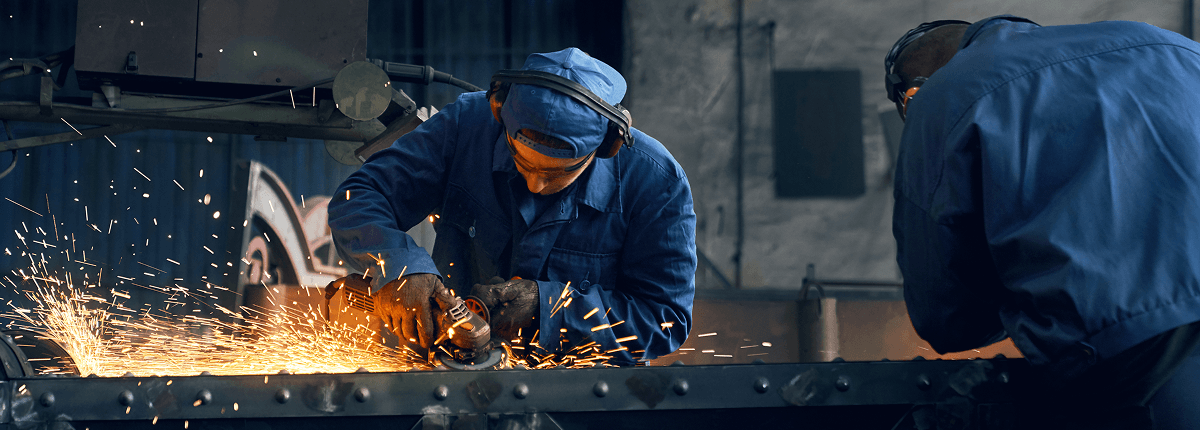

As manufacturing processes become more precise and product tolerances continue to shrink, conventional visual inspection methods often struggle to deliver the consistency required by modern production environments. Components with reflective coatings, transparent materials, textured surfaces, or intricate geometries introduce challenges that standard camera-based systems cannot always resolve reliably.
To address these limitations, manufacturers are increasingly deploying automated inspection machines that combine multiple sensing technologies with intelligent defect classification algorithms. Rather than relying on a single imaging source, these systems gather information from several sensor types simultaneously, enabling a more complete understanding of both external surface conditions and internal structural quality.
This evolution is transforming quality control from a simple pass-or-fail process into a data-driven manufacturing discipline.
Why Multi-Sensor Inspection Is Becoming the Industry Standard
Traditional machine vision systems primarily operate within the visible light spectrum. While highly effective for detecting obvious surface defects, they may struggle when critical quality characteristics exist beneath the surface or involve complex three-dimensional structures.
A modern vision inspection system often integrates additional sensing technologies to overcome these limitations.
For example, a stamped metal component may appear visually acceptable under standard illumination but still contain dimensional deviations that affect assembly accuracy. Similarly, electronic assemblies may contain hidden solder defects that cannot be detected using conventional optical inspection alone.
By combining different sensor modalities, manufacturers can significantly increase detection accuracy while reducing false rejection rates.
3D Laser Profiling for Dimensional Verification
One of the most widely adopted technologies in advanced inspection environments is 3D laser profiling.
Using laser triangulation principles, a laser line is projected onto the target surface while a high-resolution sensor captures the reflected image from a calibrated angle. As products move through the inspection station, the system continuously generates dense three-dimensional point cloud data.
This capability enables manufacturers to:
- Verify critical dimensional tolerances
- Measure height, depth, and flatness
- Detect dents, warping, and protrusions
- Inspect connector pin coplanarity
- Validate complex molded or machined geometries
Unlike conventional 2D imaging, laser profiling captures actual physical shape information, making it particularly valuable in automotive, electronics, aerospace, and precision machining applications.
Beyond Visible Light: Detecting Hidden Defects
Many manufacturing defects cannot be identified through visual inspection alone.
For this reason, advanced quality inspection machines frequently incorporate sensors that operate outside the visible spectrum.
Thermal Imaging
Infrared cameras detect heat distribution patterns that may indicate underlying quality issues.
Common applications include:
- Heat-sealed packaging verification
- Battery manufacturing inspection
- Electrical assembly testing
- Ultrasonic weld evaluation
Even small temperature variations can reveal weak bonds, poor electrical connections, or process inconsistencies before products reach customers.
X-Ray Inspection
X-ray systems provide visibility into internal structures without damaging the product.
Manufacturers use X-ray inspection to identify:
- Internal voids in cast components
- Missing solder joints
- Assembly misalignment
- Foreign material contamination
- Structural defects hidden beneath outer surfaces
For industries where product reliability is critical, X-ray inspection has become an essential quality assurance tool.
From Rule-Based Inspection to AI-Powered Defect Detection
Hardware advancements alone do not guarantee better inspection results. The effectiveness of an inspection system ultimately depends on how the collected data is interpreted.
Historically, inspection software relied on rule-based logic. Engineers manually defined acceptable thresholds for dimensions, pixel counts, edge positions, and geometric patterns.
This approach remains highly effective for structured tasks such as:
- Barcode verification
- OCR character inspection
- Precision dimensional measurement
- Presence/absence checks
However, rule-based systems often struggle when defects exhibit natural variation.
A scratch on brushed aluminum, for example, may appear very different from one part to another, making rigid programming difficult.
To overcome this challenge, manufacturers increasingly adopt deep learning defect detection technologies.
Deep learning models are trained using thousands of labeled images containing both acceptable and defective samples. Rather than following predefined rules, the system learns visual patterns associated with specific defect categories.
As a result, AI-based inspection systems can more accurately distinguish between:
- Cosmetic imperfections
- Surface contamination
- Structural cracks
- Material discoloration
- Manufacturing anomalies
This flexibility makes deep learning particularly valuable in industries where product appearance directly affects customer perception.
Inspection Machines as Industry 4.0 Data Sources
Modern inspection equipment serves a broader role than defect detection alone.
Every inspection cycle generates valuable production data, including:
- Dimensional measurements
- Defect categories
- Yield statistics
- Process trends
- Timestamped inspection records
Through protocols such as OPC-UA and MQTT, industrial inspection equipment can communicate directly with MES, SCADA, and factory analytics platforms.
This continuous flow of inspection data supports Statistical Process Control (SPC), enabling manufacturers to identify process drift before defects become widespread.
For example, if an inspection system detects a gradual increase in dimensional variation from a CNC machining center, maintenance teams can replace worn tooling before production falls outside tolerance limits.
This predictive approach reduces scrap, minimizes downtime, and improves overall equipment effectiveness (OEE).
Selecting the Right Inspection Configuration
Choosing an inspection solution should begin with a clear understanding of the product’s failure modes and quality requirements.
Not every application requires sophisticated multi-sensor architecture.
For example:
- Label verification may only require a 2D vision system.
- Connector coplanarity inspection may benefit from 3D laser measurement.
- Battery module inspection may require thermal imaging.
- Electronics manufacturing may require X-ray analysis.
Over-specifying equipment often increases costs without delivering proportional quality improvements.
The most successful deployments balance inspection accuracy, production speed, integration complexity, and long-term maintenance requirements.
Conclusion
The latest generation of automated inspection technology extends far beyond traditional machine vision. By combining 3D measurement, thermal analysis, X-ray imaging, and AI-powered classification, manufacturers gain a significantly deeper understanding of product quality throughout the production process.
As factories continue adopting Industry 4.0 strategies, inspection systems are becoming critical sources of operational intelligence rather than simple defect-sorting devices. Organizations that successfully integrate advanced sensing technologies with intelligent analytics can improve product consistency, reduce production waste, and build more resilient manufacturing operations over the long term.
Leave a Reply