
In today’s manufacturing environment, quality control has become one of the most critical factors determining production efficiency, customer satisfaction, and long-term competitiveness. As industries move toward higher automation levels and stricter quality standards, manufacturers can no longer rely solely on traditional inspection methods to maintain consistent product quality.
Manual inspection still plays a role in certain production scenarios, but it faces obvious limitations when applied to high-speed, large-scale manufacturing. Human fatigue, subjective judgment, and limited inspection frequency can create quality gaps that are difficult to identify until products reach customers. As a result, more manufacturers are adopting automated inspection machines to achieve faster, more accurate, and more traceable quality control processes.
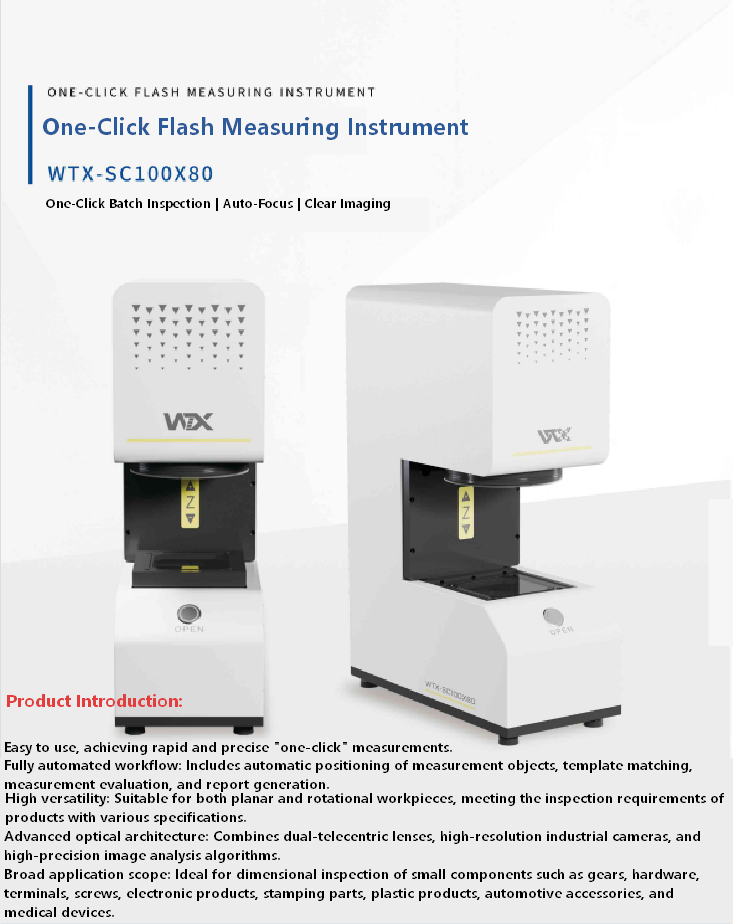
By combining advanced imaging technology, intelligent algorithms, and industrial data management, modern inspection systems allow factories to detect defects earlier, reduce production losses, and improve overall manufacturing reliability.
Why Traditional Quality Inspection Methods Are No Longer Enough
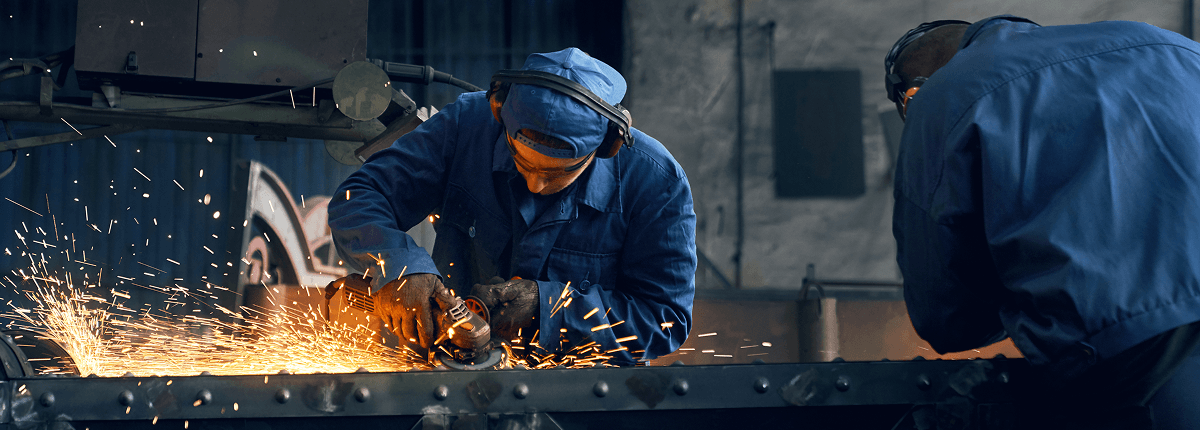
For many years, manufacturers depended on skilled operators to visually examine products on production lines. Experienced inspectors can identify many common defects, but manual inspection becomes increasingly challenging as production speed and product complexity increase.
Small surface defects, dimensional deviations, or assembly errors may be difficult to detect consistently, especially during long production cycles. Even highly trained workers can experience visual fatigue, resulting in inconsistent inspection results.
Another major limitation is the lack of detailed production data. When a defect is discovered through manual inspection, manufacturers often struggle to determine exactly when and why the problem occurred. Without reliable inspection records, quality teams must spend additional time investigating root causes instead of preventing defects from happening again.
This is where modern machine vision inspection systems provide a significant advantage. These systems continuously collect inspection data and create a more transparent connection between production processes and final product quality.
The Technologies Behind Advanced Inspection Machines
Modern industrial inspection equipment is built around several key technologies that work together to improve accuracy and production efficiency.
High-Precision Imaging and Advanced Lighting Systems
The foundation of any inspection system is its imaging capability. High-resolution cameras capture detailed product images while specialized lighting techniques enhance specific defect characteristics.
Different lighting methods, including bright-field, dark-field, and structured illumination, allow systems to identify problems such as scratches, cracks, contamination, missing components, and surface irregularities.
Unlike human vision, which can vary depending on working conditions, automated imaging provides consistent inspection results throughout the entire production cycle.
Real-Time Processing and Industrial Computing
Collecting images is only part of the inspection process. The real challenge is analyzing large amounts of visual information without slowing production.
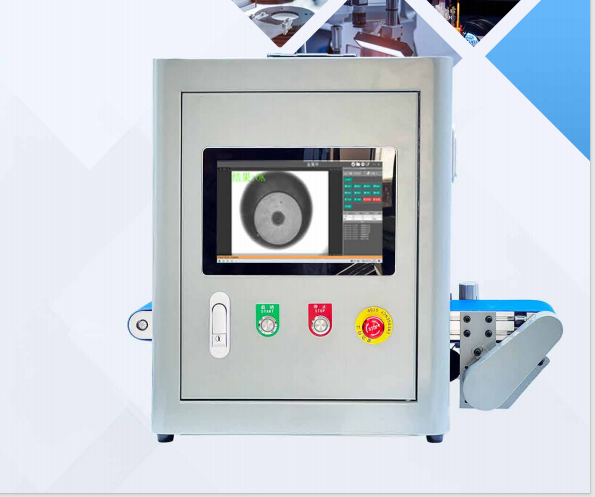
Modern inspection machines use high-performance processors and edge computing technology to analyze images within milliseconds. Products can be automatically classified as acceptable or defective while moving through the production line, maintaining high production speeds without creating bottlenecks.
This capability is especially valuable in industries where production downtime directly affects profitability.
Artificial Intelligence and Adaptive Defect Recognition
Traditional inspection systems often depended on fixed rules programmed for specific defect types. While effective for simple applications, these systems could struggle with complex products or changing manufacturing conditions.
With advances in artificial intelligence, modern systems can use machine learning models to recognize patterns from large datasets. Through continuous training, AI-powered inspection systems can identify subtle defects, adapt to product variations, and improve detection accuracy over time.
This makes automated inspection more flexible for industries producing multiple product models or customized components.
Industrial Applications of Automated Inspection Technology
The demand for advanced inspection solutions continues to grow across multiple manufacturing sectors.
In the automotive industry, inspection machines help verify critical components, detect assembly errors, and maintain strict safety standards. Manufacturers increasingly rely on automated inspection to support consistent production quality for complex vehicle systems.
In electronics and semiconductor manufacturing, where components are becoming smaller and more precise, automated inspection plays an essential role in identifying microscopic defects that cannot be reliably detected by human operators.
For packaging and consumer goods manufacturers, inspection systems help verify label accuracy, package integrity, printing quality, and sealing performance at extremely high production speeds.
Across these industries, the goal remains the same: improving manufacturing quality control while reducing waste, rework, and customer complaints.
How Manufacturers Can Successfully Implement Inspection Systems
Installing an inspection machine is not simply a hardware upgrade. Successful implementation requires careful consideration of production requirements and factory conditions.
First, manufacturers need to define clear quality standards, including acceptable defect levels, inspection speed requirements, and product specifications. A well-designed inspection strategy ensures that the system focuses on the issues that create the greatest operational impact.
Environmental factors should also be considered. Industrial production areas often include vibration, dust, temperature changes, and inconsistent lighting conditions. Reliable inspection equipment must be designed to operate accurately under real factory conditions.
Another important factor is data integration. Modern factories increasingly connect inspection systems with Manufacturing Execution Systems (MES) and enterprise management platforms. This allows production teams to monitor quality trends, identify process changes, and make faster decisions based on real-time information.
Moving Toward Data-Driven Manufacturing Excellence
As global manufacturing becomes more competitive, quality control is evolving from a final inspection step into a continuous improvement process. Advanced inspection machines help manufacturers move from detecting problems after production to preventing defects before they occur.
The combination of automated imaging, artificial intelligence, and industrial data connectivity creates a smarter approach to production management. Companies that invest in reliable inspection technology can improve efficiency, reduce operating costs, and build stronger quality systems.
For manufacturers seeking to upgrade production capabilities, professional solutions from specialized providers such as InspectionMachinePro.com can help businesses select inspection equipment based on their specific industry requirements and manufacturing goals.
Key Takeaways for Manufacturing Leaders
- Automated inspection technology provides faster and more consistent defect detection compared with traditional manual methods.
- AI-based inspection systems improve flexibility when dealing with complex products and changing production conditions.
- Connecting inspection equipment with factory data platforms enables smarter quality management and continuous process optimization.
Leave a Reply