
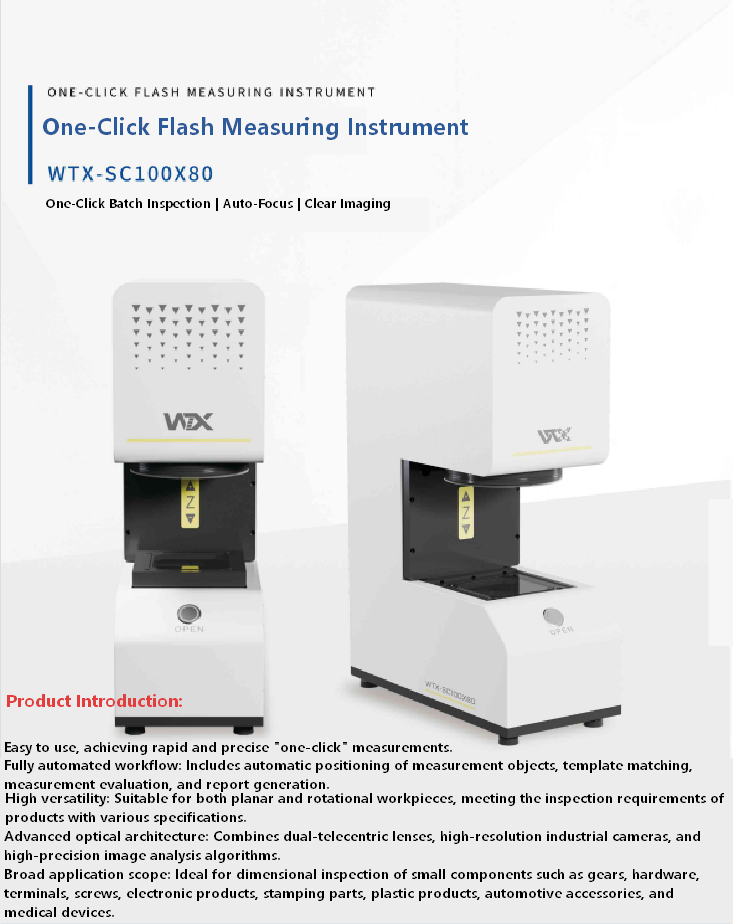

As manufacturing continues its transition toward Industry 4.0, automated inspection systems are no longer isolated pieces of production equipment. They have become intelligent data hubs that continuously collect, process, and exchange critical production information across the factory. Every inspection result, dimensional measurement, defect image, and process parameter contributes to a growing pool of operational intelligence that helps manufacturers improve quality, optimize production, and make faster business decisions.
However, greater connectivity also introduces new responsibilities. Manufacturers must now protect production data with the same level of attention they give to physical assets, intellectual property, and customer information. At the same time, organizations must recognize that technology alone cannot guarantee manufacturing excellence. Sustainable quality depends equally on the people who interpret inspection data, improve production processes, and create a culture of continuous improvement.
Companies that successfully combine secure digital infrastructure with a strong quality culture are far better positioned to compete in increasingly demanding global markets.
Why Data Security Has Become Essential in Smart Manufacturing
Digital transformation has fundamentally changed the role of quality inspection.
Modern machine vision inspection systems continuously exchange information with production equipment, industrial networks, enterprise software, and cloud platforms. Inspection data now influences production scheduling, maintenance planning, traceability, customer reporting, and executive decision-making.
As inspection systems become increasingly connected, they also become valuable cybersecurity assets that require appropriate protection.
Manufacturers should view inspection equipment not simply as production hardware but as an important part of their overall digital infrastructure.
Production Data Is Valuable Intellectual Property
Inspection systems generate much more than simple pass/fail results.
Modern quality inspection systems record valuable manufacturing information such as:
- Product dimensions
- Process capability data
- Defect images
- Production recipes
- Equipment settings
- Inspection algorithms
- Statistical quality information
- Manufacturing trends
Together, this information reflects years of engineering expertise and production optimization.
Unauthorized access to this data may expose confidential manufacturing processes, product designs, or proprietary production methods.
Protecting inspection data therefore protects one of the company’s most valuable competitive assets.
Secure Communication Protects Manufacturing Networks
As inspection equipment exchanges information across factory networks, secure communication becomes increasingly important.
Manufacturers should ensure inspection platforms support secure industrial communication technologies including:
- Encrypted data transmission
- User authentication
- Role-based access control
- Secure remote maintenance
- Device authentication
- Network segmentation
- Activity logging
These cybersecurity practices reduce the risk of unauthorized system access while improving compliance with modern industrial security standards.
As cyber threats continue evolving, secure communication is becoming a standard requirement rather than an optional feature.
Choosing Between Edge Computing and Cloud Analytics
One of the most important architectural decisions involves determining where inspection data should be processed.
Many manufacturers now combine edge computing with cloud-based analytics to balance performance, security, and scalability.
Edge Computing Advantages
Processing inspection data directly within the factory provides several benefits:
- Extremely low processing latency
- Faster production decisions
- Reduced network traffic
- Greater control over sensitive manufacturing data
- Continued operation during network interruptions
This approach is particularly valuable for high-speed production lines where inspection decisions must be made within milliseconds.
Cloud-Based Analytics Advantages
Cloud platforms provide significantly greater computing resources for:
- Long-term production analysis
- AI model training
- Multi-factory reporting
- Predictive analytics
- Enterprise-wide quality benchmarking
Cloud computing enables organizations to identify trends that may not be visible within individual production facilities.
Many manufacturers now adopt hybrid architectures that combine secure local inspection with cloud-based business intelligence.
Keeping Inspection Software Secure
Inspection software continues evolving throughout the equipment lifecycle.
Manufacturers should establish structured maintenance procedures covering:
- Firmware updates
- Software patches
- AI model improvements
- Security vulnerability fixes
- Operating system updates
- Communication protocol verification
Keeping industrial machine vision platforms current improves both cybersecurity and inspection performance.
Updated algorithms frequently deliver improved defect detection accuracy while reducing false rejection rates.
Software maintenance should therefore be considered part of routine quality management rather than an occasional IT activity.
Cybersecurity Is a Company-Wide Responsibility
Successful cybersecurity extends beyond the IT department.
Production personnel, quality engineers, maintenance teams, and plant managers all contribute to protecting manufacturing information.
Organizations should establish clear cybersecurity procedures including:
- User permission management
- Password policies
- Equipment access control
- USB device restrictions
- Secure remote support
- Employee cybersecurity awareness training
Building cybersecurity awareness throughout the organization reduces operational risk while strengthening confidence in connected manufacturing systems.
Technology Alone Cannot Create Manufacturing Excellence
Even the most advanced inspection equipment cannot improve quality if production teams fail to use the information effectively.
The greatest value of automation comes from transforming inspection data into better manufacturing decisions.
This requires a workplace culture where quality is everyone’s responsibility rather than being limited to the quality department.
Turning Inspection Data into Action
Inspection systems continuously identify process variation, defect trends, and production abnormalities.
However, information only creates value when it leads to corrective action.
Modern Manufacturing Execution Systems (MES) increasingly present inspection results through intuitive dashboards that allow operators to quickly understand:
- Defect frequency
- Process trends
- Equipment performance
- Production stability
- Quality alerts
- Historical comparisons
Providing operators with clear, actionable information enables faster decision-making while encouraging proactive problem solving.
The Changing Role of Quality Professionals
Automation does not eliminate human expertise.
Instead, it changes how manufacturing professionals contribute to production.
Routine visual inspection increasingly becomes automated, allowing experienced personnel to focus on higher-value responsibilities including:
- Root cause investigation
- Process capability improvement
- Statistical quality analysis
- Equipment optimization
- Continuous improvement projects
- Manufacturing innovation
This transition enhances workforce productivity while creating more engaging technical roles.
Rather than replacing employees, automation expands their ability to improve manufacturing performance.
Continuous Learning Supports Consistent Quality
Maintaining high inspection accuracy requires ongoing organizational learning.
Manufacturers should establish continuous improvement programs that include:
- Regular operator training
- Inspection parameter reviews
- AI model updates
- Cross-functional quality meetings
- Process improvement workshops
- Performance benchmarking
As products, materials, and customer requirements evolve, inspection strategies should evolve accordingly.
Continuous education helps organizations maintain consistent quality throughout long production lifecycles.
Quality Culture Creates Long-Term Competitive Advantage
Global manufacturers increasingly compete on reliability rather than price alone.
Customers prefer suppliers capable of delivering consistent quality supported by objective production data.
Organizations that combine intelligent inspection technology with strong quality management practices gain several long-term advantages:
- Greater customer confidence
- Improved regulatory compliance
- Lower production costs
- Faster problem resolution
- Better supplier relationships
- Stronger brand reputation
Quality becomes more than a manufacturing objective—it becomes a core business strategy.
Building the Smart Factory of the Future
The future of manufacturing depends on much more than automation.
Successful factories integrate secure digital infrastructure, intelligent inspection, connected production systems, and highly skilled employees into a unified manufacturing ecosystem.
A secure machine vision inspection system protects valuable production knowledge while providing the real-time information required for continuous improvement.
At the same time, organizations that cultivate a culture of quality empower employees to transform inspection data into meaningful operational improvements.
Manufacturers that invest in both secure digital manufacturing and people-centered quality management will be best positioned to respond to changing market demands, strengthen customer trust, and maintain sustainable growth in the era of smart manufacturing.
Leave a Reply