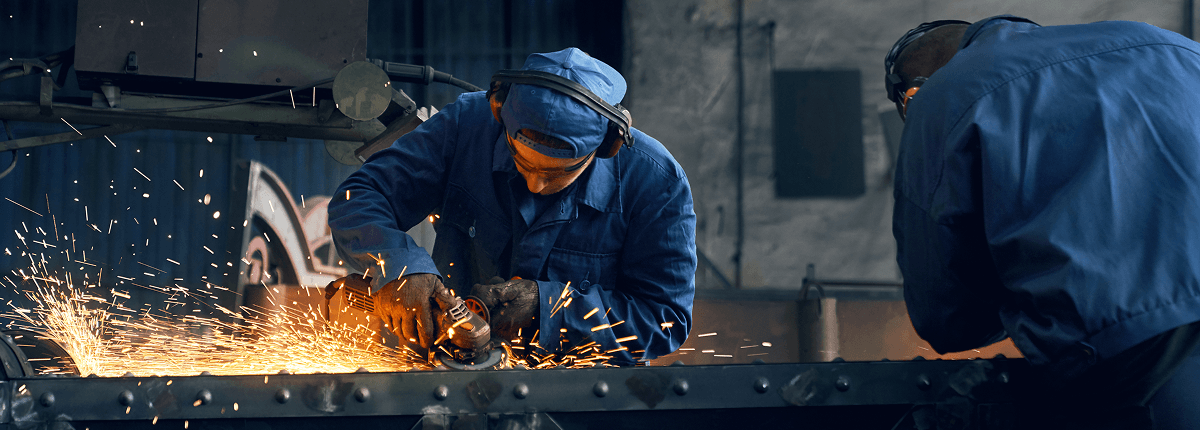

Manufacturing quality standards are becoming increasingly demanding. As production speeds rise and product tolerances tighten, traditional inspection methods are struggling to keep pace.
For years, factories relied on manual inspectors and rule-based vision systems to identify defects. While these approaches remain useful in certain applications, modern production environments require inspection solutions that can adapt to complex product variations and maintain consistent accuracy around the clock.
This shift has accelerated the adoption of AI-powered inspection systems, where deep learning algorithms work alongside industrial cameras to identify surface defects with a level of consistency that conventional systems often cannot achieve.
From automotive components and consumer electronics to pharmaceutical packaging and precision machining, manufacturers are increasingly investing in automated inspection machines to improve product quality while reducing operational costs.
Why Traditional Vision Inspection Faces Growing Challenges
Conventional machine vision systems operate through predefined rules.
Engineers establish parameters such as size, shape, brightness, or contrast. If an object falls outside those parameters, the system flags it as defective.
This approach works well when products and defect patterns remain highly consistent. However, modern manufacturing rarely offers such predictability.
Several limitations frequently emerge:
High False-Reject Rates
Materials such as aluminum, stainless steel, textiles, wood, and injection-molded plastics naturally contain visual variations.
A rule-based system may incorrectly classify harmless texture differences, reflections, or color changes as defects, increasing rejection rates and generating unnecessary waste.
Extensive Engineering Effort
Every new product launch typically requires engineers to adjust lighting conditions, modify inspection parameters, and retune algorithms.
For manufacturers handling multiple SKUs, maintenance quickly becomes time-consuming.
Difficulty Detecting Unknown Defects
Traditional systems only identify conditions that engineers specifically programmed them to recognize.
When a new scratch pattern, contamination type, or surface anomaly appears, the defect may pass undetected.
This limitation becomes increasingly problematic in industries where product designs change frequently.
How Deep Learning Changes Industrial Inspection
Unlike conventional systems, deep learning models learn directly from production data.
Instead of defining every defect mathematically, manufacturers provide the system with large collections of acceptable and defective product images.
The AI then learns to recognize visual patterns independently.
A typical surface defect detection workflow includes:
Image Acquisition → Image Preprocessing → Feature Extraction → Defect Segmentation → Classification → Pass/Fail Decision
Modern convolutional neural networks (CNNs) evaluate far more than simple pixel differences.
They analyze:
- Surface texture
- Edge characteristics
- Material consistency
- Shape variations
- Contextual visual relationships
As a result, the system develops a more sophisticated understanding of product appearance.
This capability allows AI inspection solutions to distinguish between harmless cosmetic variations and genuine manufacturing defects.
Traditional Vision vs Deep Learning Inspection
Setup and Deployment
Traditional systems often require weeks of programming and calibration.
Deep learning systems typically rely on image collection and model training, reducing engineering workload when new products are introduced.
Defect Recognition Capability
Rule-based inspection generally delivers binary results: acceptable or unacceptable.
By contrast, deep learning vision systems can classify defect categories such as:
- Scratches
- Cracks
- Dents
- Surface contamination
- Missing components
- Material inconsistencies
This additional information helps quality teams identify root causes more quickly.
Adaptability
Production environments change constantly.
Deep learning models can be retrained using new image datasets, allowing inspection performance to evolve alongside manufacturing processes.
This flexibility is particularly valuable for contract manufacturers and facilities producing multiple product variants.
Building an Effective AI Inspection System
Successful deployment involves more than installing a camera.
Several foundational elements determine overall performance.
Optimizing Lighting and Imaging
Even the most advanced AI model depends on image quality.
Proper illumination ensures defects generate sufficient contrast for reliable detection.
Different applications often require specialized lighting methods:
- Coaxial lighting for reflective metal surfaces
- Dome lighting for curved plastic components
- Backlighting for dimensional inspection
- Structured lighting for textured materials
Careful optical design remains one of the most important factors influencing inspection accuracy.
Collecting High-Quality Training Data
The quality of the dataset directly impacts model performance.
Manufacturers should gather images that represent:
- Normal production variation
- Different defect types
- Multiple operating conditions
- Real-world lighting fluctuations
Many factories now utilize anomaly detection technology, which allows systems to learn from images of acceptable products and identify deviations automatically.
This approach significantly reduces data preparation requirements.
Edge Computing Integration
Inspection decisions often need to occur within milliseconds.
To meet these requirements, many manufacturers deploy AI models directly on industrial computers located near production equipment.
By processing data locally, factories avoid cloud latency and maintain consistent performance even during network interruptions.
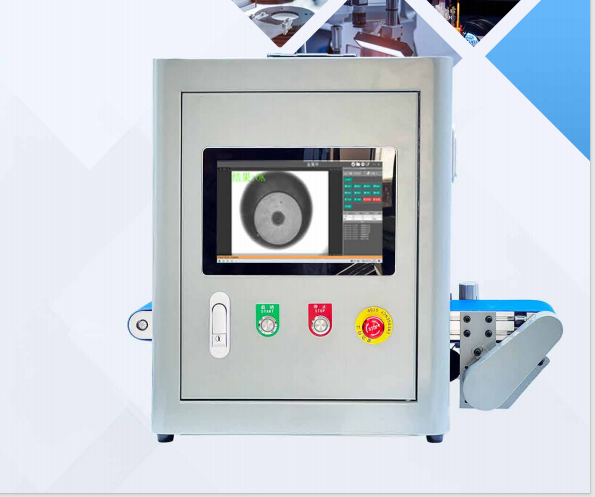
Integrated machine vision inspection systems combining cameras, industrial computing hardware, and automated sorting mechanisms can simplify deployment while shortening implementation timelines.
Industry Applications of AI-Based Surface Inspection
Electronics Manufacturing
As electronic assemblies become smaller and more complex, manual inspection becomes increasingly difficult.
AI systems can detect:
- Missing components
- Solder defects
- PCB contamination
- Micro-cracks
- Alignment errors
These inspections occur at production speeds that would be impossible for human operators.
Pharmaceutical Packaging
Reflective blister packs present challenges for conventional vision systems.
Deep learning models can focus on product integrity while filtering out irrelevant reflections.
Common inspection tasks include:
- Tablet presence verification
- Capsule damage detection
- Seal integrity inspection
- Foreign particle identification
Automotive and Metal Processing
Stamped and machined metal components often exhibit oil residues, changing reflectivity, and complex geometries.
AI-powered systems can distinguish between acceptable manufacturing marks and critical structural defects, reducing both false positives and escape rates.
Frequently Asked Questions
Will AI Inspection Replace Human Inspectors?
Not completely.
Instead of performing repetitive visual checks, operators typically transition into supervisory roles.
Human expertise remains essential for:
- Reviewing uncertain cases
- Validating inspection results
- Managing model updates
- Supporting continuous improvement initiatives
How Long Does It Take to Achieve ROI?
While results vary by application, many manufacturers report measurable returns within 9–18 months.
Savings typically come from:
- Reduced labor requirements
- Lower scrap rates
- Fewer customer complaints
- Improved production throughput
- Reduced rework costs
Can Deep Learning Systems Support High-Speed Production Lines?
Yes.
Modern edge-AI platforms can complete image analysis in milliseconds.
This makes them suitable for:
- Packaging lines
- Bottling systems
- Continuous web production
- Electronics assembly lines
- High-speed sorting equipment
The Future of Quality Inspection
Manufacturing quality control is moving beyond traditional pass/fail inspection.
Today’s factories increasingly rely on intelligent systems capable of learning, adapting, and generating actionable production insights.
By combining industrial imaging with advanced AI algorithms, manufacturers can reduce inspection variability, improve defect detection accuracy, and gain deeper visibility into production performance.
As Industry 4.0 initiatives continue to expand, automated visual inspection and AI defect detection are becoming core components of modern smart factories rather than optional upgrades.
For manufacturers evaluating their next automation investment, upgrading to an intelligent inspection platform may provide one of the most direct paths toward higher quality consistency and long-term operational efficiency.
Leave a Reply