
Quality control technology has undergone a significant transformation over the past decade. What was once considered a specialized investment reserved for large manufacturing corporations is now accessible to businesses of virtually every size. From independent machine shops and contract manufacturers to fully automated production facilities, modern quality inspection systems provide scalable solutions that improve consistency, reduce waste, and support long-term operational growth.
As production standards continue to rise and customers demand higher levels of reliability, manufacturers can no longer rely solely on manual inspection processes. Human-based inspection remains valuable in certain situations, but it is often limited by fatigue, inconsistent judgment, and production speed constraints. Automated inspection technology addresses these challenges by providing standardized verification processes that deliver repeatable and measurable results.
Why Inspection Technology Is Becoming More Accessible
Historically, implementing automated inspection required substantial investment in hardware, software, and engineering expertise. Many small manufacturers simply lacked the resources to justify such projects.
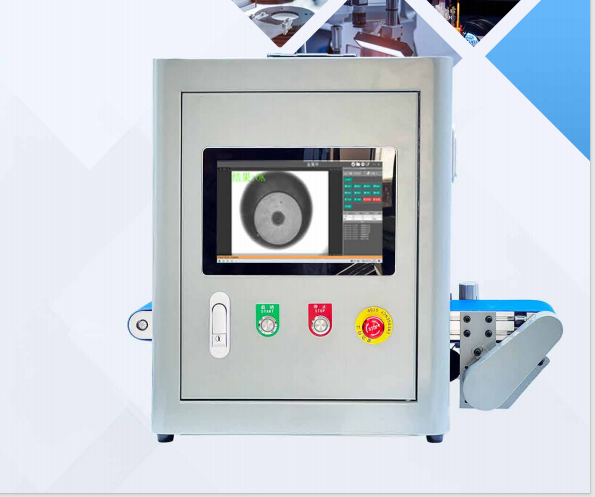
Advancements in sensor technology, computing power, and software design have changed this reality. Modern inspection platforms feature intuitive touchscreen interfaces, simplified setup procedures, and automated calibration functions that significantly reduce operational complexity.
Many systems now utilize teach-and-learn functionality, allowing operators to scan a known-good product and automatically establish baseline inspection parameters. Instead of requiring specialized programming knowledge, users can configure inspection criteria through graphical interfaces and adjustable tolerance settings.
This accessibility enables smaller businesses to achieve the same quality standards that were once only available to large-scale manufacturers.
Choosing Between Standalone and Inline Inspection Systems
One of the first decisions when implementing inspection technology is determining whether a standalone or integrated solution best fits the production environment.
Standalone inspection stations operate independently from the primary production line. Operators manually place components into the system for measurement, visual verification, or dimensional analysis. These systems are particularly well suited for low-volume production, custom manufacturing, prototyping environments, and workshops where flexibility is more important than throughput.
By contrast, inline inspection systems are integrated directly into production lines. Products move through the inspection zone automatically while sensors, cameras, or measurement devices evaluate each item in real time. Defective products are immediately identified and removed from the production flow without interrupting operations.
For high-volume manufacturers, inline systems provide continuous quality monitoring while maintaining maximum production efficiency.
The Growing Role of Machine Vision Technology
Among all inspection technologies, machine vision inspection has become one of the most widely adopted solutions across modern manufacturing sectors.
Machine vision systems combine industrial cameras, controlled lighting, and intelligent image-processing software to analyze products as they move through production. These systems can identify surface defects, assembly errors, missing components, labeling inconsistencies, and dimensional variations with a level of consistency difficult to achieve through manual inspection alone.
Industries including automotive manufacturing, electronics assembly, packaging, and consumer goods production increasingly rely on machine vision technology to improve quality consistency and reduce inspection-related labor requirements.
As artificial intelligence and image-processing algorithms continue to evolve, machine vision capabilities are becoming even more powerful, enabling faster and more accurate defect detection across a broader range of applications.
Software Simplicity Is Now a Competitive Advantage
When evaluating inspection solutions, hardware capabilities represent only part of the equation. Software usability has become equally important.
For smaller organizations without dedicated automation engineers, intuitive software can dramatically reduce implementation time and training costs. Modern inspection platforms frequently include visual dashboards, automated reporting tools, and cloud-based data storage capabilities.
These features allow operators to monitor production quality, review defect trends, and generate professional quality assurance reporting without requiring advanced technical expertise.
The ability to access inspection data quickly also improves communication between production teams, quality managers, and customers, creating greater transparency throughout the manufacturing process.
Environmental Factors That Influence Inspection Performance
Even the most advanced inspection equipment must operate within real-world manufacturing environments. Before selecting a system, manufacturers should carefully evaluate the conditions under which the equipment will be deployed.
Excessive vibration generated by nearby machinery can affect measurement accuracy, particularly for precision dimensional inspection systems. In facilities with heavy equipment, vibration isolation solutions may be necessary to ensure reliable performance.
Lighting conditions also play a critical role. Variable ambient lighting can negatively impact vision-based systems, making controlled illumination essential for consistent results. Many modern inspection solutions address this challenge by utilizing enclosed inspection chambers equipped with integrated LED lighting.
In environments where dust, metal particles, or airborne contaminants are present, equipment protection becomes equally important. Manufacturers should verify that selected systems offer appropriate sealing and environmental protection ratings to maintain long-term reliability.
Building a Scalable Quality Control Strategy
Implementing automated quality control does not require a complete transformation of existing operations. In many cases, businesses achieve significant improvements by introducing inspection technology at a single critical stage of production and expanding gradually as requirements evolve.
A scalable approach allows organizations to validate return on investment, refine inspection procedures, and build internal expertise before committing to larger automation initiatives.
Whether operating a small workshop or managing a high-volume manufacturing facility, the objective remains the same: establish consistent quality standards, reduce variability, and create a reliable process for identifying defects before products reach customers.
Conclusion
The modern generation of industrial inspection equipment has made advanced quality control more accessible than ever before. Manufacturers no longer need enterprise-scale budgets or large engineering departments to implement effective inspection processes.
By carefully evaluating production volume, available space, operator requirements, and environmental conditions, organizations can deploy quality inspection systems that align with their operational goals while supporting future growth.
As manufacturing becomes increasingly data-driven and quality expectations continue to rise, scalable inspection technology will remain a key component of efficient, competitive, and sustainable production operations.
Leave a Reply