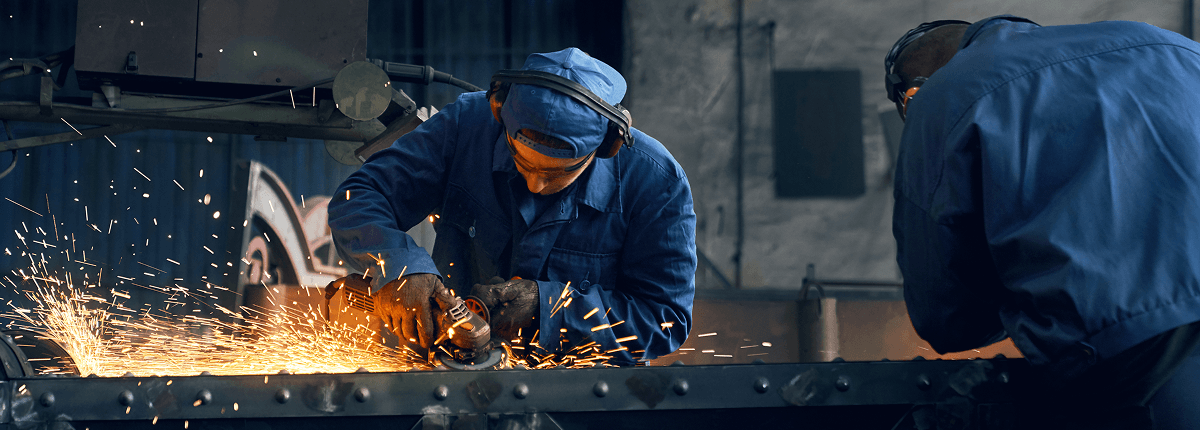
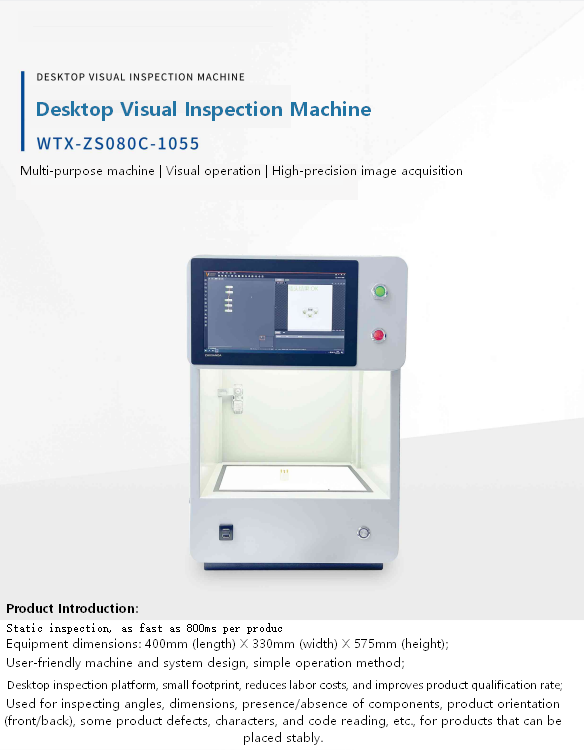

Manufacturing has entered an era where speed, consistency, and reliability determine business competitiveness. As production lines become faster and product designs become increasingly complex, maintaining stable quality across millions of components has become one of the biggest challenges for manufacturers.
Traditional manual inspection methods can no longer fully support modern production demands. Human inspectors may experience fatigue, inconsistent judgment, and limited inspection speed, especially in high-volume manufacturing environments. These limitations often result in missed defects, increased waste, and unexpected quality risks.
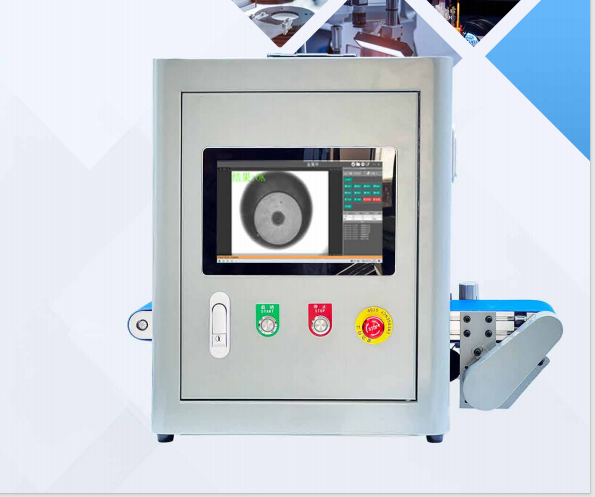
To overcome these challenges, manufacturers are increasingly adopting automated inspection machines that combine machine vision, intelligent algorithms, and real-time data analysis. These systems are changing quality control from a reactive process into a proactive manufacturing strategy, helping factories achieve higher accuracy, better efficiency, and stronger production traceability.
From Manual Quality Checks to 100% Automated Inspection
For decades, many factories relied on sampling-based quality control. Operators would inspect a small percentage of products from a production batch and assume the remaining items met the required standards.
Although this approach reduced inspection costs, it created a major weakness: defective products could still pass through the production process and reach customers. In industries such as automotive, electronics, and medical manufacturing, even a small percentage of undetected defects can lead to expensive recalls, production losses, and reputational damage.
Modern vision inspection systems have changed this traditional model by enabling continuous inspection of every product moving through the production line.
Instead of checking only selected samples, automated systems analyze each component in real time. This allows manufacturers to:
- Detect defects immediately before additional processing costs occur
- Reduce material waste and unnecessary rework
- Improve production consistency across different shifts
- Create digital inspection records for quality tracking
This transition from random sampling to full inspection represents a fundamental shift toward smarter manufacturing.
The Technology Behind Modern Inspection Systems
The performance of today’s inspection equipment comes from the combination of advanced imaging technology, computing power, and intelligent software.
High-Precision Imaging and Advanced Lighting
Accurate inspection starts with reliable image acquisition. A machine vision system must capture clear and detailed images before software algorithms can identify defects.
Modern inspection platforms use technologies such as high-resolution industrial cameras, customized LED lighting, polarized filters, and multi-angle imaging solutions to detect extremely small imperfections.
These technologies allow manufacturers to identify issues including:
- Surface scratches and cracks
- Dimensional variations
- Missing components
- Color inconsistencies
- Manufacturing contamination
In industries where product tolerances are measured in microns, high-quality imaging is essential for maintaining production accuracy.
Real-Time Processing and Intelligent Decision Making
High-speed production lines require inspection systems that can make decisions within milliseconds. A delay of even a few seconds can affect the entire manufacturing workflow.
Modern systems integrate edge computing technology to process image data directly near the production line. This reduces communication delays and enables immediate responses, such as automatically removing defective parts through sorting mechanisms.
Unlike traditional inspection methods that only provide pass-or-fail results, advanced systems generate valuable production data. Manufacturers can analyze this information to identify recurring problems, improve processes, and reduce long-term operating costs.
The Role of AI in Automated Quality Control
Artificial intelligence has further expanded the capabilities of industrial inspection.
Traditional machine vision systems often depended on fixed rules and predefined parameters. While effective for simple applications, these systems struggled when products had natural variations or complex surface characteristics.
Today, AI-powered inspection systems can learn from production data and recognize complex defect patterns. This improves detection accuracy while reducing false alarms, allowing factories to maintain efficiency without sacrificing quality.
AI-based inspection is particularly valuable in industries where defect types are constantly changing or difficult to define using traditional measurement methods.
Key Applications Across Different Manufacturing Industries
Automated inspection technology has become an important part of many industrial sectors.
Electronics and Semiconductor Manufacturing
Electronic components require extremely precise quality control because even microscopic defects can affect product performance.
In semiconductor and circuit board production, inspection systems are used to verify:
- Component placement accuracy
- Solder joint quality
- Surface defects
- Assembly consistency
By identifying problems during manufacturing, companies can prevent costly failures after products reach the market.
Automotive Component Manufacturing
The automotive industry relies heavily on automated inspection due to strict safety requirements.
Components such as gears, fasteners, seals, and precision metal parts must meet exact specifications before entering vehicle assembly.
Using automated quality control systems, manufacturers can inspect critical components for:
- Dimensional accuracy
- Surface damage
- Assembly errors
- Material inconsistencies
This ensures that every component meets industry standards and reduces the risk of field failures.
Packaging and Consumer Product Manufacturing
Inspection automation is also widely used in packaging industries where production speed is extremely high.
Modern systems can verify:
- Label positioning
- Printing quality
- Packaging seals
- Product appearance
- Filling levels
For consumer brands, these inspections help protect product quality while maintaining efficient production output.
How Manufacturers Can Successfully Implement Inspection Automation
Installing an inspection system is not simply a hardware upgrade. Successful implementation requires careful planning and integration with existing production processes.
Define Inspection Requirements Clearly
Before selecting equipment, manufacturers should identify:
- The types of defects that must be detected
- Required inspection speed
- Product tolerance ranges
- Data reporting requirements
A clear understanding of these factors helps companies select the most suitable inspection configuration.
Ensure Smooth Factory Integration
Modern factories often operate with complex production environments. Inspection equipment should integrate smoothly with existing conveyors, manufacturing execution systems, and production workflows.
Flexible and modular designs allow companies to upgrade quality control capabilities without major changes to existing infrastructure.
Train Teams for Long-Term Performance
Although modern inspection machines are increasingly automated, skilled operators and maintenance teams remain essential.
Proper training helps employees manage:
- System calibration
- Software adjustments
- Equipment maintenance
- Performance monitoring
This ensures stable operation and maximizes the long-term value of the investment.
The Future of Automated Inspection in Smart Manufacturing
As factories continue moving toward Industry 4.0, inspection technology will become even more connected and intelligent.
Future inspection systems will not only identify defects but also predict production problems before they happen. By combining machine vision, artificial intelligence, and manufacturing data analytics, companies can create more efficient and self-optimizing production environments.
For manufacturers competing in global markets, investing in industrial automation solutions is becoming a strategic necessity rather than an optional improvement.
Automated inspection machines represent a critical foundation for smart factories, helping businesses achieve higher quality standards, lower production costs, and stronger customer confidence.
Leave a Reply