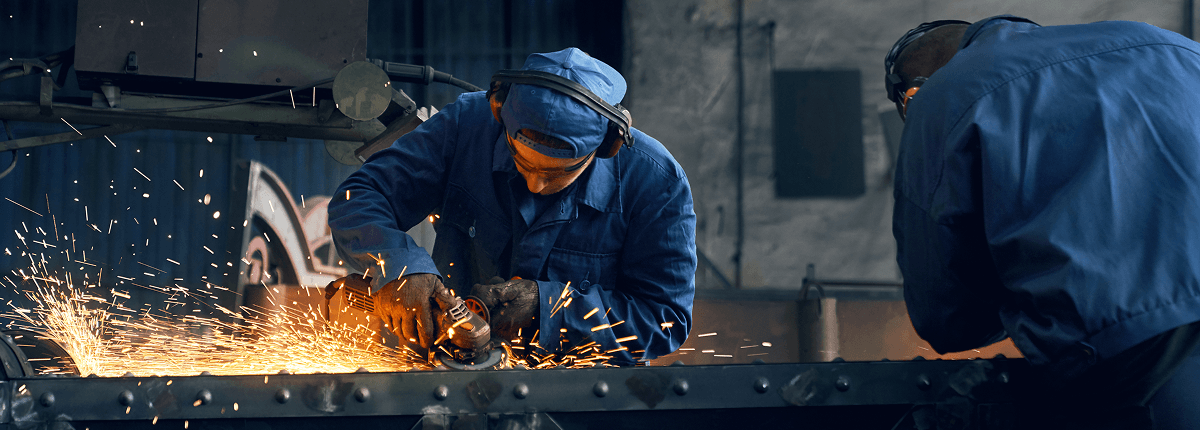

Manufacturing standards have changed dramatically over the last decade. Today, quality is no longer measured only by the finished product—it is evaluated throughout every stage of production. As production lines become faster and customer expectations continue to rise, manufacturers are turning to Industrial Quality Inspection Machines to achieve higher accuracy, greater efficiency, and consistent product quality.
From electronics and automotive manufacturing to pharmaceutical packaging and medical devices, automated inspection has become a critical part of modern production. Companies that still rely heavily on manual inspection often struggle with inconsistent quality, higher labor costs, and unnecessary material waste.
Why Manufacturers Are Moving Beyond Manual Inspection
For many years, visual inspection depended on experienced operators to identify defects. Although human inspectors are capable of recognizing complex patterns, manual inspection has unavoidable limitations.
Fatigue, changing lighting conditions, repetitive work, and production speed all affect inspection accuracy. Even highly trained inspectors may overlook microscopic defects during long production shifts.
This is why manufacturers increasingly adopt Machine Vision Systems that combine industrial cameras, precision lighting, image processing software, and intelligent algorithms to inspect products automatically with remarkable consistency.
Unlike manual inspection, machine vision delivers the same level of accuracy regardless of production volume or operating hours.
How Machine Vision Inspection Systems Work
A modern Automated Optical Inspection (AOI) solution follows a structured inspection process that ensures every product is evaluated against predefined quality standards.
Image Acquisition
Every inspection begins with capturing a high-quality image. Industrial cameras work together with specialized lighting to eliminate shadows, reflections, and environmental interference. Proper illumination is often the most important factor influencing inspection accuracy.
Image Processing
Once an image is captured, advanced software converts visual information into digital data. The system removes background noise while highlighting critical product features such as edges, dimensions, textures, labels, or surface conditions.
Defect Detection and Measurement
The processed image is compared against reference models or tolerance parameters. The inspection software measures dimensions, verifies component positioning, detects missing parts, and identifies surface imperfections with micron-level precision.
Automated Decision Making
Based on predefined inspection rules, the system immediately determines whether a product passes or fails inspection. Defective products can be automatically rejected, while production data is simultaneously recorded for process analysis and traceability.
Key Advantages of Automated Industrial Inspection
Replacing manual inspection with intelligent vision systems provides benefits that extend far beyond faster inspections.
Consistent Inspection Accuracy
Unlike human operators, machine vision systems never become tired or distracted. Every product receives exactly the same inspection criteria regardless of shift schedules or production volume.
Detection of Microscopic Defects
Advanced inspection equipment can identify defects that are invisible to the human eye, including tiny cracks, surface scratches, contamination, incorrect component placement, and subtle color variations.
Real-Time Production Data
Modern Quality Inspection Systems generate valuable production data during every inspection cycle. Manufacturers can identify recurring defects, monitor process stability, and continuously improve production efficiency using real-time analytics.
Lower Manufacturing Costs
Early defect detection prevents defective products from moving further down the production line. This reduces material waste, minimizes rework, lowers warranty claims, and improves overall production profitability.
Applications Across Multiple Manufacturing Industries
The flexibility of machine vision technology makes it suitable for nearly every industrial sector.
Electronics Manufacturing
Inspection systems verify PCB assembly quality, inspect solder joints, confirm connector alignment, and detect missing or misplaced electronic components before final assembly.
Automotive Manufacturing
Automotive suppliers use Vision Inspection Systems to measure dimensional tolerances, inspect weld quality, verify gasket installation, and ensure every safety-critical component meets strict manufacturing specifications.
Medical Device Production
Medical manufacturers require exceptionally high inspection accuracy. Automated systems inspect syringe assembly, pharmaceutical packaging, surgical instruments, and disposable medical products while maintaining strict regulatory compliance.
Food and Packaging Industry
Machine vision is widely used for package integrity inspection, barcode verification, label positioning, seal inspection, and contamination detection to ensure product safety and traceability.
Choosing the Right Industrial Inspection Solution
Every production environment has unique inspection requirements. Selecting the right solution depends on several important factors, including production speed, product size, surface characteristics, lighting conditions, and defect types.
Reflective metal components require different lighting techniques than transparent plastic products, while high-speed production lines demand faster image processing and shorter inspection cycles.
A scalable inspection solution should also integrate easily with existing automation equipment, PLC systems, MES platforms, and factory management software to support future production expansion.
The Future of Industrial Inspection Is AI-Driven
Artificial intelligence is redefining industrial quality control. Traditional rule-based inspection systems perform well when defects follow predictable patterns. However, many manufacturing defects are irregular, complex, or difficult to define using fixed programming rules.
Modern AI Vision Inspection powered by deep learning continuously improves its detection capability by analyzing thousands of real production samples. Instead of relying solely on manually defined inspection parameters, AI models learn the characteristics of both acceptable and defective products, significantly improving detection accuracy for complex defects.
As Industry 4.0 adoption accelerates, AI-powered inspection systems are becoming an essential component of smart factories. They not only identify quality issues but also provide actionable production insights that help manufacturers optimize processes, reduce downtime, and improve overall equipment effectiveness (OEE).
Conclusion
Industrial quality inspection has evolved from a simple quality control process into a strategic manufacturing capability. By combining machine vision, intelligent software, and AI-driven analytics, manufacturers can achieve higher production efficiency, lower operating costs, and consistently deliver products that meet increasingly demanding quality standards.
For companies planning to modernize their production lines, investing in advanced inspection technology is no longer just a quality improvement initiative—it is a long-term investment in operational excellence, digital manufacturing, and sustainable business growth.
Leave a Reply