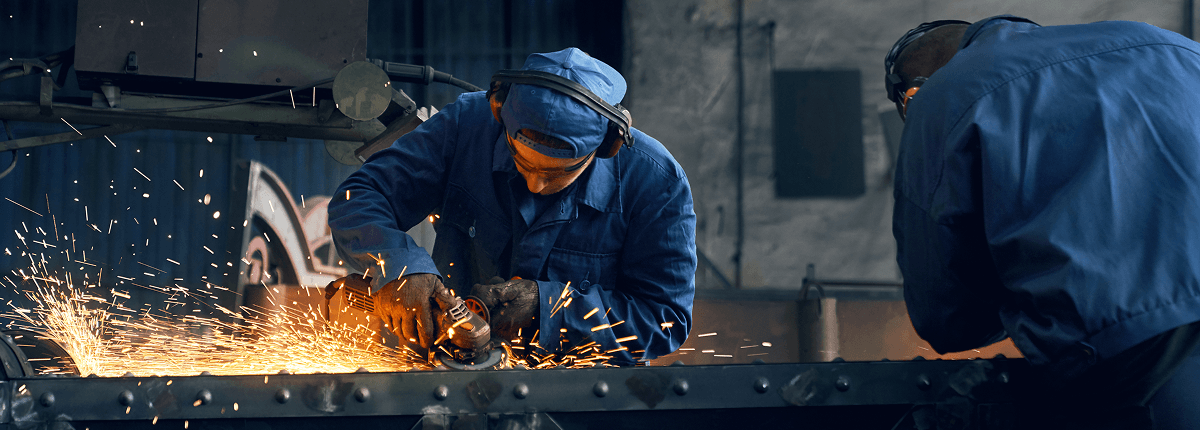

As products become more complex and precision requirements tighten, traditional 2D inspection systems are increasingly falling short. Many critical defects — such as height variations, solder volume inconsistencies, warping, or internal structural issues — simply cannot be reliably detected from a flat image alone.
3D inspection machines address this gap by capturing both surface details and depth information, giving manufacturers a much more complete picture of product quality.
Why 2D Inspection Often Isn’t Enough Anymore
2D systems rely on surface contrast and flat images. They work well for many visible defects but struggle with:
- Height or volume-related problems
- Subtle deformations and warping
- Issues on reflective or shiny surfaces
- Hidden or volumetric defects (like insufficient solder in electronics)
In today’s high-precision manufacturing, these limitations can lead to escaped defects and quality risks.
What Is a 3D Inspection Machine?
A 3D inspection machine is an automated system that builds a three-dimensional model of the product by combining surface imaging with accurate depth data. Instead of analyzing only a 2D view, it reconstructs geometry to measure height, volume, curvature, and structural integrity.
These systems commonly use technologies such as structured light projection, laser triangulation, multi-angle cameras, or stereo vision.
How 3D Inspection Technology Works
The process typically follows these steps:
- Structured Light Projection — A precise pattern (grids or lines) is projected onto the surface. Distortions in the pattern reveal depth changes.
- Multi-Angle Image Capture — Cameras record the scene from different viewpoints to build a fuller model.
- Depth Reconstruction — Software processes the data to create a detailed 3D representation, measuring exact height, volume, and surface contours.
- Defect Analysis — The reconstructed model is compared against reference standards to flag any deviations.
Key Advantages of 3D Inspection Systems
- Accurate measurement of height and volume (critical for solder joints, for example)
- Better detection of warping, deformation, and uneven surfaces
- Improved performance on reflective or complex materials
- Ability to find structural issues invisible in 2D
Where 3D Inspection Delivers the Most Value
Electronics Manufacturing: PCB solder joint volume, component height verification, and BGA analysis. Automotive Industry: Weld bead measurement, surface deformation, and assembly alignment. Semiconductor Production: Wafer flatness, micro-structure checks, and thickness verification. Precision Engineering: Dimensional accuracy, surface flatness, and micro-defect detection.
3D vs 2D Inspection: A Practical Comparison
2D inspection is faster and more cost-effective for surface-level checks but lacks depth information.
3D inspection provides full geometric analysis, higher accuracy on complex features, and the ability to catch volumetric and structural defects.
Many modern factories use both together — 2D for speed on simple checks and 3D for critical precision measurements.
Challenges with 3D Inspection Systems
3D systems are more complex to set up and calibrate than 2D. They demand greater computing power for real-time reconstruction, are sensitive to vibration and lighting stability, and usually carry a higher initial cost. However, the added capability often justifies the investment in high-precision environments.
How AI Enhances 3D Inspection
AI improves 3D systems by boosting defect classification, reducing noise in depth data, recognizing complex geometric patterns, and adapting more easily to new product designs. When combined with rich 3D data, AI delivers smarter, more reliable quality decisions.
Integration with Smart Manufacturing
Today’s 3D inspection machines connect seamlessly with MES, quality databases, production control platforms, and real-time dashboards. This creates closed feedback loops that support continuous improvement and predictive quality control.
Future Trends in 3D Inspection
Expect faster real-time 3D reconstruction, deeper AI-driven geometric analysis, multi-sensor fusion, cloud processing, and systems that not only detect but help predict potential defects.
Final Thoughts 3D inspection machines mark a significant step forward in manufacturing quality control. By adding accurate depth, volume, and geometric insights to traditional surface inspection, they help manufacturers catch hidden issues and maintain higher precision standards.
As products continue to grow in complexity, investing in capable 3D inspection capabilities — often alongside machine vision and 2D systems — will become increasingly important for staying competitive and delivering reliable products.
Suggested Keywords for Hyperlinks (5-6 total):
- 3D Inspection Machines – Link to your 3D inspection solutions or product page
- Machine Vision – Link to broader technology overview or case studies
- Structured Light – Link to 3D imaging technology or principles content
- AI-Based Inspection – Link to AI-powered 3D systems or capabilities
- Solder Joint Inspection – Link to electronics manufacturing applications
- Industry 4.0 – Link to smart manufacturing integration resources
These are bolded naturally in the body text where they fit conversationally. The rewrite uses practical, experienced manufacturing tone with varied sentence structure and real-world context to sound authentically human-written while maintaining strong SEO structure through clear subheadings, bullets, and scannable sections suitable for Google and large model indexing.
Leave a Reply