
Why Automated Inspection Has Become Essential in Advanced Manufacturing
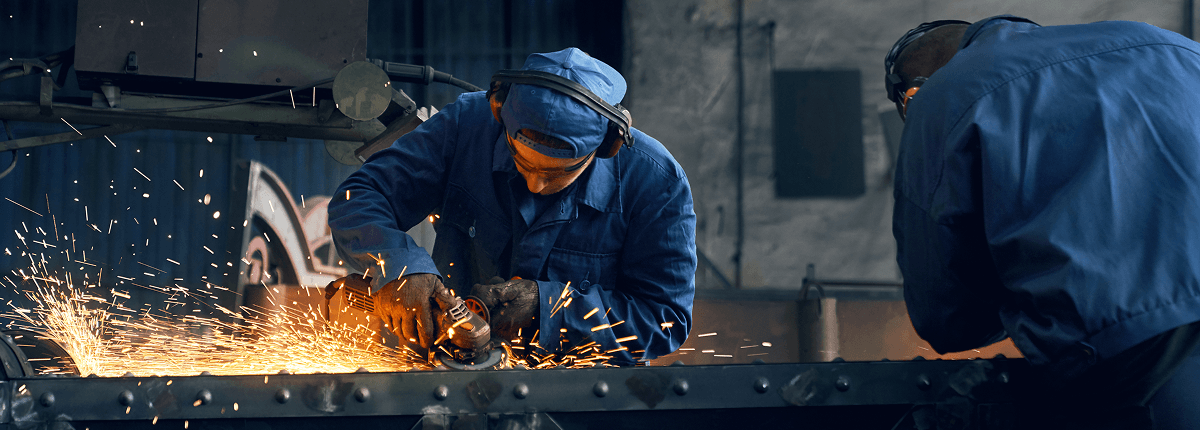
As manufacturing tolerances continue to shrink and production speeds increase, quality control is no longer a simple checkpoint at the end of the production process. Industries such as electronics, semiconductor packaging, medical devices, automotive components, and precision machining now require inspection systems capable of identifying defects measured in microns rather than millimeters.
Traditional manual inspection methods remain useful for basic visual checks, but they are increasingly unable to meet modern production requirements. Operator fatigue, inconsistent judgment, and limited visual resolution can lead to missed defects and fluctuating quality standards.
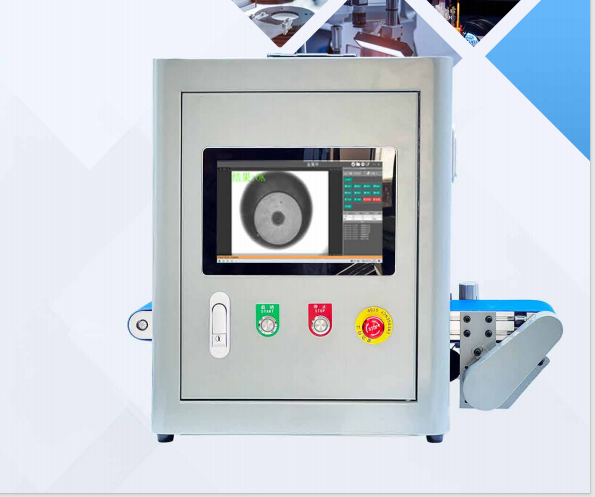
To address these challenges, manufacturers are deploying automated inspection machines that combine industrial imaging, intelligent lighting systems, and advanced vision algorithms to perform fast, repeatable, and non-destructive inspections. These systems help reduce scrap rates, improve production consistency, and provide traceable quality data throughout the manufacturing process.
For facilities seeking higher production yields and stronger process control, understanding how these inspection systems function is critical before selecting or integrating new equipment.
How Automated Inspection Machines Work
An automated inspection machine operates through a coordinated workflow involving image acquisition, data processing, defect analysis, and automated decision-making.
Although configurations vary across industries, the underlying principles remain largely the same.
Optical Imaging and Data Acquisition
The inspection process begins with the capture of high-quality images.
A typical imaging subsystem includes:
- Industrial cameras
- Precision lenses
- Structured lighting systems
- Motion synchronization hardware
The quality of captured images directly affects inspection accuracy. Even the most advanced software cannot reliably detect defects if the original image lacks sufficient contrast or resolution.
Industrial Camera Technologies
Modern inspection systems typically utilize either line-scan or area-scan cameras.
Line-scan cameras are commonly used for:
- Continuous web inspection
- Battery electrode production
- Film manufacturing
- High-speed conveyor applications
These cameras capture images one pixel row at a time while the object moves through the field of view.
Area-scan cameras capture an entire image frame simultaneously and are widely used for:
- PCB inspection
- Precision mechanical parts
- Medical device verification
- Assembly inspection
The selection depends on product geometry, production speed, and required resolution.
Lens Selection and Measurement Accuracy
For dimensional measurement applications, telecentric lenses are often preferred.
Unlike conventional lenses, telecentric optics maintain constant magnification across varying object distances. This characteristic eliminates perspective distortion and significantly improves measurement accuracy.
Applications that frequently require telecentric lenses include:
- Semiconductor inspection
- Connector measurement
- Precision stamping
- Micro-machined components
When dimensional tolerances are measured in microns, optical distortion can create unacceptable measurement errors.
Lighting: The Foundation of Reliable Defect Detection
Lighting is often the most underestimated component of a machine vision system.
Different defect types require different illumination strategies:
| Lighting Type | Typical Application |
|---|---|
| Dome Lighting | Reflective surfaces |
| Ring Lighting | General inspection |
| Coaxial Lighting | Flat metallic components |
| Dark Field Lighting | Scratch detection |
| Infrared Lighting | Internal structure analysis |
| UV Lighting | Surface contamination detection |
A properly designed lighting system increases defect visibility while minimizing reflections and background noise.
Image Processing and Defect Analysis
Once images are captured, they are transferred to an industrial computer through high-speed interfaces such as CoaXPress, GigE Vision, or Camera Link.
The inspection software then executes several processing stages.
Noise Filtering and Image Enhancement
Raw images often contain electronic noise, uneven illumination, or irrelevant surface textures.
Pre-processing algorithms improve image quality through:
- Contrast enhancement
- Noise reduction
- Edge sharpening
- Background normalization
This step ensures stable inspection performance under varying production conditions.
Segmentation and Region Identification
The system separates the object of interest from the background using thresholding and segmentation techniques.
This allows software to isolate critical inspection regions such as:
- Solder joints
- Weld seams
- Surface coatings
- Mechanical edges
Accurate segmentation is essential for minimizing false positives and false rejects.
Pattern Matching and Alignment
Before measurement begins, the software verifies part orientation and position.
Using either CAD-based references or master templates, the system compensates for:
- Rotation
- Translation
- Minor positioning shifts
This alignment process ensures measurements remain consistent regardless of part placement.
Defect Classification
Modern machine vision systems use either rule-based algorithms or AI-assisted models to classify detected anomalies.
Common classification outputs include:
- Acceptable variation
- Cosmetic defect
- Functional defect
- Critical defect
The resulting inspection data can then trigger automatic sorting or rejection mechanisms.
Common Defects Detected by Automated Inspection Systems
Automated inspection machines are capable of identifying a broad range of manufacturing defects.
Dimensional Deviations
Dimensional errors occur when a part fails to meet engineering specifications.
Typical measurements include:
- Diameter
- Length
- Flatness
- Concentricity
- Position tolerance
- Angular accuracy
Even microscopic deviations can affect assembly performance and long-term product reliability.
Surface Defects
Surface integrity inspection is particularly important in high-value manufacturing sectors.
Common defects include:
- Scratches
- Dents
- Cracks
- Pinholes
- Burrs
- Contamination
Advanced lighting techniques enable detection of defects that are invisible to the naked eye.
Assembly Verification Errors
In assembly environments, inspection machines verify component presence and orientation.
Examples include:
- Missing screws
- Incorrect labels
- Misaligned connectors
- Incomplete assemblies
- Faulty bonding
Detecting these issues before shipment helps prevent costly recalls and warranty claims.
Automated Inspection vs Manual Inspection
The operational advantages of automated inspection become clear when compared with traditional quality control methods.
| Performance Factor | Manual Inspection | Automated Inspection |
|---|---|---|
| Inspection Speed | Limited by operators | Continuous high-speed inspection |
| Consistency | Varies between personnel | Highly repeatable |
| Defect Detection | Visible defects only | Micron-level detection |
| Data Traceability | Manual records | Automatic digital records |
| Production Analytics | Limited | Real-time quality monitoring |
| Labor Costs | Ongoing staffing expenses | Reduced long-term labor dependency |
For high-volume manufacturing environments, automated inspection often delivers measurable improvements in both productivity and product quality.
Key Factors When Selecting an Inspection Machine
Choosing the right system requires balancing technical performance with production requirements.
Resolution and Field of View
There is always a trade-off between inspection area and image resolution.
A larger field of view enables faster inspection of large components, while higher magnification improves defect detection capability.
As a general engineering guideline, the smallest detectable defect should occupy at least three to five pixels within the captured image.
This principle helps ensure stable and repeatable detection performance.
Production Throughput Requirements
An inspection machine should never become the bottleneck of a production line.
Manufacturers must evaluate:
- Camera acquisition speed
- Processing latency
- Mechanical handling speed
- Sorting response time
When inspection requirements exceed processing capabilities, manufacturers may adopt parallel inspection architectures or hardware acceleration technologies such as GPUs and FPGAs.
Industrial Integration Capability
Modern factories rely heavily on interconnected automation systems.
A high-performance inspection platform should support communication with:
- PLC systems
- MES software
- ERP platforms
- Industrial automation networks
Protocols such as OPC UA, Modbus, and Profinet enable seamless communication between inspection equipment and factory control systems.
This integration allows defects to be identified, logged, and removed from production in real time.
Conclusion
The adoption of automated inspection machines is becoming a strategic requirement rather than a competitive advantage in high-precision manufacturing. As product complexity increases and quality expectations continue to rise, manufacturers need inspection technologies capable of delivering consistent, data-driven decision-making at production speed.
By combining advanced optics, intelligent illumination, high-resolution imaging, and sophisticated analysis algorithms, modern industrial inspection systems provide the accuracy, traceability, and scalability required for next-generation manufacturing operations. Organizations that invest in properly designed inspection solutions are better positioned to reduce waste, improve yield, and maintain long-term product quality in increasingly competitive markets.
Leave a Reply