
Why Many Vision Inspection Projects Struggle After Installation
In controlled laboratory demonstrations, modern machine vision technology can achieve impressive levels of defect detection accuracy. However, the reality of a production environment is often very different.
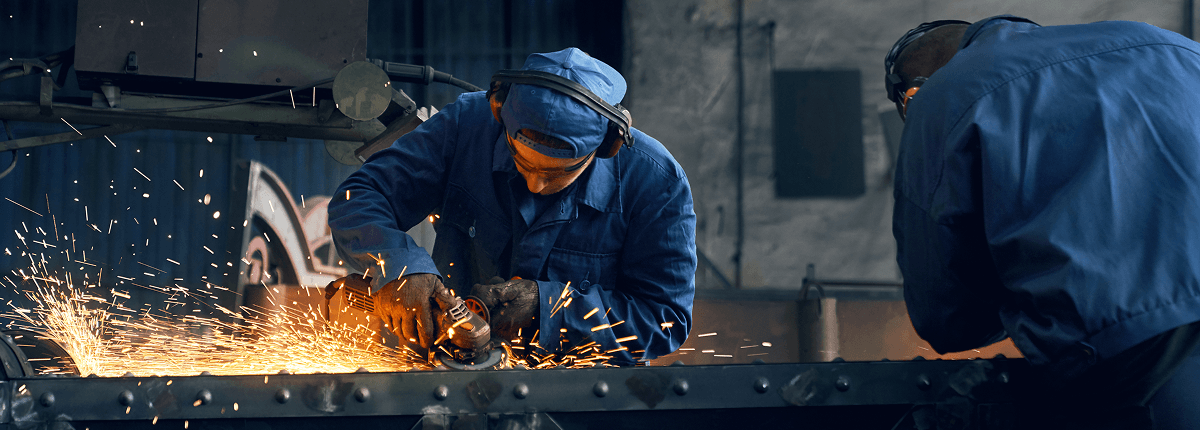
Manufacturing facilities introduce constantly changing variables, including fluctuating lighting conditions, mechanical vibration, conveyor speed variations, environmental contamination, and network communication delays. As a result, a vision system that performs flawlessly during testing can experience unexpected performance issues once deployed on the factory floor.
Successfully implementing Automated Vision Inspection Systems requires more than selecting the right camera or software package. It demands a comprehensive understanding of optics, automation engineering, data processing, and production line integration.
Organizations that address these factors early typically achieve faster deployment, lower false rejection rates, and a stronger return on investment.
Controlling Lighting Variability in Real Production Environments
One of the most common causes of inspection instability is inconsistent lighting.
Machine vision algorithms make decisions based on pixel values. Any change in illumination directly affects those values, potentially causing defects to be missed or acceptable products to be incorrectly rejected.
Sources of Lighting Variation
Industrial facilities frequently experience uncontrolled lighting influences such as:
- Sunlight entering through skylights
- Reflections from nearby machinery
- Welding arc flashes
- Aging overhead lighting systems
- Seasonal environmental changes
Even small fluctuations can significantly impact image consistency.
Engineering Solutions for Optical Stability
Experienced integrators typically focus on creating a fully controlled imaging environment rather than relying solely on software compensation.
Common approaches include:
- Light-blocking inspection tunnels
- Enclosed imaging stations
- Optical shielding structures
- Dedicated illumination modules
Many advanced Machine Vision Systems also utilize narrow-band optical filters paired with specific LED wavelengths. By allowing only the controlled light source to reach the sensor, these systems minimize external interference and maintain stable inspection performance throughout production shifts.
Eliminating Motion Blur on High-Speed Production Lines
As production throughput increases, image acquisition becomes increasingly challenging.
If a component moves too far during camera exposure, critical defects may become blurred and impossible to detect.
This issue is particularly important in industries such as:
- Packaging
- Pharmaceutical manufacturing
- Metal processing
- Textile production
- Battery manufacturing
To maintain inspection accuracy, engineers must carefully balance conveyor speed, exposure time, and sensor resolution.
Strobe Lighting Synchronization
A common solution involves high-intensity LED strobing.
Instead of continuously illuminating the product, the lighting system generates extremely short pulses that effectively freeze motion during image capture.
This technique enables inspection systems to maintain sharp image quality even on extremely fast production lines.
Transitioning to Line-Scan Inspection
For continuous materials such as steel coils, paper webs, or industrial textiles, traditional area-scan cameras often reach their performance limits.
In these situations, manufacturers frequently deploy Line Scan Inspection Technology, which builds images one line at a time as material moves through the inspection area.
This architecture delivers superior resolution while eliminating many of the motion-related challenges associated with conventional imaging methods.
Balancing False Rejects and False Accepts
One of the most important decisions during system calibration involves setting inspection tolerances.
Thresholds that are too aggressive generate excessive false alarms.
Thresholds that are too lenient allow defective products to pass through the quality gate.
False Rejection Rate (FRR)
High false rejection rates occur when acceptable products are classified as defective.
The consequences often include:
- Increased rework
- Additional labor costs
- Reduced throughput
- Production bottlenecks
Although quality managers typically focus on defect detection, excessive false rejects can quietly erode manufacturing profitability.
False Acceptance Rate (FAR)
False acceptance occurs when actual defects remain undetected.
This is often the more serious issue because defects continue downstream and may eventually reach customers.
Potential consequences include:
- Warranty claims
- Product recalls
- Brand reputation damage
- Increased service costs
Modern AI-Powered Defect Detection systems help reduce both types of errors by analyzing defect characteristics beyond simple threshold measurements.
Rather than relying exclusively on predefined rules, AI models evaluate visual context and defect patterns to improve classification accuracy.
Managing High-Volume Image Data
As camera resolution and frame rates increase, data management becomes a significant engineering challenge.
A single high-resolution industrial camera operating at full production speed can generate gigabytes of image data every second.
Without proper infrastructure, this volume of information can create processing delays, dropped frames, and incomplete inspections.
Choosing the Right Communication Protocol
Different inspection applications require different data transmission architectures.
Common industrial standards include:
- GigE Vision
- USB3 Vision
- Camera Link
- CoaXPress
Each protocol offers a unique balance of bandwidth, cable length, and deployment flexibility.
For multi-camera inspection cells spanning large production areas, GigE Vision is often preferred due to its long-distance networking capabilities.
For ultra-high-speed applications, CoaXPress frequently provides the performance required to handle large image streams with minimal latency.
Edge Processing and FPGA Acceleration
To reduce system load, many advanced Industrial Quality Control platforms perform image preprocessing before data reaches the central processor.
Tasks such as image normalization, filtering, and correction can be executed directly on dedicated FPGA hardware.
This approach improves throughput while reducing CPU utilization and overall system latency.
Solving Mechanical Alignment Challenges
Products rarely arrive at the inspection station in exactly the same position.
Minor variations in orientation, rotation, or conveyor tracking can cause traditional inspection programs to fail.
A component that rotates only a few degrees may shift critical measurement points outside expected coordinates, generating unnecessary reject decisions.
Geometric Pattern Matching
Modern inspection software addresses this challenge through geometric alignment algorithms.
Before performing measurements, the system identifies reference features such as:
- Mounting holes
- Printed markings
- Component edges
- Registration marks
Once these anchor features are located, the software automatically adjusts its measurement coordinates to match the product’s actual orientation.
This capability significantly improves inspection reliability in high-volume manufacturing environments where perfect mechanical positioning is unrealistic.
PLC Communication and Reject Timing
Detecting a defect is only part of the inspection process.
The defective product must also be removed from the production line at exactly the right moment.
Most vision systems communicate with programmable logic controllers through industrial protocols such as:
- Profinet
- EtherNet/IP
- Modbus TCP
Accurate synchronization between the camera, conveyor encoder, and reject mechanism is essential.
Even small timing errors can result in good products being rejected while defective products continue through production.
For this reason, successful Vision Inspection System Integration requires close coordination between automation engineers, machine builders, and software developers.
Long-Term Maintenance and Calibration
Inspection performance does not remain constant indefinitely.
Without routine maintenance, image quality and detection accuracy gradually deteriorate.
Recommended maintenance procedures include:
- Cleaning optical components
- Verifying illumination intensity
- Inspecting protective enclosures
- Confirming camera focus
- Validating reject timing
Many manufacturers also maintain a library of validated defect samples, often referred to as golden samples.
Running these reference parts through the inspection system on a scheduled basis helps verify that hardware, software, and automation components continue operating within established performance limits.
Conclusion
Deploying a vision inspection system successfully requires far more than installing cameras above a conveyor. Long-term performance depends on lighting stability, motion control, image processing infrastructure, automation integration, and ongoing calibration procedures.
Manufacturers investing in Visual Inspection Machines should view implementation as an engineering project rather than a hardware purchase. When properly designed and maintained, machine vision systems not only improve defect detection but also provide valuable production intelligence that supports continuous improvement initiatives across the factory floor.
Leave a Reply