
Introduction
In today’s manufacturing environment, product quality is no longer evaluated through occasional sampling alone. As production speeds increase and customer quality requirements become more demanding, manufacturers are turning to automated inspection technologies to maintain consistency while reducing operational costs.
Among these technologies, Visual Inspection Machines have become a critical component of modern production lines. By combining advanced imaging hardware, intelligent software, and automated decision-making processes, these systems enable manufacturers to identify defects, verify assembly accuracy, and monitor production quality in real time.
From automotive factories and electronics assembly plants to pharmaceutical packaging facilities, machine vision-based inspection systems are increasingly replacing manual inspection processes due to their speed, repeatability, and scalability.
Understanding the Structure of a Visual Inspection Machine
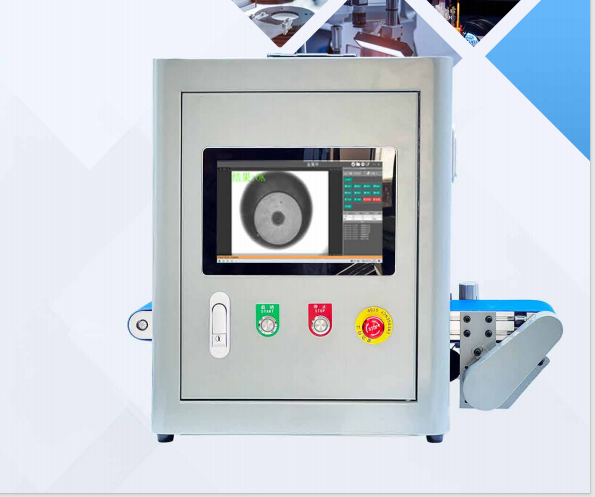
A visual inspection machine is not simply a camera connected to a computer. It is an integrated inspection platform consisting of imaging devices, illumination systems, processing hardware, and analysis software working together to evaluate products automatically.
The primary objective is straightforward: capture a clear image, analyze it against predefined quality standards, and determine whether the product meets production requirements.
Modern Machine Vision Systems can inspect thousands of components per hour while maintaining consistent inspection criteria, something that is difficult to achieve through manual inspection alone.
Industrial Cameras and Image Acquisition
The inspection process begins with image acquisition.
Industrial cameras are specifically designed to operate in demanding manufacturing environments where high-speed production and continuous operation are required. Unlike consumer-grade cameras, machine vision cameras prioritize stability, accuracy, and rapid data transmission.
Historically, CCD sensors were widely used because of their excellent image uniformity. However, advances in sensor technology have made CMOS cameras the preferred option for most modern inspection systems.
Modern CMOS sensors provide:
- Faster image capture speeds
- Lower power consumption
- Reduced system costs
- Improved compatibility with high-speed production lines
Depending on the application, manufacturers may choose monochrome or color cameras. Monochrome cameras are generally preferred for dimensional inspection and defect detection because they provide sharper contrast and more precise edge information. Color cameras are typically used when product color verification is required.
Why Lighting Determines Inspection Accuracy
One of the most overlooked aspects of machine vision is lighting.
Even the highest-resolution camera cannot deliver reliable inspection results if the lighting environment is inconsistent. Reflections, shadows, and changing ambient light conditions can significantly affect image quality.
For this reason, professional inspection systems use carefully engineered lighting solutions.
Backlighting is commonly used when precise dimensional measurements are required because it creates a clear silhouette of the inspected object.
Coaxial lighting is frequently applied to highly reflective materials such as polished metal components, semiconductor wafers, and glass surfaces.
Dark-field illumination is particularly effective for revealing scratches, cracks, and surface imperfections that may be invisible under direct lighting.
Dome lighting provides uniform illumination from multiple angles, helping eliminate glare when inspecting curved or reflective products.
Proper lighting design is often the difference between a highly reliable inspection system and one that generates excessive false rejects.
How Automated Inspection Software Detects Defects
Once an image has been captured, the software begins analyzing the visual data.
Most Automated Optical Inspection (AOI) systems follow a structured inspection workflow.
The first stage involves image preprocessing. During this phase, the software removes noise, enhances contrast, and isolates the area of interest to improve inspection accuracy.
The second stage involves feature extraction and measurement. Depending on the application, the software may evaluate dimensions, verify component locations, inspect surface conditions, or compare products against predefined standards.
Traditional inspection systems rely heavily on rule-based algorithms.
Common inspection techniques include:
- Pattern matching
- Edge detection
- Blob analysis
- Geometric measurement
- Optical character recognition (OCR)
These methods perform exceptionally well when inspection criteria are clearly defined and production conditions remain stable.
The Rise of Artificial Intelligence in Machine Vision
Although traditional machine vision remains highly effective for structured inspections, many manufacturing defects are difficult to describe using fixed mathematical rules.
Examples include:
- Irregular scratches
- Surface discoloration
- Material texture variations
- Cosmetic imperfections
- Random contamination patterns
To address these challenges, manufacturers are increasingly adopting AI-Powered Defect Detection technologies.
Rather than relying entirely on manually programmed rules, AI-based inspection systems learn from large collections of production images.
Using deep learning models such as convolutional neural networks (CNNs), the system analyzes thousands of examples of both acceptable and defective products. Over time, it develops the ability to recognize subtle patterns and anomalies that may be difficult for conventional algorithms to identify.
This approach can significantly improve inspection flexibility while reducing false rejection rates in applications involving naturally varying materials or complex product surfaces.
Integration with Manufacturing Automation Systems
Successful implementation requires more than installing cameras and software.
Inspection equipment must operate as part of a larger manufacturing ecosystem.
Most visual inspection systems communicate directly with PLCs, robotic cells, conveyors, and factory control systems.
Timing synchronization is particularly important. Sensors and encoders ensure that images are captured precisely when the product enters the inspection area.
Environmental considerations are equally important. Dust, vibration, temperature fluctuations, and oil mist can all negatively affect image quality and equipment longevity. As a result, many inspection systems are installed within protective enclosures designed for industrial environments.
When a defect is detected, the inspection machine automatically sends signals to downstream equipment. Pneumatic actuators, robotic arms, or conveyor diverters then remove the defective product from the production flow without interrupting line operation.
This seamless integration helps manufacturers improve productivity while maintaining consistent quality standards.
Applications Across Multiple Industries
The demand for Industrial Quality Control solutions continues to expand across numerous manufacturing sectors.
In automotive production, visual inspection systems are used for weld verification, assembly validation, dimensional measurement, and surface defect detection.
In electronics manufacturing, they inspect printed circuit boards, solder joints, connectors, and component placement accuracy.
Pharmaceutical manufacturers utilize machine vision systems to verify labels, packaging integrity, expiration dates, and serialization codes.
Metalworking operations use automated inspection technology to identify burrs, cracks, machining defects, and dimensional deviations before products move to subsequent production stages.
As manufacturing tolerances become increasingly stringent, automated inspection is becoming a standard requirement rather than an optional enhancement.
Future Development Trends
The future of machine vision is moving beyond simple pass-or-fail inspection.
Emerging technologies are enabling inspection systems to become intelligent data collection platforms capable of supporting predictive quality management and process optimization.
Several trends are shaping the industry, including:
- Edge AI processing
- 3D vision inspection
- Real-time production analytics
- Digital twin integration
- Self-learning inspection models
As computing power becomes more affordable and AI models become more sophisticated, inspection systems will play an increasingly strategic role in smart manufacturing environments.
Conclusion
The adoption of visual inspection technology has fundamentally changed how manufacturers approach quality assurance. By combining advanced optics, intelligent software, and automated decision-making capabilities, modern inspection systems provide fast, repeatable, and objective quality verification across a wide range of industries.
As production volumes increase and quality requirements become more demanding, investments in Machine Vision Inspection Equipment are becoming essential for manufacturers seeking to improve efficiency, reduce defects, and maintain long-term competitiveness.
Organizations evaluating inspection solutions should focus not only on camera specifications but also on lighting design, software capabilities, system integration, and application-specific requirements. A properly configured inspection system can deliver measurable improvements in product quality, operational efficiency, and overall manufacturing performance.
Leave a Reply